Global race for fusion energy: France's WEST quickly breaks China's record

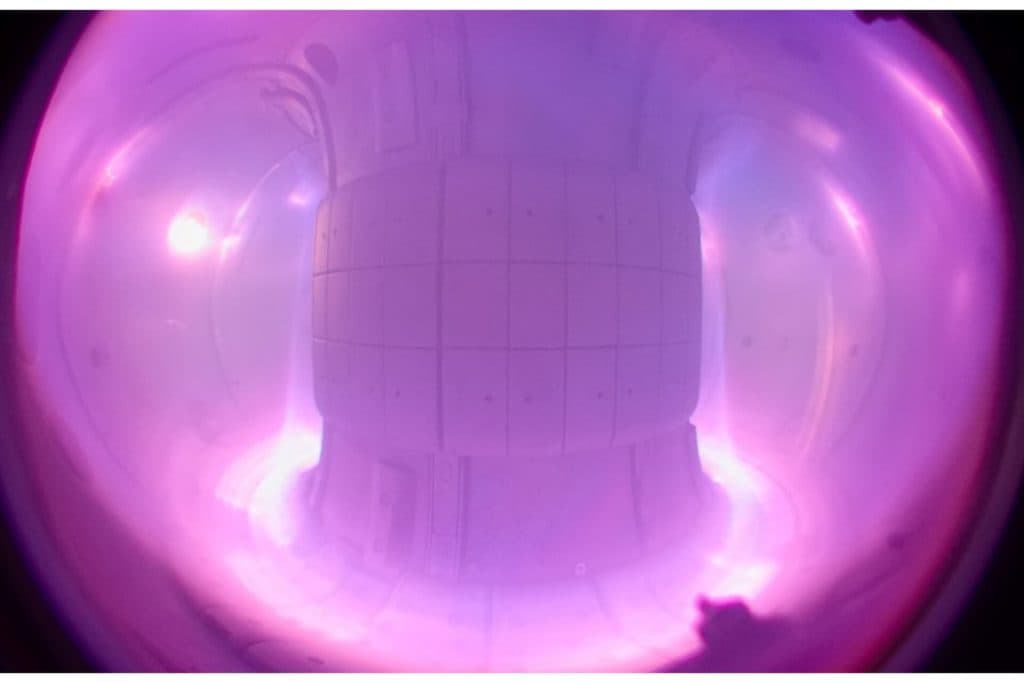
The record set by China’s EAST tokamak, which kept fusion plasma in so-called H-mode for 1066 seconds at the beginning of the year, did not last long. According to France’s CEA (French Alternative Energies and Atomic Energy Commission), it was beaten last week by the WEST device operated in France, by almost five minutes. This breakthrough brings us closer to harnessing energy from the fusion of hydrogen atoms and shows the growing momentum behind fusion research, as well as the race among laboratories around the world to achieve longer plasma stability.
The new record for sustaining extraordinarily hot plasma is 1337 seconds, or 22 minutes and 17 seconds. During the test, the plasma reached a temperature of 50 million degrees Celsius, approximately three times hotter than the Sun’s core. This result surpassed the previous record set by China’s EAST tokamak on 20 January, when the 1,000-second threshold was exceeded for the first time. China achieved 1066 seconds, marking significant progress in fusion research.
France has now raised the bar even higher with the WEST tokamak, demonstrating continued technological development and the global push to harness fusion energy in practice.
“WEST has reached a new key technological milestone, with 2 MW of heating power being delivered. Experiments will continue at higher power. Thanks to this outstanding result, WEST and the French community can take a leading role in the future use of ITER,” said Anne-Isabelle Etienvre, CEA’s Director of Research.
In the coming months, the WEST team will redouble its efforts not only to achieve even longer plasma confinement times—which could eventually reach several hours—but also to heat the plasma to even higher temperatures. These steps are crucial to approaching the conditions expected in fusion plasma and developing technologies that could one day enable the commercial use of nuclear fusion as a clean and virtually inexhaustible energy source.
WEST is a CEA facility that draws on the commission’s decades of experience using tokamaks to study plasma. It brings together researchers from around the world, who make use of its key features for long-term plasma confinement, particularly its superconducting coils and actively cooled components.
WEST is part of a broader international research effort in which CEA scientists also contribute to other major experiments, including JET (Joint European Torus) in the United Kingdom, which was shut down at the end of 2023 and holds the record for energy production from nuclear fusion; JT-60SA in Japan; EAST in China; and KSTAR in South Korea. The most ambitious project remains ITER, which aims to demonstrate the feasibility of fusion energy as a source of power for future plants.
Translation disclaimer
This article is a machine translation of the Czech original and has not yet been fully reviewed. In case of any doubt, please refer to the Czech version.




