4 October 2026, 21:07
Loading...
Heat curbs nuclear output, France's EDF shuts down more units

Jiří Puchnar
2 July 2026, 06:39
An exceptional heatwave in France is also affecting the operation of the country's nuclear fleet. EDF has temporarily shut down some units and reduced output at others due to high river water temperatures, in order to comply with environmental limits on the discharge of heated water back into waterways.
On Thursday 25 June, restrictions affected Bugey 3 on the Rhône and Nogent-sur-Seine 1 on the Seine. In both cases, the measures were related to rules governing the intake and discharge of water from nuclear power plants during periods of high temperatures.
For the same reason, Golfech 2 on the Garonne was also shut down earlier in the week. The plant's first unit was already offline for scheduled maintenance and refuelling.
Not a nuclear safety issue
The outages and output restrictions are not related to nuclear safety, but to the protection of aquatic ecosystems. Nuclear power plants use water to cool the secondary circuit and return it to the river after it has been heated. During heatwaves and periods of lower river flow, it can therefore be more difficult to meet limits on the maximum water temperature after mixing, or on the permitted temperature difference between water upstream and downstream of a plant.
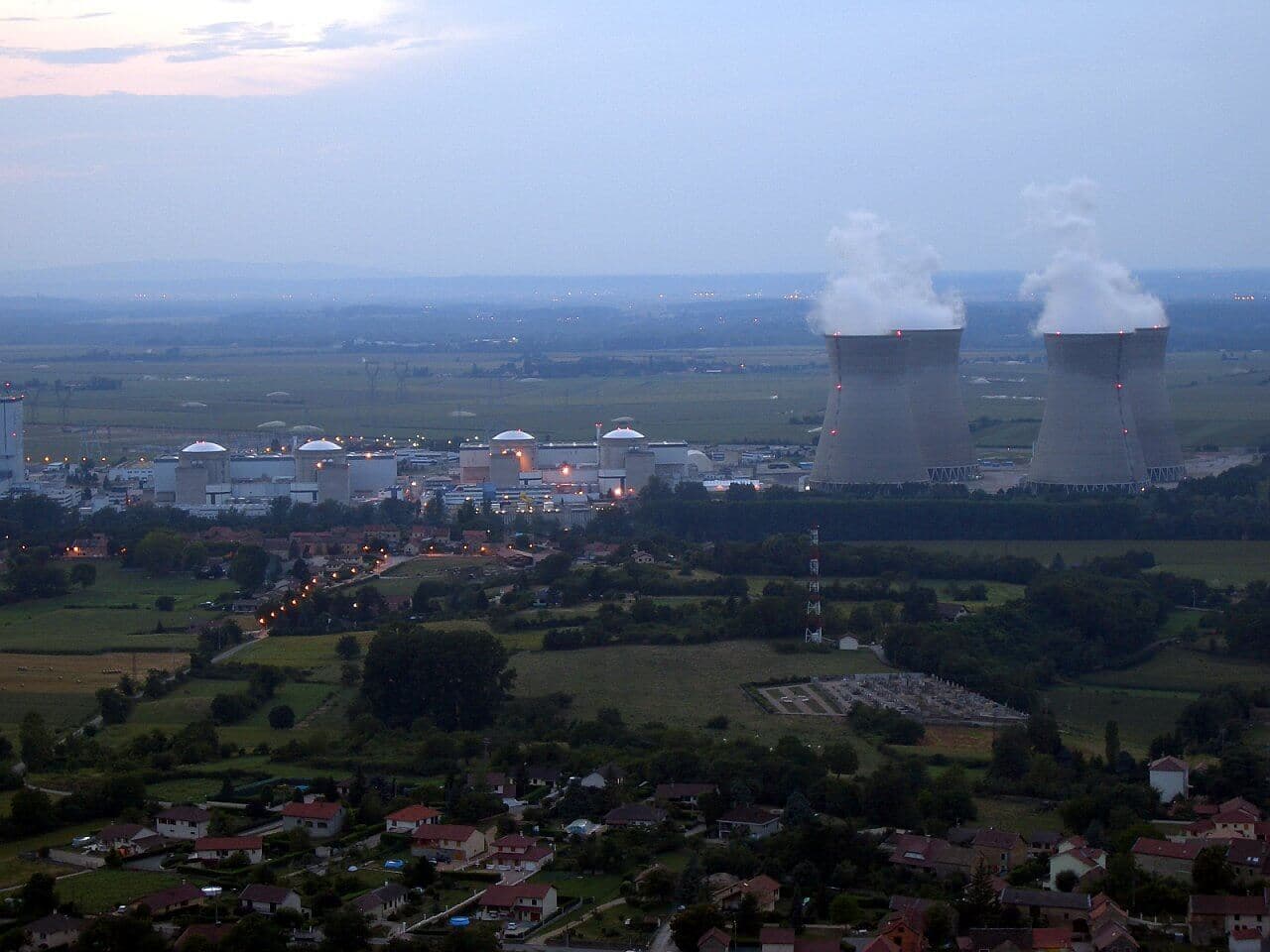
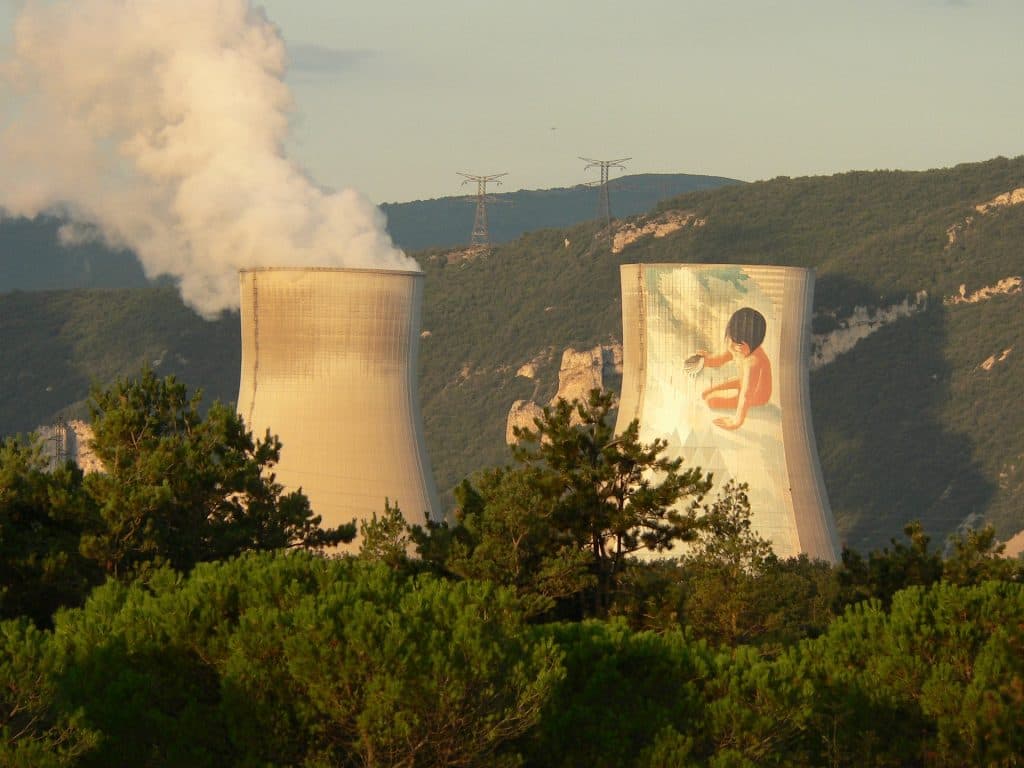
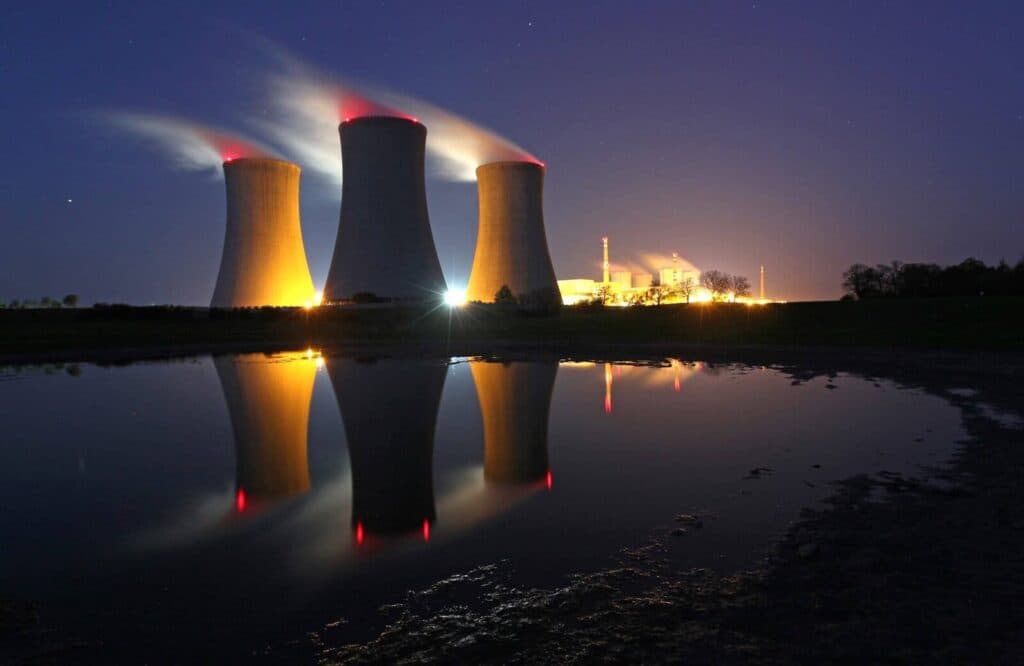
Bugey nuclear power plant, France. Source: LakeCastle / Creative Commons / CC-By-SA
France's nuclear regulator ASNR says that if these limits are at risk of being breached, EDF must reduce reactor output or temporarily shut down units. The rules also require ongoing monitoring of the physical, chemical and biological parameters of the aquatic environment.
Limits vary by site
At the Golfech plant, a limit of 28 °C applies from June to September to the temperature of the Garonne downstream of the plant after mixing, with a maximum permitted increase of 1.25 °C. EDF said Golfech 2 was shut down at 23:45 on 22 June in anticipation of the Garonne reaching 28 °C.
For the Nogent-sur-Seine plant, the rules stipulate that the temperature of the Seine downstream of the plant must not exceed 28 °C under normal operating conditions, and that the difference between the water temperature upstream and downstream must not exceed 3 °C. EDF also said that, at the request of transmission system operator RTE, Nogent-sur-Seine 2 remains in operation at reduced output because it is helping to maintain the stability of the French electricity system.
Unit 3 at the Bugey nuclear power plant on the Rhône was shut down on 25 June. EDF later said that, at RTE's request, units 4 and 5 would remain in operation at reduced output under exceptional climatic conditions. In this situation, the maximum average temperature of the Rhône downstream of the plant is set at 27 °C, with warming limited to 1 °C.
RTE says the French grid has sufficient reserves
Transmission system operator RTE said in connection with the heatwave that there was no need for any special alert regarding electricity supplies. According to RTE, available generation sources were sufficient to meet French demand, even with part of the generation fleet offline.
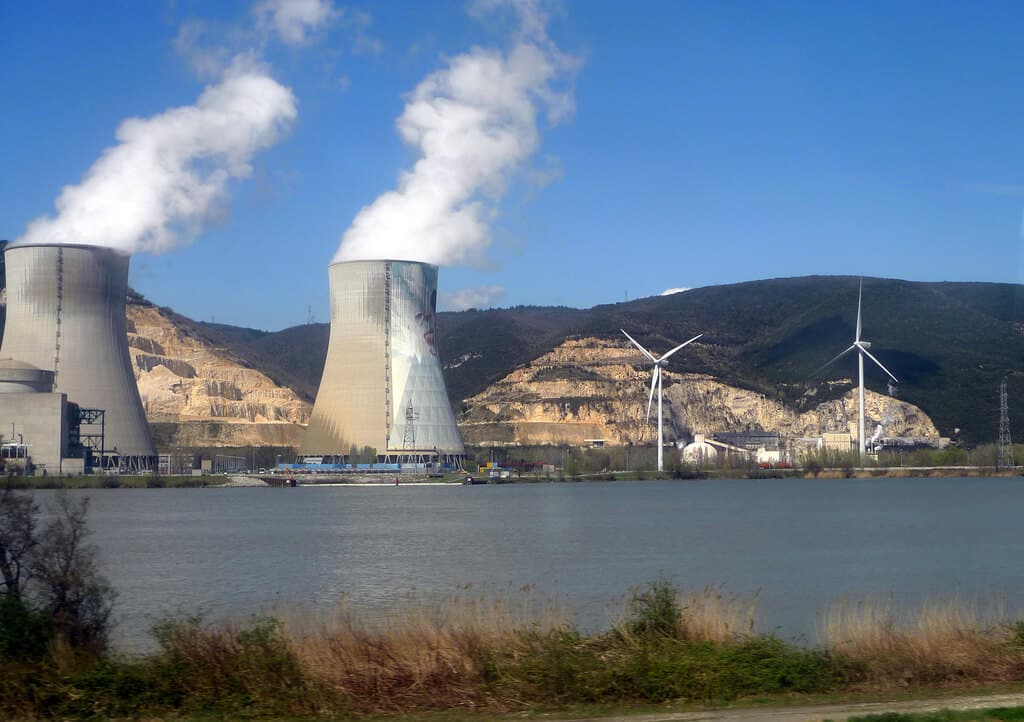
The Tricastin nuclear power plant also had to adjust its output during heatwaves in 2025. Source: jean-louis Zimmermann / Creative Commons / CC BY 2.0
However, heat increases electricity consumption because of air conditioning use. RTE estimated that each additional degree Celsius increases consumption in France by approximately 0.7 to 1 GW, depending on the time of day. According to the operator, this is around three times less than the impact of a one-degree drop in temperature during winter.
Exceptional heatwave highlights the role of climate-related restrictions
Météo-France described the June heatwave as exceptionally severe. According to the national average temperature indicator, 24 and 25 June were the hottest days recorded in France since 1947, with an average temperature of 30 °C over 24 hours.
Translation disclaimer
This article is a machine translation of the Czech original and has not yet been fully reviewed. In case of any doubt, please refer to the Czech version.
Sdílejte článek prostřednictvím:
You might also like


3 October 2026, 13:01
3 October 2026, 07:43

2 October 2026, 21:55