Italy could get up to a fifth of its electricity from nuclear power by 2050

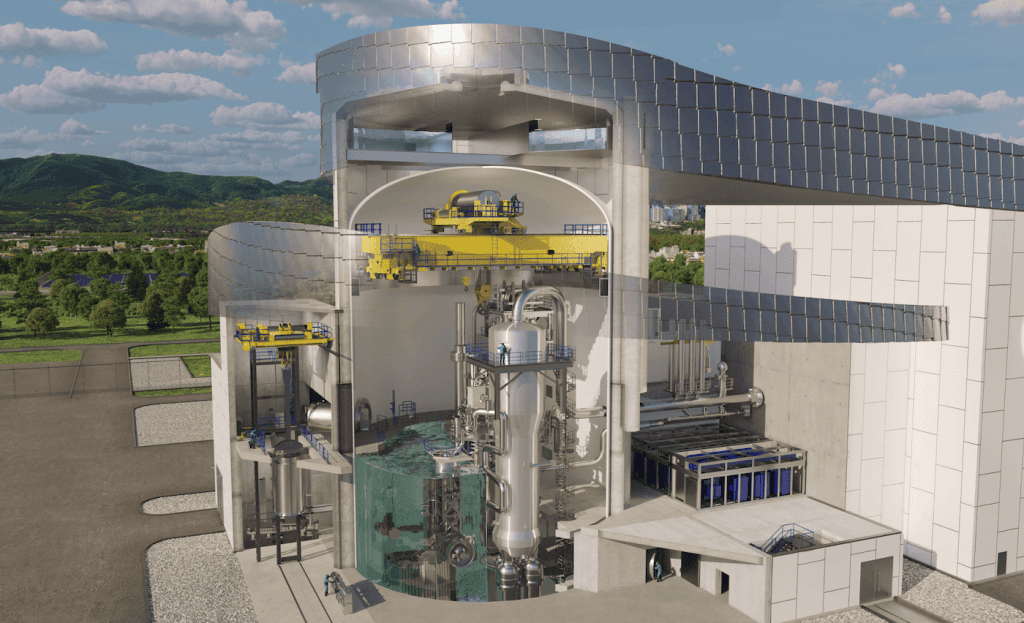
Italy’s Minister of the Environment and Energy Security, Gilberto Pichetto Fratin, presented a possible plan to develop nuclear capacity if the country decided to revive its civil nuclear programme. Gilberto Fratin spoke at the Global Energy Transition Congress in Milan, where he said his team had begun an assessment process through the Italian Platform for Sustainable Nuclear Energy, looking at the possible revival of Italy’s nuclear energy sector after 2030.
“We intend to do so by implementing new sustainable nuclear technologies currently under development, particularly small modular reactors and, in the longer term, nuclear fusion,” Fratin said. “Nuclear energy and fusion will complement the growing share of energy generation from renewables and other low-carbon solutions. We expect to reach approximately 8 GW of installed nuclear capacity by 2050, covering more than 10% of Italy’s electricity consumption. This share could rise to more than 20–22% if our country fully exploits its nuclear energy potential.”
National Integrated Energy and Climate Plan
The Italian government included the possibility of using nuclear power in its National Integrated Energy and Climate Plan. The plan was submitted to the European Commission on Monday, 1 July 2024. The conservative scenario envisages an 11% share of electricity generation from nuclear power, while the ambitious scenario envisages 20-22%. The submitted document also states that Italy aims to reach 131 GW of installed renewable capacity by 2030. Under this scenario, 79 GW of capacity would come from solar power, 28 GW from wind power, 19 GW from hydropower, 3 GW from bioenergy (biomass, etc. …) and 1 GW from geothermal sources.
A spokesperson for Newcleo, an Italian company developing innovative nuclear reactors, described the announcements as “a step in the right direction”. An important part of the Italian government’s integrated plan was also that the estimated cost of meeting climate targets with nuclear power was EUR 17 billion (approx. KČ 472.8 billion) lower than the cost of meeting them without nuclear energy.
Changing public opinion and new plans
Italy operated a total of four nuclear power plants from the early 1960s. After the 1986 Chernobyl nuclear disaster, Italians decided to shut down all nuclear power plants in the country. The last two operating plants, Caorso and Trino Vercellese, were closed in 1990.
At the end of March 2011, following the accident at Japan’s Fukushima plant, the Italian government approved a moratorium on the construction of nuclear power plants, which was to last at least one year. Public opinion has since changed, and in May 2023 the Italian parliament approved a motion calling on the government to consider including nuclear energy in the national energy mix.
In September, the first meeting of the National Platform for Sustainable Nuclear Energy was held. The government established the platform to define a timeline for the possible resumption of nuclear power use in Italy and identify opportunities for the supply chain already active in the sector.
Translation disclaimer
This article is a machine translation of the Czech original and has not yet been fully reviewed. In case of any doubt, please refer to the Czech version.