9 October 2026, 06:22
Loading...
New law was meant to help Czech areas slated for nuclear waste repository. MPs have curtailed our rights, municipalities say
Ekonews.cz
21 November 2023, 14:57
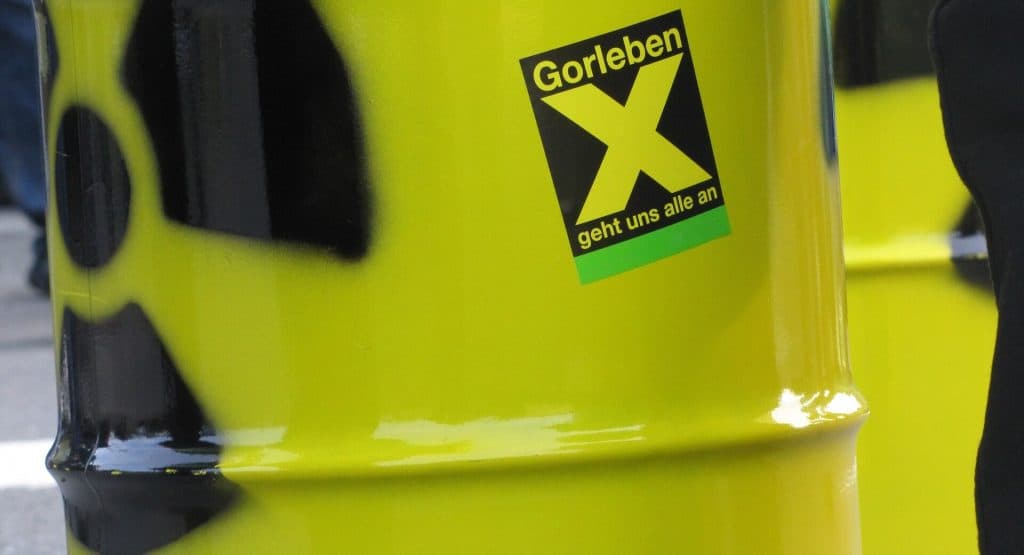
A deep nuclear waste repository has been sought in Czechia for more than twenty years. A new law was meant to help reach an agreement between municipalities and the state. However, municipalities say an important provision has been removed from it, without which they will block negotiations.
In 2020, four sites were selected from nine locations where a nuclear waste repository is to be built. It is a problematic final stage of nuclear energy, as nobody usually wants a repository on their territory. The situation is similar in other European “nuclear” countries, with the exception of Finland.
Communication between residents of affected municipalities, officials and politicians was to be improved by the Act on proceedings related to a deep geological repository for high-level radioactive waste, which MPs considered today. In the end, they approved a version that, according to municipalities represented by the Platform Against a Deep Geological Repository, is even worse than the original. Even the original version, according to previous statements by the affected municipalities (Březový potok in the Klatovy region, Horka in the Třebíč region, Hrádek in the Jihlava region and Janoch near Temelín), did not guarantee that their objections would be heard.
According to an earlier statement by energy expert Edvard Sequens of Calla – Association for the Preservation of Nature (a member of the Platform Against a Deep Geological Repository, which commented on the bill on behalf of the municipalities), the proposed version of the law gave municipalities more opportunities to express their views in ongoing administrative proceedings, but did not ensure that their interests would be respected.
Under the proposed law, authorities do not have to accept their objections. For example, in proceedings to permit exploration areas (simplified, the right to “drill”) or when selecting the final site. Municipalities can take legal action, but this will not delay further steps.
Several MPs (Klára Kocmanová of the Pirates, Vít Kaňkovský of KDU-ČSL and Radek Koten of SPD) attempted today to push through the Platform’s proposals in the Chamber of Deputies through an amendment. However, they were unsuccessful.
At the proposal of MP Ivan Adamec of ODS, the Chamber of Deputies also removed parliament’s co-decision-making role from the government bill, which Industry Minister Jozef Síkela had promised to mayors. In other words, the final say on the decision on the final site (which is to be made by 2028) would not rest with the government but with parliament.
“Identifying the nuclear repository, deciding where it will be, is a managerial decision, and in our political system, managerial decisions are made solely by the government,” Adamec explained his proposal before the vote.
We are very disappointed by the approach of the majority of MPs to the repository law, as they did not support the promised strengthening of municipalities’ rights in decision-making on this project. If the law passes the Senate in this form as well, municipalities will use all available means to prevent the construction on their territory of a repository authorised in this way,” said Michael Forman, spokesperson for the Platform Against a Deep Geological Repository, which now brings together 56 towns, municipalities and associations.
The Platform will continue to advocate for the decision on selecting a site for potential disposal to be conditional on the prior consent of the affected municipalities. As an example of how this could work, it cites Finland, where a deep geological repository is already under construction and where, it says, Finnish legislation respects the views of affected municipalities.
“Such a solution would not mean blocking construction, as is sometimes mistakenly interpreted, but would put municipalities in a partner negotiating position with the state. And it is also Finland where parliament decides on the deep geological repository,” the Platform’s press release states.
However, according to a statement by Minister Jozef Síkela in the Chamber of Deputies, the law gives municipalities sufficient rights. “I am pleased that the bill, including amendments on which I will take a favourable or neutral position, will lead to the fulfilment of Section 108(4) of the Atomic Act, namely that all affected parties have the right for all relevant arguments and interests to be carefully considered and taken into account,” the minister said before the vote.
At the same time, he promised municipalities the possibility of receiving more money for hosting the repository on their territory. “I am prepared to discuss the form of contributions from the nuclear account with the affected municipalities at the four potential sites, including possible adjustments to these contributions. For example, so that their level, set as early as 2016, also reflects changes in price levels in recent years,” he added.
Republished from the online portal EkoNews.cz, a website covering business and sustainability.
Translation disclaimer
This article is a machine translation of the Czech original and has not yet been fully reviewed. In case of any doubt, please refer to the Czech version.
Sdílejte článek prostřednictvím:
You might also like
8 October 2026, 10:05