18 October 2026, 22:09
Loading...
Nuclear energy in Czechia - part 1

Martin Voříšek
21 March 2015, 13:53
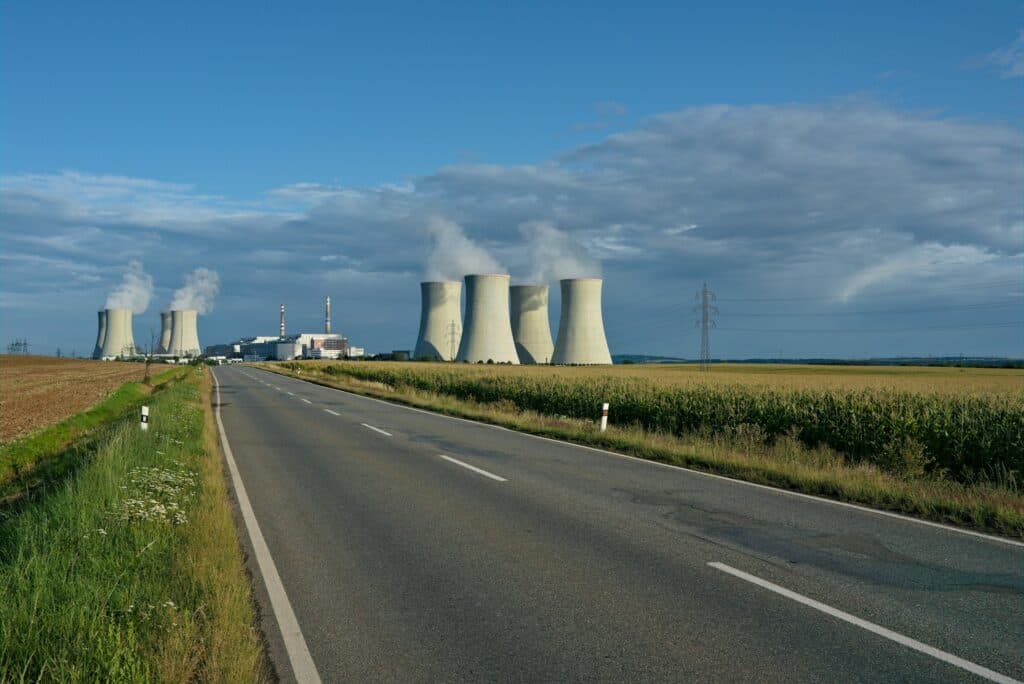
In 2013, 87,1 TWh of electricity was generated in the Czech Republic. Of this, 44,2 TWh came from coal-fired power plants and 30,7 TWh from nuclear power plants. Thanks to the stable output of this type of power plant, the Czech Republic was able to achieve net exports of 17 TWh, with total installed capacity of 21 GWe in the country. Since 2000, renewable energy sources have accounted for an increasingly large share of Czech installed capacity (the biggest renewables boom came after 2005, with the adoption of the Act on support for electricity generation from renewable energy sources).
Around CZK 44 billion was paid for renewable energy sources in 2013. Electricity consumption per capita is around 5400 kWh/year, while the country is 80% dependent on Russia for gas imports.
- There are 6 nuclear reactors in the Czech Republic, producing approximately one third of all electricity in the country
- The first nuclear power plant began generating electricity in 1985
- Nuclear energy has strong support from the Czech government
- Plans for new nuclear capacity are currently on hold
In 2011, a draft State Energy Policy was issued that envisaged a major increase in nuclear power plant capacity. Under the lowest scenario, nuclear power capacity was to reach 13,9 GWe by 2060, while under the highest scenario it was to reach 18,9 GWe, alongside the massive uptake of electric vehicles in the country. In that case, nuclear power would account for 60% of total generation.
According to another version of the State Energy Policy from November 2012, at least 50% of domestic electricity consumption was to come from nuclear power. Two new reactors at Temelín and one new reactor at Dukovany were intended to help achieve this. This would raise annual generation to around 55,2 TWh per year (the State Energy Policy was also to identify new sites for the construction of nuclear power plants). Under the policy, Dukovany was to receive a further 20-year licence and operate until 2045-2047. Coal consumption was expected to fall by one third from its current level by 2040, gas-fired generation was to increase, and support for new renewable energy sources was to virtually cease from 2014. Development was also to include the use of heat from nuclear power plants for nearby cities.
Operating nuclear units in the Czech Republic
| Reactor | Model | Capacity | Commissioned | Licence until |
| Dukovany 1 | VVER-440 V-213 | 500 | 1985 | 2015 |
| Dukovany 2 | VVER-440 V-213 | 500 | 1986 | 2016 |
| Dukovany 3 | VVER-440 V-213 | 500 | 1986 | 2017 |
| Dukovany 4 | VVER-440 V-213 | 500 | 1987 | 2018 |
| Temelin 1 | VVER-1000 V-320 | 1080 | 2000 | 2020 |
| Temelin 2 | VVER-1000 V-320 | 1056 | 2003 | 2022 |
| Total (6) | 4036 |
Development of nuclear energy in the Czech Republic
In 1958, Czechoslovakia began construction of the first nuclear power plant on its territory – a carbon dioxide-cooled reactor at Jaslovské Bohunice (in Slovakia). The 110 MWe reactor, supplied by Škoda, was completed in 1972 and operated until 1977. Construction of four VVER-440 reactors at Bohunice began in 1970, and they were commissioned in the mid-1980s.
Construction of the Dukovany nuclear power plant began in 1978 and it was the first nuclear power plant on the territory of today’s Czech Republic. Russian organisations and Energoprojekt were responsible for the design of the four VVER-440 V-213 reactors. Škoda Praha was responsible for their construction. They entered commercial operation between 1985 and 1987 and have undergone several refurbishments since then.
Work on the Temelín nuclear power plant began in 1982. Russian organisations and Energoprojekt were again involved, and under the original plans the plant was to include four VVER-100 V-320 reactors. Work on the first units began in 1987. Due to events associated with the Velvet Revolution, the democratic government decided in 1990 to postpone construction of the third and fourth units. Despite several protests and a complicated political situation, construction of the first two units continued, which was officially confirmed after the dissolution of Czechoslovakia. In the subsequent tender for the nuclear power plant, Westinghouse was selected and decided to change the originally planned control systems, diagnostic systems and radiation monitoring systems. Westinghouse was also selected to supply fuel (this subsequently changed, and fuel for Temelín is currently supplied by Russian company TVEL). The reactors, financed by ČEZ with the help of World Bank loans, were commissioned in 2000 and 2003.
Thermal energy from Temelín nuclear power plant is already supplied to nearby Týn nad Vltavou, and ČEZ is also considering the possibility of supplying heat to České Budějovice, around 20 km away. However, this is not currently under consideration. Another heat supply project concerns the city of Brno from the Dukovany power plant (approximately 40 km away). If implemented, it could supply up to two thirds of heat consumption.
Generation by Czech nuclear power plants in the past year, 2014:
- Temelín NPP – 14,95 TWh
- Dukovany NPP – 5,37 TWh
Both nuclear power plants in the Czech Republic are operated by the ČEZ energy group, whose shares are majority-owned by the state.
Increasing electrical capacity and extending the operating life of nuclear power plants
Dukovany NPP has 4 nuclear reactors, each of which originally had a capacity of 440 MW. Between 2005 – 2008, changes to the low-pressure turbines increased capacity to 456 MW, representing the first stage of the plant’s uprating plan. The second phase of refurbishment, as in the first case, began with the refurbishment of the third unit. The work affected the control elements and the unit control room. In total, the capacity of each Dukovany unit was increased by 60 MW to a final installed capacity of 500 MW. The high-pressure parts of the turbines and the fuel were also replaced. The refurbishment was completed in mid-2012.
At the beginning of 2009, ČEZ announced the LTO project (Long-Term Operation project, a project for the long-term operation of nuclear power plants), aimed at extending the planned operating life of Dukovany by 10 years. Dukovany nuclear power plant unit 1 can currently operate until the end of 2015 (under its original 30-year operating life). The LTO consists of many sub-projects, which together cost more than CZK 14 billion between 2009 and 2015. Extending the operating life to 60 years is also being considered, meaning that Dukovany NPP would have a licence until 2045. However, Austria has raised objections, having long protested against nuclear energy in the Czech Republic.
Units 1 and 2 at Temelín nuclear power plant were built with a capacity of 1000 MW. During their operating lives, they were refurbished, and unit 1 now has an installed capacity of 1080 MW. The second unit currently has a capacity of 1055 MW, but it was expected to reach 1080 MW by the end of 2015. The State Office for Nuclear Safety (SÚJB) confirmed the licences of the Temelín reactors until 2020 and 2022, respectively.
Translation disclaimer
This article is a machine translation of the Czech original and has not yet been fully reviewed. In case of any doubt, please refer to the Czech version.
Sdílejte článek prostřednictvím:
You might also like
17 October 2026, 13:09