
17 October 2026, 13:09
Loading...
Nuclear fusion is once again one step closer as ITER selects contractor for reactor torus

Jiří Puchnar
2 July 2025, 07:01
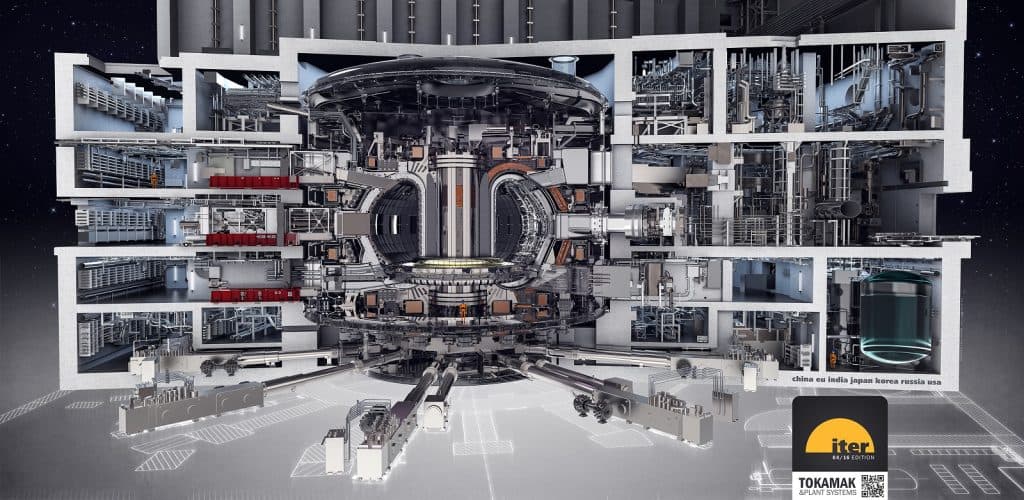
Westinghouse Electric Company has signed a contract worth USD 180 million (approximately CZK 3.95 billion) with ITER to assemble the ring-shaped vacuum vessel for the International Thermonuclear Experimental Reactor (ITER), under construction in Cadarache in southern France. The vacuum vessel is one of the reactor’s most critical components. It is a hermetically sealed, double-walled steel container that will hold the fusion plasma.
After all the vacuum vessel sectors have been installed, Westinghouse will begin the most complex phase of assembly – welding the nine sectors together simultaneously to form a single, continuous ring known as a torus.
A long history of cooperation
"We are pleased that Westinghouse is taking on this key role in our unique project. With decades of experience in designing and building nuclear power plants, we believe the company will bring exceptional expertise to the assembly of the ITER tokamak," said Pietro Barabaschi, ITER Director-General.
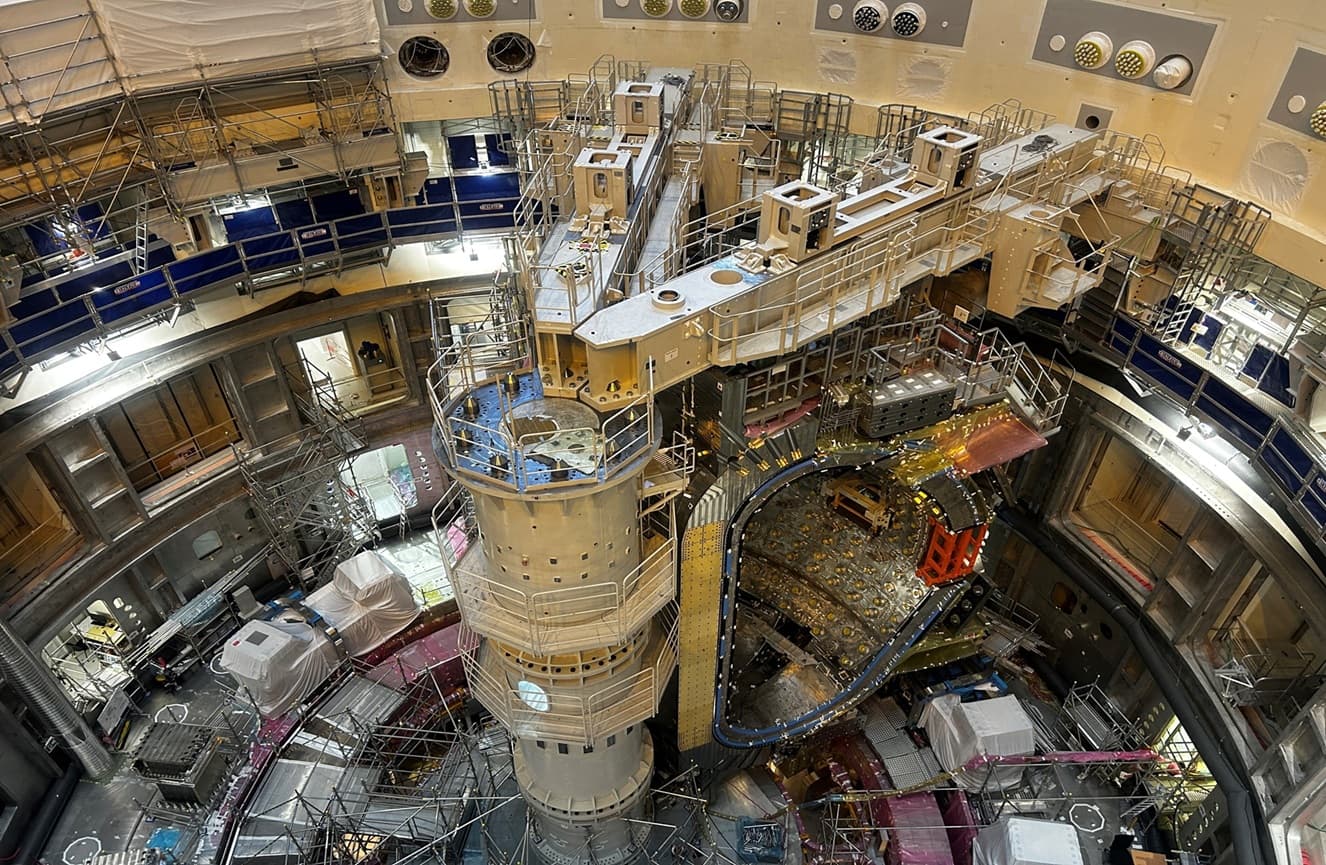
The ITER tokamak pit with two vacuum vessel sector modules installed. Westinghouse contributed to the manufacture of the vacuum vessel sectors as part of the Fusion for Energy (F4E) consortium, alongside its partners Ansaldo Nucleare and Walter Tosto. Source: Westinghouse
Westinghouse interim CEO Dan Sumner added that the company had always been at the forefront of energy innovation and was proud to "be part of this groundbreaking project, which could ensure energy security for future generations".
Westinghouse has a long-standing partnership with ITER. Together with its partners in the AMW consortium (Italian companies Ansaldo Nucleare and Walter Tosto), it contributed to the manufacture of five vacuum vessel sectors. The project involved developing advanced manufacturing techniques and working with global partners to meet stringent quality requirements.
ITER: A step towards the commercial use of fusion
ITER is the largest international project in the field of nuclear fusion. Its aim is to demonstrate the technical feasibility of fusion as a large-scale, emissions-free energy source. The reactor is designed to produce 500 MW of fusion power using 50 MW of input energy to heat the plasma, for at least 400 seconds. The facility will not generate electricity; ITER is for research purposes only.
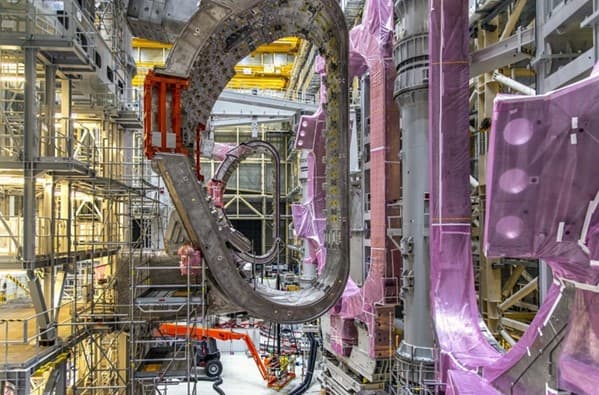
Assembly of the vacuum vessel sectors was halted because of defects and will resume only after they have been repaired. Source: ITER
Dozens of countries are involved in building the facility. The European Union is funding almost half of the costs, while the other six partners (China, India, Japan, South Korea, Russia and the US) are sharing the remaining half equally.
Construction began in 2010, but the original target of achieving first plasma in 2018 was pushed back to 2025. In 2023, ITER announced a new schedule, under which the first phase of operations is to involve deuterium-deuterium fusion in 2035, followed by full operation with the magnetic field and plasma current.
Translation disclaimer
This article is a machine translation of the Czech original and has not yet been fully reviewed. In case of any doubt, please refer to the Czech version.
Sdílejte článek prostřednictvím:
You might also like




16 October 2026, 10:16