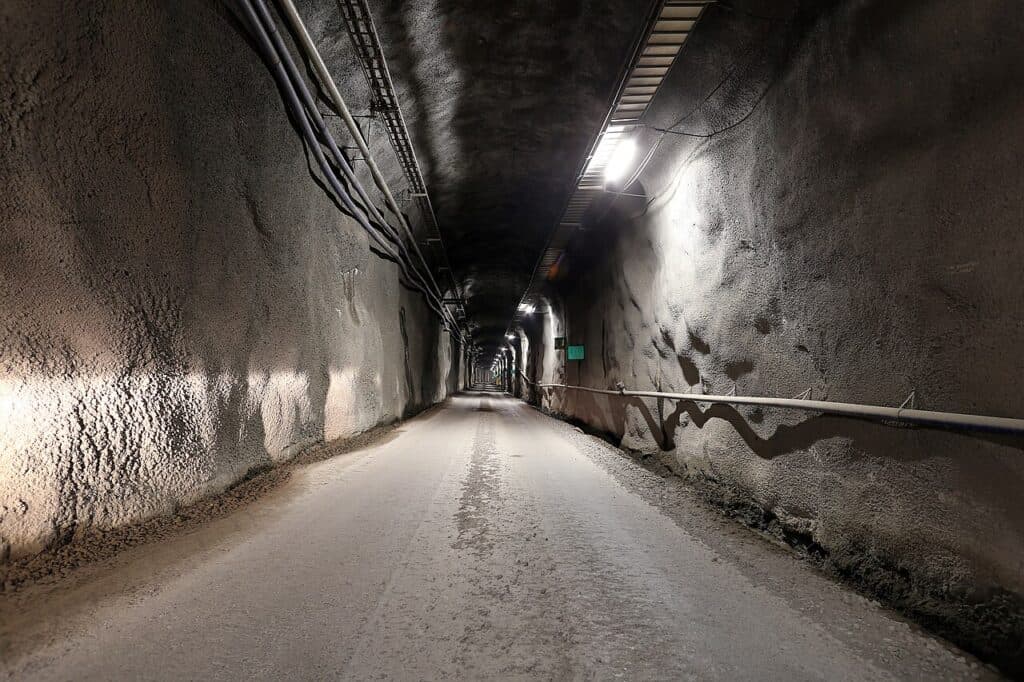
Finland intends to become the first country in the world to launch a deep geological repository for radioactive waste this year. The Czech Radioactive Waste Repository Authority (SÚRAO), which is seeking a suitable domestic site for spent nuclear fuel, is also drawing inspiration from Onkalo.
A narrow strip of asphalt winds between farmers’ fields towards the horizon, where the bright blue sky meets the treetops. Neat family homes are scattered here and there along both sides of the road, while a yellow wooden school building stands out right beside it. Welcome to Eurajoki, a cosy coastal town on the Gulf of Bothnia in western Finland, home to just under nine thousand people.
It is hard to imagine that just ten kilometres from this idyllic landscape, one of the most ambitious and complex engineering projects of our time has been built. Deep underground, preparations are now being completed to open the world’s first repository designed for the permanent disposal of spent nuclear fuel.
Posiva Oy, the company responsible for the Onkalo project, is currently awaiting an operating licence from the Finnish government. The first batch of radioactive waste could be sent underground as early as this year. Finland would thus become the first country in the world to permanently dispose of spent nuclear fuel.
Research took thirty years
The Onkalo project (which means “cave” or “cavity” in Finnish) has been under way since the 1980s as a long-term solution for the safe disposal of spent nuclear fuel. The research resulted in the construction of an underground complex in solid granite bedrock at a depth of approximately 450 metres.
The repository is located on Olkiluoto Island, just a short distance from the nuclear power plant of the same name. The facility will receive radioactive waste from the country’s two nuclear power plants – Olkiluoto and Loviisa, in southern Finland.
“This project is technologically incredibly complex and entirely unprecedented,” says Tuomas Pere, a geologist at Posiva, during a tour of the underground complex. “We needed more than thirty years just for the approval process and research,” he stresses.
Construction of the first phase took more than ten years. This May, the project entered its final phase: the above-ground buildings housing the repository underwent final testing, and the first five underground waste disposal tunnels were completed. Posiva plans to build more than 100 additional tunnels gradually during normal repository operations.
The first phase of construction cost approximately one billion euros, or around CZK 24 billion. Posiva estimates the total lifecycle budget for Onkalo at €5 billion to €5.5 billion.
Exclusively for domestic needs
The project is financed by Posiva’s owners, who also operate Finland’s two nuclear power plants – Teollisuuden Voima (TVO, which operates Olkiluoto) and state-owned energy company Fortum (which operates Loviisa). They can borrow money from Finland’s State Nuclear Waste Management Fund, which, like its Czech counterpart, receives funds from nuclear power plant operators.
Onkalo is not a commercial project. Finnish law prohibits the export and import of spent nuclear fuel, so the complex was built solely for the country’s domestic needs. “It is our responsibility,” comments Philippe Bordarier, CEO of TVO.
Posiva nevertheless expects to generate revenue by selling its technology. It is currently working with more than twenty organisations worldwide, including the Czech Radioactive Waste Repository Authority (SÚRAO). “SÚRAO had an approximately ten-year project with Posiva Solutions, which ended last year,” says the authority’s spokeswoman Martina Bílá.
“We also have an agreement with Posiva Solutions to participate in expert workshops. The final workshop is planned for the beginning of next year and provides us with specific input for the deep geological repository project in the Czech Republic,” Bílá explains.
Bentonite protects against water
The first permanent repository will operate as follows. Cooled spent nuclear fuel will be transported from the nuclear power plants’ interim storage facilities to Onkalo in special steel containers. The fuel assemblies will be immersed in water inside the containers during loading and transport.
Once the fuel arrives at Onkalo’s above-ground complex, automated equipment will transfer the fuel assemblies into thick-walled copper canisters. They will then be slowly lowered underground to a depth of around 430 metres, where specialised loaders will insert the canisters into disposal shafts.
Each tunnel is around 350 metres long and has several vertical shafts drilled into its floor, each eight metres deep. The spent-fuel canisters will be lowered into them.
Posiva experts point out that the shafts are spaced at a safe distance from one another. Depending on the type of fuel, one tunnel can accommodate 30 to 40 canisters.
The repository is built in monolithic granite bedrock. According to Posiva, selecting a site without tectonic faults should ensure that groundwater does not reach the waste and that the repository withstands pressure from future ice ages and movements of the Earth’s crust.
Bentonite provides an additional technical barrier – a special type of clay used to line each shaft. When it comes into contact with underground moisture, the material swells and becomes fully monolithic, creating a hermetic seal that prevents further water ingress to the nuclear fuel canisters.
“Once all the shafts in a tunnel have been filled, we will backfill the tunnel with a mixture of bentonite and crushed bedrock and seal the exits with massive concrete plugs,” Tuomas Pere explains.
The Onkalo repository will accept spent fuel for the next 100 years – precisely the period for which Finland’s nuclear power plants are expected to operate. Once the final canister has been lowered into it, the entire complex will be hermetically sealed and closed. Posiva’s calculations indicate that the waste will remain safe in this condition for at least 100,000 years. Over time, the fuel’s radioactivity is expected to fall to a level comparable to naturally occurring uranium.
How accident scenarios were modelled
Posiva says the repository site was selected very carefully, based on an analysis of more than one hundred options. The main criteria were low population density, proximity to operating nuclear power plants and stable bedrock. The granite beneath Eurajoki is regarded as among the oldest and most stable on the planet, with scientists estimating its age at almost 1.8 billion years.
Groundwater was the greatest challenge. A similar project in Forsmark, Sweden, was delayed in the past because scientists feared moisture could damage the copper canisters. Posiva communications manager Pasi Tuohimaa says the company addressed this risk by introducing a multi-layer protection system.
In addition, the tunnels have a slight slope so that any groundwater entering them will drain from the shafts into special collection tanks, from where it will be pumped to the surface and monitored.
To test how the system would behave in the event of extraordinary incidents, the company developed various scenarios and published the results on its website. Specifically, Posiva analysed the probability of an earthquake beneath the repository, canister corrosion and pressure caused by ice ages. The calculations suggested that the protective capsules would withstand the load under these conditions.
Experts even developed a worst-case scenario in which all risks occurred at once. A defective canister, bentonite erosion and an earthquake would cause the capsule to crack, allowing fuel to begin seeping towards the surface through groundwater.
The results showed that even with this combination of factors, the natural density of the granite would prevent radiation from spreading. Computer modelling of the worst-case leakage scenario showed that the annual radiation dose at the surface would not exceed 0.0001 millisieverts. That is less than the dose a passenger receives during one intercontinental flight.
Finland’s secret of trust
Eurajoki residents are not afraid of spent fuel. In 2000, the municipal council approved the repository’s location by twenty votes to seven. Under Finnish legislation, the local community effectively had veto power – parliament could not push the project through without its consent.
This support stems from the fact that many Eurajoki residents work at the Olkiluoto nuclear power plant and understand how nuclear facilities operate. Other factors included the public’s high level of trust in government decisions and society’s emphasis on environmental values.
Posiva says transparency in public communication made a significant contribution to the project’s smooth public acceptance. During the planning phase, the company held numerous consultations with the public and independent experts, as required by law.
“We are completely open in our communication. Perhaps we are the most open of all the ‘closed’ projects in the world,” Pasi Tuohimaa declares.
Today, Onkalo regularly attracts scientists, politicians, journalists and tourists from around the world. According to Posiva, around 20 thousand people visit the facility’s information centre each year.
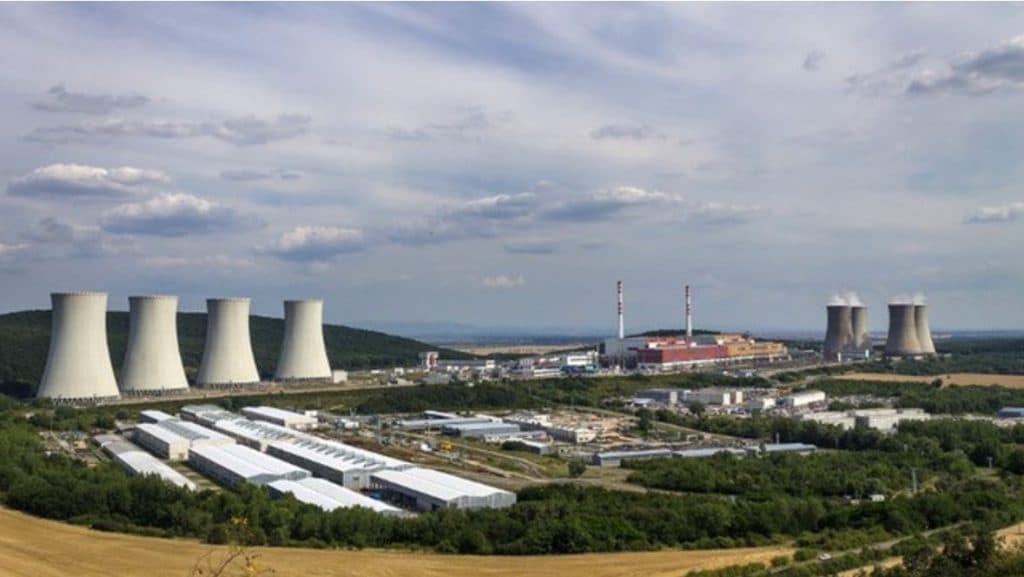
The two Finnish nuclear power plants mentioned above generate approximately 40 percent of the country’s electricity. Nuclear power’s strategic importance in the country is growing, particularly against the backdrop of Europe’s energy crises and the war in Ukraine. Parliamentary debates increasingly stress the role of nuclear power plants as a reliable source of stable and independent electricity.
Opinion polls show that public trust in nuclear energy in Finland is among the highest in the European Union. “We Finns are very practical people,” comments Pasi Tuohimaa. “We are well aware of all the risks of energy dependence, which is why we support comprehensive yet reliable solutions that provide us with stability,” he says.
This article was produced with the support of Journalismfund Europe.