
17 October 2026, 13:09
Loading...
Restarting Germany's reactors: economic necessity or political dream?

Jiří Puchnar
12 March 2025, 07:07
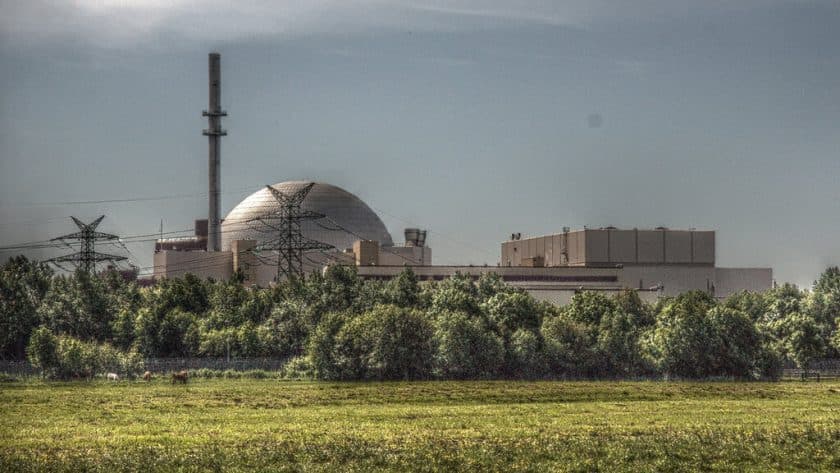
Germany closed its last nuclear power plants in April 2023, raising questions about energy security and the impact on the economy. A new study by Radiant Energy Group, an energy consultancy, examines the feasibility and timeline for potentially restarting Germany's shut-down reactors, highlighting the potential economic benefits and the challenges involved. The study suggests that political will is key to restoring nuclear power in Germany.
Until recently, Germany was exporting electricity, but now it has to import it on a large scale—in 2023, electricity imports reached 9 TWh, and in 2024 they rose to 25 TWh. This trend has not only led to higher electricity prices, but also caused economic problems for German industry.
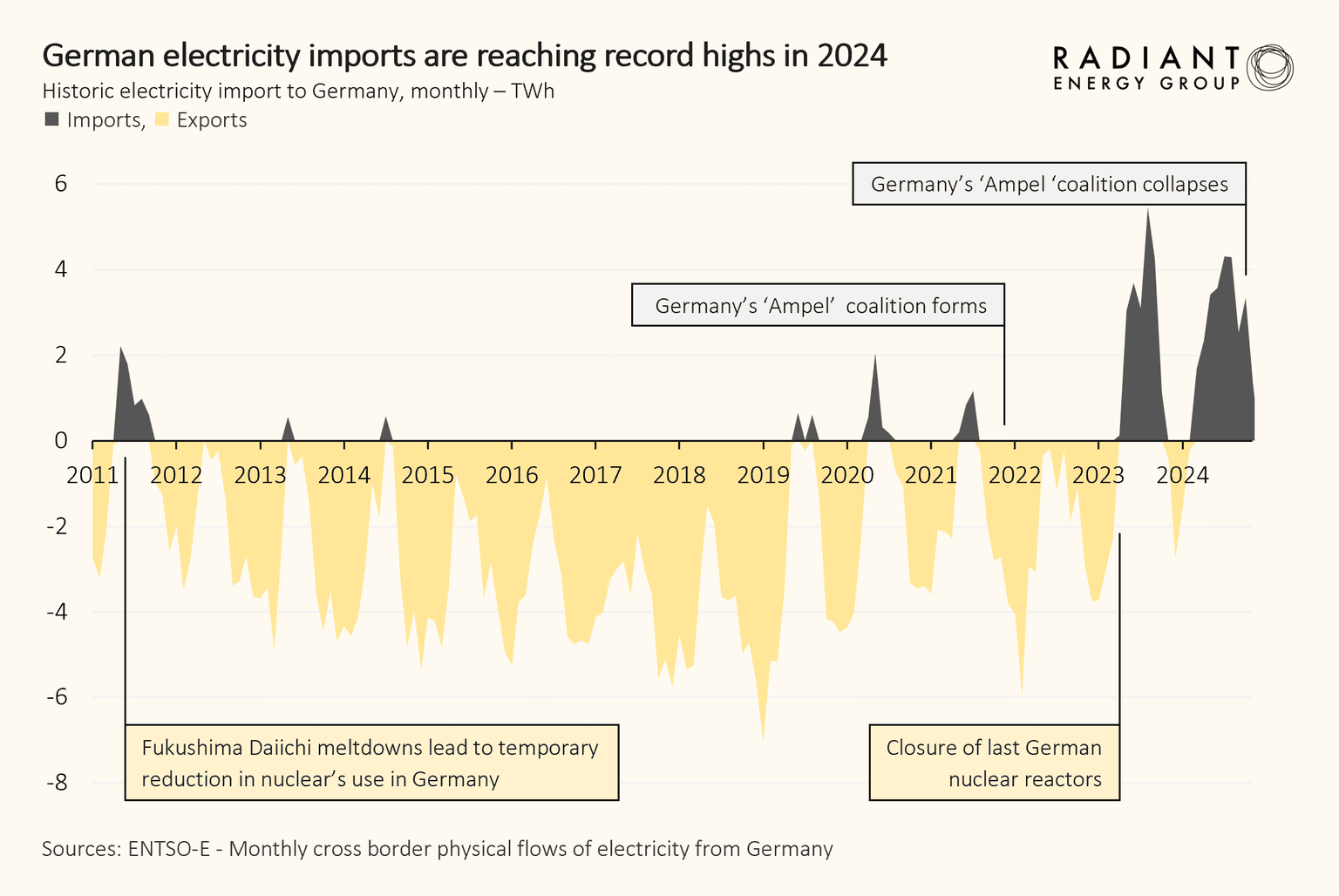
Trends in electricity imports to Germany (2011–2024). Since the nuclear power plants were shut down, imports have reached record levels. Source: Radiant Energy Group
According to a 2024 survey by the German Chamber of Commerce and Industry (DIHK), as many as 37% of companies are considering scaling back or even moving their production abroad because of high energy prices.
Technical and economic feasibility
A new analysis by Radiant Energy Group suggests that restarting Germany's shut-down nuclear power plants is not only technically feasible, but also highly beneficial economically. If Germany were to resume operations at its nine best-preserved reactors, they could generate more than 100 billion euros in profit over the next 20 years.
Some plants could start producing electricity within a short timeframe—for example, Brokdorf could be brought back online by the end of 2025, with an investment of less than 1 billion euros. Other plants, such as Emsland and Grohnde, could be ready to restart by 2028.
A similar initiative is underway in the US, where Microsoft recently signed a long-term power purchase agreement for electricity from the restarted Three Mile Island reactor at a price of between USD 110 and 115 per MWh. This example clearly demonstrates the growing appeal of nuclear power to energy-intensive sectors such as data centres, steel producers and companies using advanced computing technologies.
Benefits for regions, industry and the environment
Restarting Germany's nuclear power plants would also preserve approximately 5000 skilled jobs in regions that have been economically affected by their closure. The restart would also revitalise Germany's nuclear industry, which was once among the world's leading, and strengthen the country's energy self-sufficiency. In addition to the economic benefits, the reactors' return to service would make a significant contribution to reducing CO2 emissions not only in Germany, but across Europe.
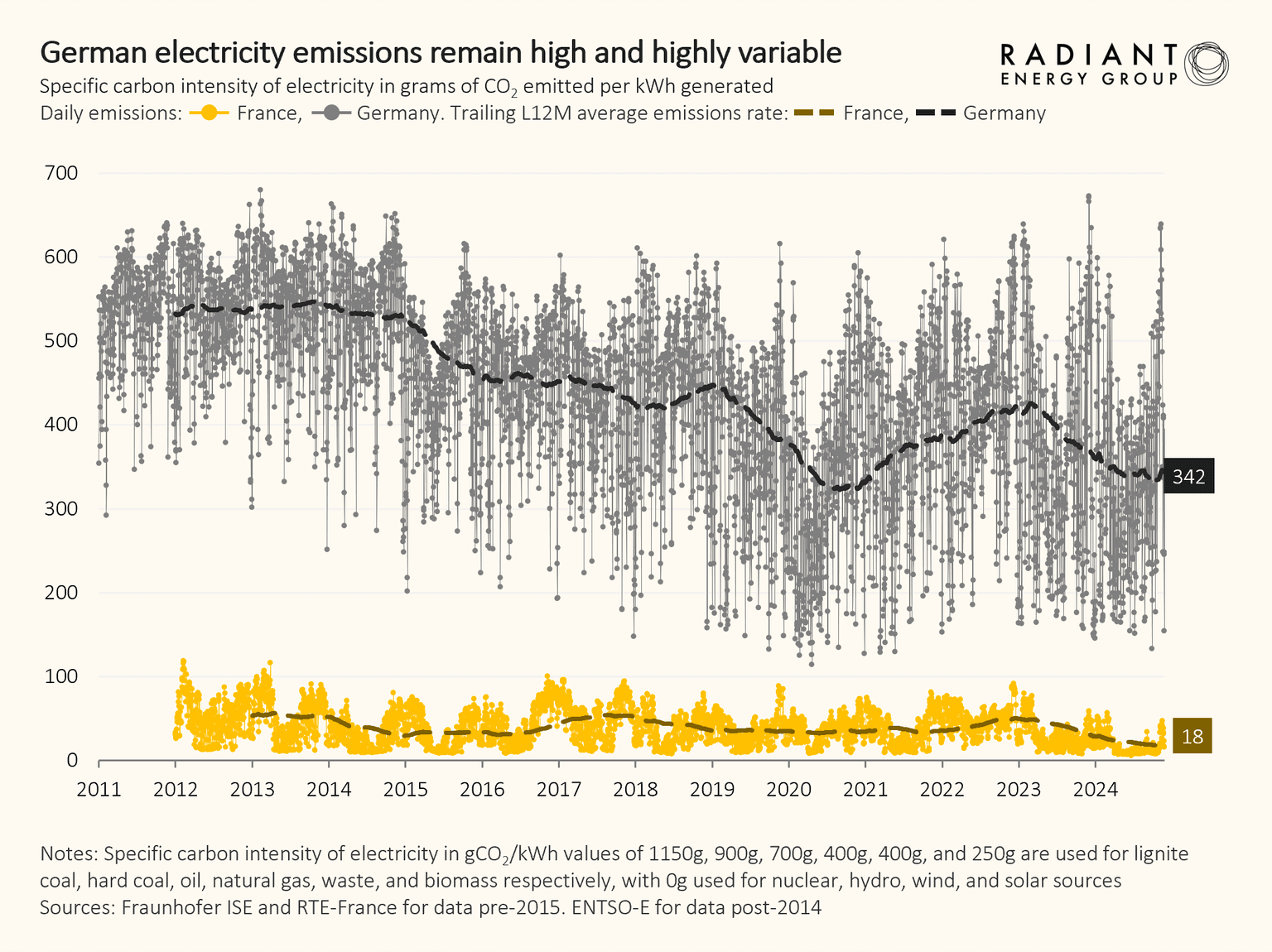
Comparison of CO₂ emissions from electricity generation in Germany and France (2011–2024). The chart shows that emissions from electricity generation in Germany have remained high and highly variable over the long term, while those in France have stayed consistently low. The difference is mainly due to France's dominance of nuclear power compared with Germany's reliance on fossil fuels. Source: Radiant Energy Group
According to experts, the main obstacles are not technical in nature, but relate primarily to political will and administrative measures. The decommissioning of the shut-down plants needs to be halted quickly, qualified staff must be brought back, and legislation amended—above all, Germany's Atomic Energy Act, which currently does not allow the commercial operation of nuclear power plants.
Growing public support for nuclear power
The shift in public opinion is confirmed by a recent Radiant Energy Group survey, according to which as many as 67% of Germans support the continued use of nuclear power. As many as 42% of respondents would even support the construction of new reactors. This shift in public opinion could be crucial to future political decisions that could quickly clear the way for a revival of nuclear energy.
Germany is at a crossroads—it can either make use of its existing energy capacity and quickly return to nuclear power, or choose to persist with a politically motivated phase-out that brings additional economic costs and long-term uncertainty for industry and consumers alike.
Translation disclaimer
This article is a machine translation of the Czech original and has not yet been fully reviewed. In case of any doubt, please refer to the Czech version.
Sdílejte článek prostřednictvím:
You might also like




16 October 2026, 10:16