South Korea shuts down another nuclear reactor after 40 years of operation and awaits licence extension

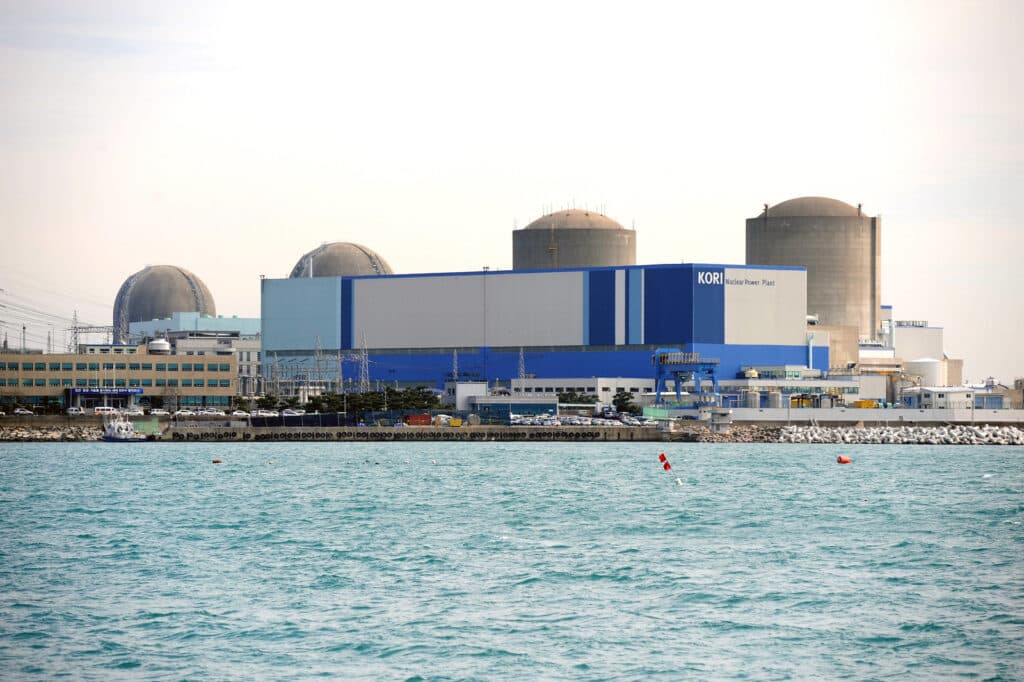
Technicians at South Korea’s Kori nuclear power plant have shut down Unit 4 after it reached the end of its 40-year operating life. The pressurised water reactor, with an installed capacity of 1 GW, is likely to return to operation. Along with two other units at Kori, it is awaiting a 10-year extension to its operating licence. During its operation, the unit generated more than 277 TWh of electricity.
Korea Hydro & Nuclear Power (KHNP), which operates South Korea’s Kori nuclear power plant, shut down Unit 4 after it completed the 40 years of operation covered by its licence. The pressurised water reactor, with a net installed capacity of 950 MW, began reducing output on the morning of 5 August and was fully shut down on the afternoon of 6 August. Construction of Kori 4 officially began in April 1980; it received an operating licence on 7 August 1985 and began commercial operation on 29 April 1986. KHNP says the unit supplied 277.3 TWh of electricity to the grid during its operation.
“Continued operation is a key strategy for achieving stable energy supplies and carbon neutrality. The safety of our citizens is our priority, and we will seek to continue operations through transparent and fair procedures. With thorough safety inspections, upgraded safety equipment and state-of-the-art facility improvements, Kori Unit 4 will become a safer and more efficient power plant,” said Kori plant director Lee Sang-wook.
Kori nuclear power plant’s first phase comprises four nuclear reactors. The first unit, commissioned in 1978, stopped generating electricity in 2017. The other three, commissioned in the 1980s, are now awaiting licence extensions. A further four pressurised water reactors are in operation as part of the second phase of the Kori plant (Shin-Kori). In addition, construction is under way on two more units, Shin-Kori 5 and 6.
Extending operating life and meeting demand
KHNP shut down Kori Unit 2 in April 2023 and Unit 3 in September 2024 for the same reason. The company has submitted applications to the nuclear regulator for 10-year extensions to their operating licences and is expected to receive a decision on Kori 2 this year. Kori Units 3 and 4 could receive official decisions on continued operation next year. The country now has units with a combined capacity of 2.5 GW that have exceeded their original operating lives. KHNP says they are capable of continued operation.
“Extending the operation of Kori Units 2, 3 and 4 is considered important not only for KHNP, but also for national energy policy and industry. In particular, we expect it to make a significant contribution to ensuring sustainable and stable energy infrastructure, helping Korea become a leading force in artificial intelligence,” KHNP said.
By 2030, the original 40-year operating lives of a total of ten South Korean nuclear units will expire. This year, that applies to Hanbit Unit 1, which also has a net installed capacity of 950 MW. Applications for extensions are still awaiting approval, largely due to the anti-nuclear policies of former president Moon Jae-in. These ten reactors (including the three already shut down) have a combined capacity of almost 8.5 GW, which could significantly help the country meet its emissions targets and cover growing demand from data centres.
Translation disclaimer
This article is a machine translation of the Czech original and has not yet been fully reviewed. In case of any doubt, please refer to the Czech version.




