Stop European nuclear power! Do Austrians stand a chance?
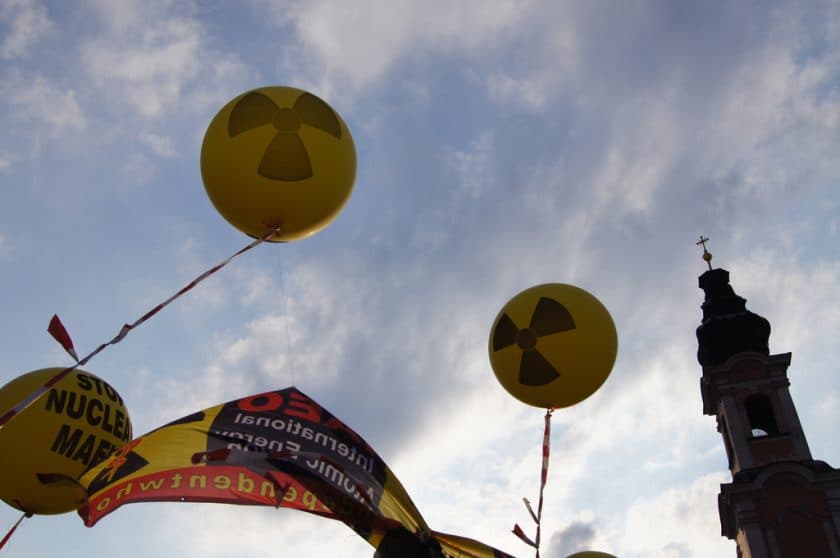
When Austrians began protesting against the completion of the first units at the Temelín nuclear power plant at the end of the last century, they apparently only succeeded in reinforcing the Czech Republic’s majority support for nuclear energy. Just under three years ago, Vienna “brought” the European Commission before the European Court of Justice in Luxembourg over its favourable opinion on the construction of the Hinkley Point C power plant in the UK. And many in Prague interpreted this as another de facto attack on the Czech Republic – if the court called the Hinkley Point project into question, it would also complicate the construction of new reactors at Dukovany or Temelín.
The truth is that Austrians are resolutely fighting nuclear power anywhere in Europe. They themselves have said “goodbye” to nuclear energy and, from this perspective, it is quite logical that they object to nuclear units anywhere else. The closer they are to Austria’s borders, the stronger Vienna’s opposition naturally becomes.
This has now been confirmed, as Austria has decided to sue the European Commission before the European court over another of its approvals – this time concerning the construction of additional units at Hungary’s Paks nuclear power plant. That is, a project to be implemented by Russian state corporation Rosatom.
A blow against Euratom
During negotiations on a new coalition between Austria’s People’s Party and the Freedom Party, it was also suggested that Vienna could seek some form of (at least) weakening of the 1957 Euratom Treaty. It could make use of the current situation, in which Brexit – the planned withdrawal of the United Kingdom from the EU – is said to open up room for other previously unthinkable steps.
An attack on Euratom has clear logic. This treaty is the very pillar of the European Commission decisions mentioned above. By adopting the treaty, all EU members (and thus members of Euratom) effectively committed themselves to supporting the development of nuclear power. This is also the main reason why Brussels allowed state aid for both Hinkley Point and Paks. It is no secret that without some form of state support, it is practically impossible to successfully deliver a nuclear unit construction project anywhere in the world.
However, this does not mean that their construction would not pay off for at least some countries – when they take into account the ratio between the cost and what they receive for it. Countries that do not share Austria’s position will continue to assume that nuclear power alone offers them the following “triple combination” – first, it is a stable baseload source; second, it reduces dependence on imported fossil fuels; and third, it does not threaten the atmosphere with greenhouse gases.
What Vienna can achieve
Do Austrians now stand a chance of succeeding? Can they play any significant role in halting the further development of nuclear power? Vienna can rely on the fact that it is being helped by the problems facing builders of European nuclear plants – namely cost overruns on new projects and an inability to complete them within reasonable timeframes. (This particularly concerns the French EPR units at Flamanville and Finland’s Olkiluoto.) Vienna is also helped by growing opposition to nuclear power in some other EU countries – especially Germany after the Fukushima accident.
But on the other hand, Austrians remain largely isolated in their radical position. Berlin has so far not opposed the construction of nuclear power plants abroad so radically; indeed, shortly before Fukushima, current Chancellor Angela Merkel still wanted to slow Germany’s own nuclear phase-out. The entry of the Greens into the German governing coalition might have changed the situation in Berlin, but that did not happen last year.
German caution
Germans will of course “throw obstacles in the way” of nuclear power in the EU; in this, they resemble the Austrians. But they will most likely be cautious about challenging Euratom – such steps could also call other earlier European commitments into question and thus undermine European integration. Whether or not we agree with this assertion, Berlin’s caution in this regard can certainly be expected.
Moreover, Germans, who have already faced criticism that their abrupt decision on a nuclear exit presented European allies with a fait accompli, are unlikely to enter into a hard confrontation with France, which – despite some expectations – is still far from abandoning nuclear power.
Nevertheless, it cannot be said that Austrians stand no chance in all of their activities. Luxembourg’s rulings on the Hinkley Point and Paks plants will certainly be highly significant for the construction of further nuclear units in Europe. However, talk of weakening Euratom can be seen more as Vienna floating trial balloons, which for now probably have no greater practical significance.
The battle over Hinkley is not over
In any case, before the European Court of Justice rules on the challenge to Hungarian state aid (also apparently using money borrowed from Russia) for the Paks nuclear power plant, a verdict should be delivered in the British Hinkley Point case. The question is how relevant this court ruling will be for the United Kingdom itself, which will soon leave the European Union one way or another.
It also depends on the agreement between London and Brussels – whether Brexit is “hard” or “soft”. A “soft” Brexit would mean that Britain remains linked to the EU through close ties. In such a case, London could undertake to respect European Court of Justice rulings in cases that Luxembourg began hearing before Britain’s departure from the Union.
On the other hand, it is difficult to imagine that any ruling from Luxembourg could halt the development of nuclear power in Britain over the long term as a non-EU country. From the Austrian perspective, that is certainly not the main issue. In an online discussion of an article by German Green politician Hans-Josef Fell (concerning Euratom), Heinz Stockinger of the Salzburg Platform Against Nuclear Risks expressed it this way at the time Austria filed its lawsuit.
The opponent is Brussels
Stockinger pointed out that the party to the dispute is the European Commission, not the United Kingdom. In his view, the outcome will be very important regardless of how Brexit and the construction of Hinkley Point turn out. The European Court of Justice ruling will show whether other EU governments will be able to continue building new nuclear reactors with state aid.
On the other hand, it is worth recalling that neither the British nor the Hungarians had it easy at all during the original approval of their projects in Brussels – that is, at the European Commission. In both cases, strong doubts about both projects initially came from the European capital, and for quite a long time. It can be assumed that Brussels’ “guardians of fair competition” took great care to provide thorough reasoning for their eventual positive verdict. They had to reckon with the possibility that they would have to defend it in Luxembourg.
Euratom is the pillar
And the European Commission naturally argued precisely on the basis of Euratom. Brussels stated that under the treaty it has an obligation to “facilitate investment” in nuclear power and to help develop resources that are “essential to the development of nuclear energy”.
Austrian and German Greens also point out in their materials that Euratom is indeed – from their perspective – the main obstacle to a “consistent nuclear phase-out in Europe”. In their view, many anti-nuclear activists did not realise this in the past.
Hans-Josef Fell had previously written about the possibility of using Brexit to weaken Euratom in the article mentioned above. He apparently understands that Euratom cannot effectively be abolished or revised directly – this would require the unanimous consent of all members. But Fell’s argument, which is identical to that of many Austrian opponents of nuclear power, grasps at a different “straw” – if the United Kingdom can leave the EU, why could Germany, Austria or other countries not leave Euratom and thus effectively “disable” it? The Euratom Treaty (unlike the EU’s Lisbon Treaty) does not contain a clause on a member state’s withdrawal, but that need not be an insurmountable obstacle…
Political reality
However, the aforementioned European anchoring, which Berlin seeks to respect to the greatest extent possible, may be an insurmountable obstacle. After all, the Euratom Treaty is one of the founding treaties of the European Communities, which later transformed into the European Union. Just as Austrians are too radical in their views by European standards, Hans-Josef Fell is too radical even by German standards.
For Austrians to have a greater chance in their fight against nuclear power, political attitudes would have to change substantially throughout the EU, especially in key states. As a whole, the European Union today is not particularly favourably inclined towards nuclear power, given the position of Germany and other countries, but neither is it inclined towards the more fundamental turn against nuclear power that Austrians would like to see.
The fact is that Britain’s departure from the EU will greatly weaken the pro-nuclear camp in the Union. To some extent, it has also long been weakened by France’s position, as it wants to reduce nuclear power’s share of electricity generation and significantly increase the share of renewables. But it is also from France that we now hear that nuclear power and renewable sources can complement each other much better than many had previously assumed. And it is French company EDF that has major plans for the construction of further nuclear units – albeit more in Britain and other countries (including the Czech Republic, after all) than in France itself.
The article’s author is a consultant and energy project specialist at HATcom.
Lead photo: Anti-nuclear protest in Austria. Source: https://www.flickr.com/photos/alfaltendorf/
Translation disclaimer
This article is a machine translation of the Czech original and has not yet been fully reviewed. In case of any doubt, please refer to the Czech version.