Swedish parliament paves the way for uranium mining to resume. The ban was only a few years old

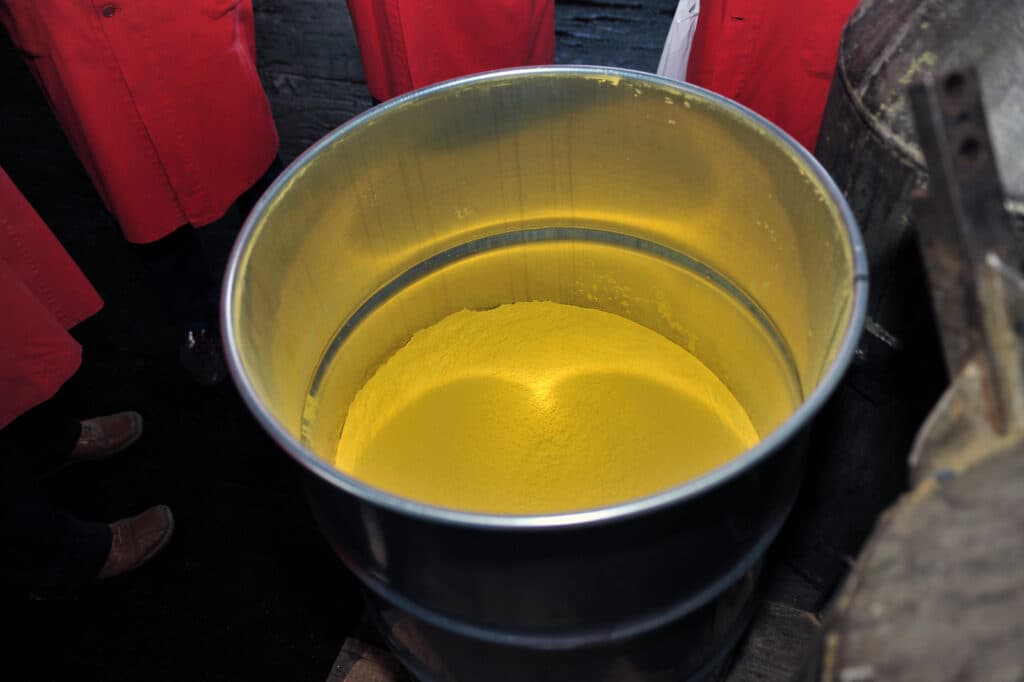
At the beginning of the month, lawmakers in Sweden voted in favor of potentially resuming uranium ore mining by approving the relevant legislation. The ban on uranium mining in Sweden had only come into force in 2018. In recent months, the current government has taken steps not only in uranium mining, but also in other areas of the nuclear industry. One example is the approval of the government’s proposal to provide state support to companies looking to invest in building new nuclear reactors.
Uranium ore mining, its processing and the subsequent production of nuclear fuel are all essential parts of supply chains in the nuclear power sector. Uranium mining in Europe has declined significantly in recent decades, as has the construction of nuclear reactors. Recent years have nevertheless shown that a number of European countries are reassessing their approach to nuclear power, and these changes are not limited to building new nuclear capacity.
Sweden is one example, with its government taking new steps across the nuclear sector. Although renewables—specifically hydro and wind—meet most of the country’s electricity generation needs, nuclear power still makes a substantial contribution, accounting for around 30% last year. Earlier this year, Sweden’s Minister for Energy and Industry said that new baseload sources, including nuclear power, should also help ensure Europe’s energy security.
Uranium mining gets the green light again
The Swedish government had also been discussing the possibility of resuming uranium mining in the country for some time. For example, last year the country’s Minister for Climate and the Environment said that “the ability to mine uranium is absolutely essential to addressing climate change, reducing emissions and cutting dependence on fossil fuels and energy sources.” At the beginning of November, however, lawmakers took concrete steps, voting in favor of the government’s proposal to repeal the 2018 ban on uranium mining.
"Parliament has voted in favor of the government’s proposal on uranium mining in Sweden,"World Nuclear News reports, quoting a statement from parliament that also says uranium will be classified as a concession mineral, meaning a mineral of particular value to society. "This decision also means that activities involving small quantities of uranium will not require a permit and will not be subject to a municipal veto. The veto means that municipalities can decide, on the basis of a local political decision, whether or not to permit such activities," the statement adds.
The decision by Swedish lawmakers was welcomed, for example, by Australian minerals company Aura Energy. The company says uranium will be regulated as a concession mineral under the Minerals Act from next year, making it part of the standard permitting process. This could increase the value of mining projects such as its Häggån project, which targets vanadium, uranium and other elements.
"This vote means that uranium now has the potential to become an important contributor to the Swedish economy and energy security. With 27% of Europe’s known uranium resources located beneath Sweden, the commercial potential is considerable," said Aura Energy Managing Director Phil Mitchell.
Another example is the Viken project, being developed by Canadian company District Metals Corp, which focuses on the exploration and mining of polymetallic deposits. Alongside substantial uranium ore reserves, it is also expected to contain resources of vanadium, molybdenum, nickel, copper, zinc and other important and critical raw materials.
The government is taking steps in other areas too
In addition to uranium mining, the current Swedish government is focusing on other areas of nuclear power. Like mining projects, new nuclear projects typically involve investment horizons spanning decades. The Swedish government has therefore begun exploring ways to provide investors with greater certainty and protection against possible policy changes in the future.
Translation disclaimer
This article is a machine translation of the Czech original and has not yet been fully reviewed. In case of any doubt, please refer to the Czech version.




