China holds the world's largest oil reserves, enough to cover two weeks of global consumption

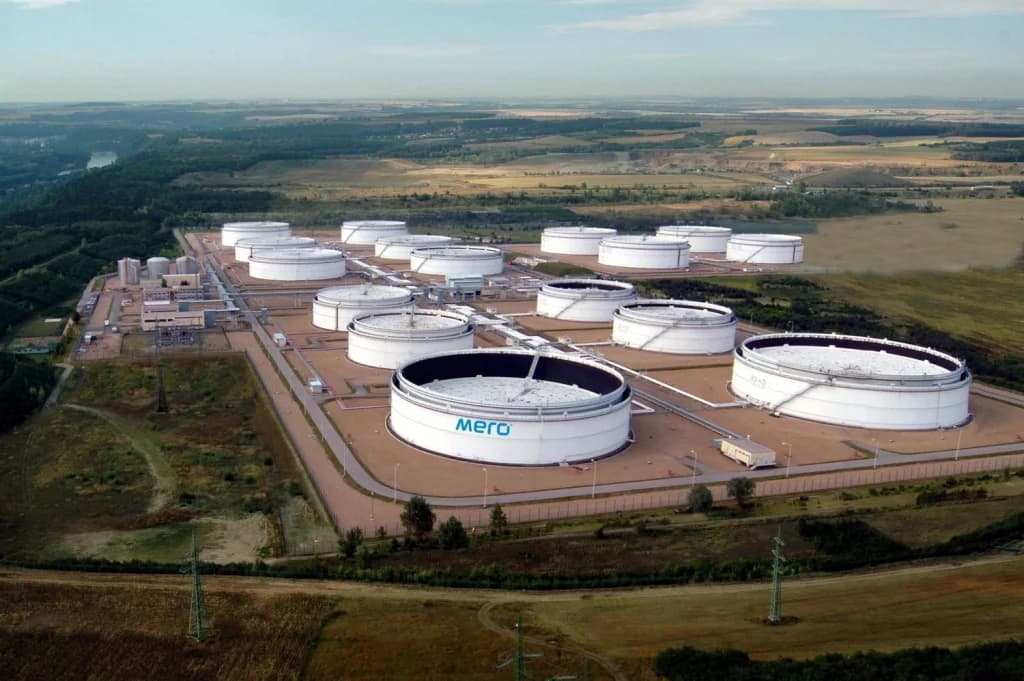
The ongoing conflict in the Persian Gulf and the resulting disruption to energy commodity supplies to global markets are once again highlighting the importance of strategic stocks of oil and petroleum products. According to estimates by a US government agency, China holds by far the largest strategic oil reserves, followed at a distance by the United States and then Japan. The size of China's reserves is primarily a reflection of its level of consumption; as in EU countries, they would last for around three months. Ongoing war in Iran has caused the largest-ever disruption to energy commodity supplies to global markets. The closure of the Strait of Hormuz has cut off around a fifth of the world's oil and liquefied natural gas (LNG) supplies. It is precisely for such situations that countries and companies around the world hold stocks of oil and petroleum products, which are intended to help bridge supply disruptions lasting up to several months. Governments began building these reserves in particular after the experience of the oil crises of the 1970s. According to estimates by the US government agency, the U.S. Energy Information Administration (EIA), China holds the largest strategic stocks by far, followed by the United States and Japan, then European countries in the Organisation for Economic Co-operation and Development (OECD). The EIA estimates are for December last year, before the war and before the decision by member countries of the International Energy Agency to release some of their oil stocks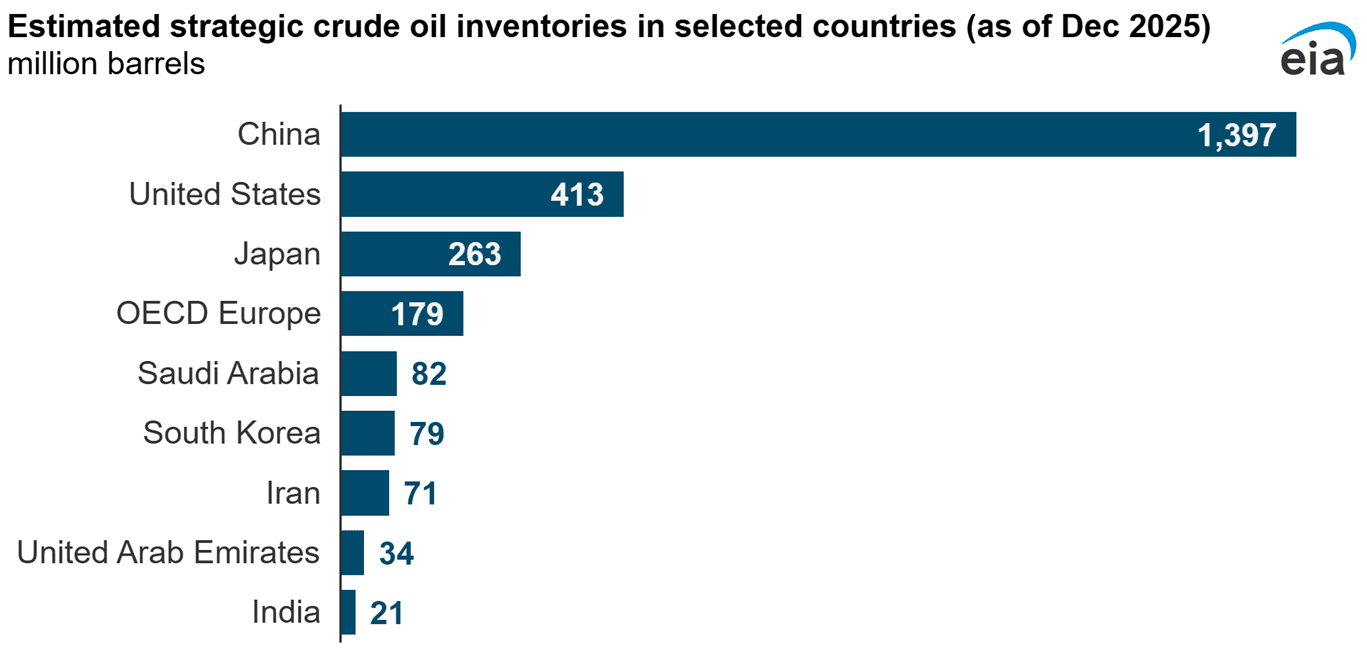
Stocks of up to three months' consumption
The size of oil reserves can vary considerably between countries and regions around the world. For example, in EU countries, EU rules require stocks sufficient to cover up to 90 days of imports or 61 days of domestic consumption, whichever is higher. Given the considerable reliance of many EU countries on imports, strategic stocks can therefore often cover up to three months of local demand. China clearly dominates in terms of total oil stocks worldwide. According to EIA estimates, it held nearly 1.4 billion barrels of oil and petroleum products at the end of last year. In this case, the EIA includes commercial stocks in the total, since state-owned companies hold a large share of the reserves. This volume would cover around three months of Chinese consumption and is equivalent to just under two weeks of global demand. The United States is next, by a considerable margin, with 413 million barrels of oil and petroleum products in its strategic reserve in December, as well as roughly the same volume in commercial stocks. However, the United States is the world's largest oil producer, so the pressure to maintain large strategic stocks is not as great as it is in countries dependent on imports. Japan holds the world's third-largest strategic oil reserves, totalling around 263 million barrels in December last year. South Korea is another country in the region with relatively substantial strategic reserves, at 79 million barrels. EU countries, including the Czech Republic, also maintain significant strategic oil reserves. EU rules govern the size of strategic stocks held by member states. Like many other EU countries, Czechia holds stocks equivalent to 90 days of imports, which, given its almost total reliance on imports, amounts to just under three months of domestic consumption.Translation disclaimer
This article is a machine translation of the Czech original and has not yet been fully reviewed. In case of any doubt, please refer to the Czech version.