10 September 2026, 15:21
Loading...
Dukovany vs. Darkov in Czechia
Beáta Packová
3 June 2020, 13:38
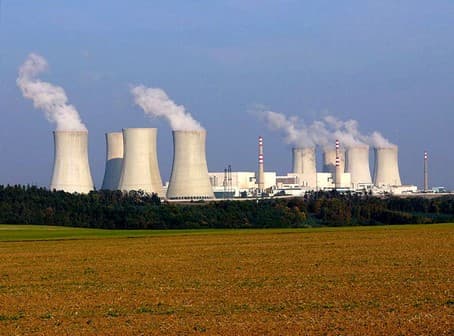
Two events in the energy sector have dominated—and continue to dominate—the coronavirus-induced shutdown of society. The first is the construction of a new reactor at the Dukovany Nuclear Power Plant, while the second is the number of infected miners at OKD. The new reactor represents Czechia's energy future, while Darkov represents its past.
Dukovany
The Czech political scene sees the future in nuclear power. It is one of the largest energy investments in recent times. This is why many government critics question the completion project, which suddenly began to move forward during recent months, when the media were reporting mainly on coronavirus-related events. The public will effectively learn about the construction only in its final version, which displeases not only journalists but also some ČEZ investors.
Critics object to the government's non-transparent negotiations, which have mysteriously advanced most during the current crisis. Others do not see a promising future in nuclear power and argue that we should focus on natural gas and increasingly cheaper renewable sources.
For nuclear power supporters, however, it represents the best mix of energy options, not only because of our geographical location but also from a sustainability perspective. The entire construction project will also help improve the economy, as many companies directly from Czechia will take part in it.
There is therefore no doubt that the new unit will be built. Under what circumstances and conditions remains a question. Various pieces of information continue to “leak” to the media about the selection of contractors, payment for the units, or even an increase in electricity prices, although these are merely speculations. The final decision will therefore come from the European Union, which must approve the proposal submitted by the Czech Republic.
The Dukovany Nuclear Power Plant therefore has a major future ahead of it. Whether it will be successful and feasible will become clear only in several decades.
Darkov
The government is heavily involved in nuclear energy, whereas it avoids intervening in the OKD mines. A paradoxical situation arose around two weeks ago, when restrictions were gradually being eased and businesses were reopening.
At OKD, however, the looser situation turned into an epidemic. The number of infected people continues to rise. Miners responded with complaints: they objected to the lack of public interest or were afraid to speak out. The government stood by idly, while OKD management assured everyone that it had the situation under control. The opposition criticised both the government's indifference and the company's management. This is quite a paradox, as both Dukovany employees and OKD miners worked at full capacity during the pandemic.
Nevertheless, Dukovany is now more important and strategic for the government. OKD's best years are behind it, and although politicians had repeatedly promised to extend mining, they now remained tactfully silent. After all, the end of coal has been declared for some time; it will not be as rapid as activists would like, but gradual.
Nevertheless, the Darkov mine falls under a state institution that should take care of it in the event of a crisis. This did not happen: according to an OKD statement, Darkov was closed, and it is now being watched to see how and whether the disease will spread further. There is no need to point out that the Moravian-Silesian Region is among the areas with the highest unemployment. The collapse of OKD would also deal a major blow to the region.
Political future
Both issues are crucial not only for the energy sector but also for the public. OKD is a company with a history rich in controversial events. Politicians, journalists and the public can learn from the mistakes of the privatisation era and try not to repeat them in the construction of Dukovany. Time will show whether they truly succeed.
Translation disclaimer
This article is a machine translation of the Czech original and has not yet been fully reviewed. In case of any doubt, please refer to the Czech version.
Sdílejte článek prostřednictvím:
You might also like
10 September 2026, 10:37
9 September 2026, 15:05
9 September 2026, 13:24