10 September 2026, 15:21
Loading...
God speed, Czech OKD!
Beáta Packová
3 March 2021, 13:47
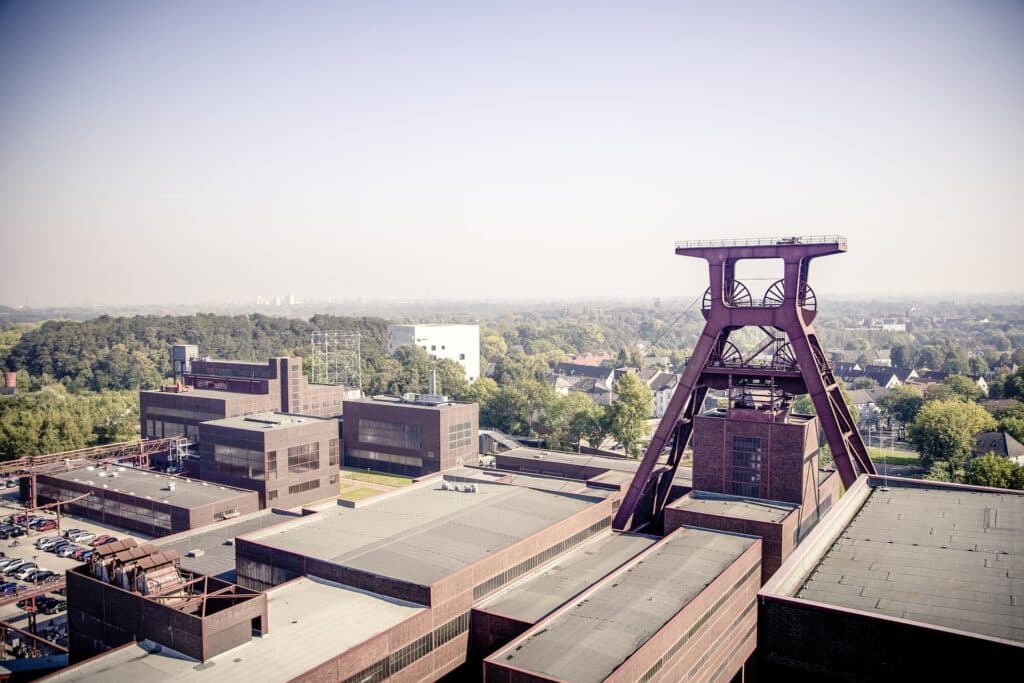
The company, which was brought down by Covid, poor sales and falling coal prices, is shutting down. OKD is gradually beginning its liquidation process and closed the two large ČSA and Darkov mines at the end of February. Although environmental activists now regard coal as a thing of the past, there were times when it was an important commodity. Let us look at OKD from a perspective other than political disputes.
History of the ČSA and Darkov mines
The ČSA mine – the Czechoslovak Army Mine – consisted of two operations: Jan Karel and Doubrava, whose history dates back to 1860. In 1995, the previously independent Doubrava mine joined it. The individual mining fields extend from Karviná to Dětmarovice and cover an area of up to 26 km. The mine extracted around 3 million tonnes a year.
The Darkov mine – its origins date back to 1852, when the Gabriela shaft began to be sunk. Construction itself did not begin until 1972, while mining started ten years later, in 1982. The Barbora mine, which closed in 2002, was also added to Darkov. In total, Darkov had three operations: Gabriela, Barbora and the 9 May mine. Together, the three produced around 4,000 tonnes of coal annually, employed roughly 3,800 people and covered an area of 25.9 km2.
Both ČSA and Darkov were unfortunately the epicentres of several major tragedies. Methane exploded at the Barbora mine in the 1990s, killing 30 miners. Major tremors occurred in Doubrava (ČSA), killing three miners and injuring several others. Last year, a Covid outbreak occurred at the Darkov mine.
OKD in a few figures
OKD has seen many successes, missteps and disasters. It is slowly but surely becoming a thing of the past, as reflected in several interesting figures.
Ostrava-Karviná Mines was created through the nationalisation of six mining companies (1946); the oldest of them was founded as early as 1836 (the Emperor Ferdinand Northern Railway). On 1 January 1950 its name was changed to Ostrava-Karviná Mines, the name by which it is still known today. One of the biggest tragedies occurred at the Dukla mine in 1961, when as many as 108 miners died. The 1970s were among the most successful years in terms of mining volumes, with up to 28.8 million tonnes extracted annually.
After the revolution, OKD became a joint-stock company, with the state as its sole shareholder. In the early 1990s, the company employed as many as 100,000 miners. Subsequently, partly due to the gradual closure of individual mines, workforce numbers began falling to 10,000. The record daily output was 27 thousand extracted tonnes of coal.
Between 1991 and 2001 mining volumes fell by as much as 37%. Nevertheless, 2008 saw OKD listed on the Prague and London stock exchanges under the NWR holding company. Eight years later, its gradual decline began, also due to falling coal prices. The fall continued in mining volumes, which declined by 67% between 2010 and 2019.
GOD SPEED, COAL!
The decline of hard coal in the Czech Republic is caused not only by its price, but also by the high cost of extraction. Many mines have been exhausted, and those that remain are located deep below the surface. Mining itself is therefore becoming unprofitable overall. Coal prices may rise slightly, but their best days are behind them. OKD had been gradually falling into losses for a long time and, unfortunately, was unable to offset them even with state assistance. Hard coal will also decline globally. Reserves are dwindling and prices are not attractive. Add the Covid pandemic and the economic crisis it caused, and both OKD and hard coal are heading towards their end. OKD's last mine cart may be brought out in 2022. It is already clear that we will soon say goodbye to hard coal mining in Czechia.
Translation disclaimer
This article is a machine translation of the Czech original and has not yet been fully reviewed. In case of any doubt, please refer to the Czech version.
Sdílejte článek prostřednictvím:
Topics:Opinion
You might also like
10 September 2026, 10:37
9 September 2026, 15:05
9 September 2026, 13:24