10 September 2026, 15:21
Loading...
Is coal Czechia's enemy?
Beáta Packová
18 February 2020, 08:45
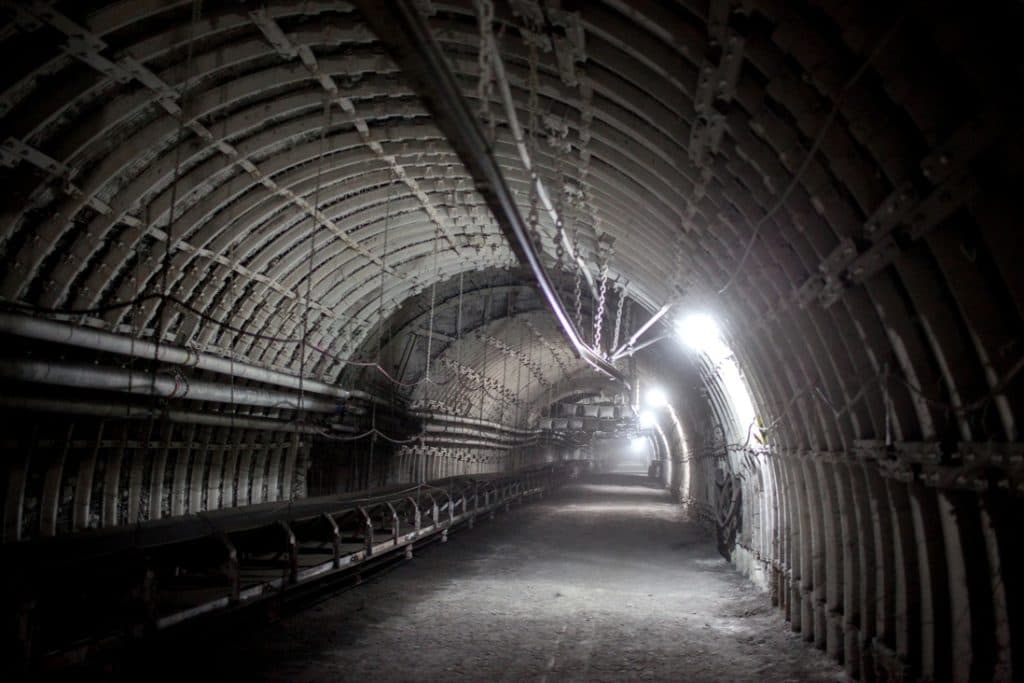
Recently, a debate has been raging on Czech Twitter about the benefits of coal as an energy source. Given the public's growing interest in climate change and the impact of different energy sources on our environment, hard coal appears to be an excellent public enemy and a good marketing tool for green politicians' campaigns. So what is the actual state of hard coal mining in the Czech Republic?
Economic versus environmental factors
If we look back into the past, coal mining laid the foundations for the functioning of capitalist society and so-called modern industrial production. Coal provided a very important impetus for the development of the most fundamental technologies, which over time evolved into the modern versions we know today. It is therefore quite logical that, in an effort to preserve our planet, we seek to modify and improve individual technologies, whether we are talking about the glassmaking, railway or food industries.
Hard coal mining has a long tradition in the Czech lands. Environmental activists are calling for an immediate end to coal mining and the closure of coal-fired power plants. However, there is one major BUT.
That is the economic aspect. Coal remains one of the most important commodities for the Czech economy, despite the price decline. It accounts for more than a 50% share in Czech industry. Hard coal is a commodity with diverse uses in the Czech environment, which depends on industrial production as it makes up an important part of gross domestic product. Mining also creates jobs, and coal is an important export commodity. Many mining companies are investing considerable resources in technologies that improve mining itself, in order to save themselves from environmentalists and defend its future. Nevertheless, it appears that the end of coal in the Czech lands has been approaching for some time.
The OKD case study
The term OKD has probably become etched in the memory of every Czech citizen thanks to the excessive number of cases and scandals. Let us set aside the various legal disputes and proceedings that have arisen around OKD and focus on its decline, which has been driven both by economic factors and by dwindling coal reserves.
OKD was, and still is, one of the most important employers in the Moravian-Silesian Region. At the height of its activity, the company employed around 120,000 people – but we are talking about the communist era, when mining was heavily promoted as an occupation that built the republic. After the 1990s revolution, the company employed around 35,000 people. However, Czech coal has been in decline since the 1990s. Many mines were closed and extraction was reduced. For environmentalists, this is good news that they often overlook.
Paradoxically, the government itself was responsible for the mine closures through its disadvantageous privatisation. The company's restructuring led to the decline of several mines and a major outflow of qualified workers. Since the 1990s, the number of active mines has fallen sharply; from 14, mining now takes place at only 4. Adding market speculation to this, the company's shares fell, driven by the declining price of coal on the global market.
Promises and the environment
The current Czech government is placing its economic bets more on environmentally unfriendly sources, while Prime Minister Babiš in particular sees his future more in nuclear power. Nevertheless, he likes to make promises. Following several poor decisions, the state took over OKD again, under unusual circumstances through the joint-stock company PRISKO a.s.
In 2018, Babiš (then finance minister) stated that OKD was prospering and would probably continue mining until 2030. Nevertheless, the company's future is uncertain, given the constantly falling market price. The depletion of coal reserves will gradually and irreversibly lead to the closure of all mines.
Ultimately, although this may not be a welcome finding for environmentalists, the use of hard coal is being reduced gradually. The end of coal cannot come overnight. The Czech economy is not ready for it. From an environmental perspective, coal is dying; its death simply will not come as soon as many would like.
Translation disclaimer
This article is a machine translation of the Czech original and has not yet been fully reviewed. In case of any doubt, please refer to the Czech version.
Sdílejte článek prostřednictvím:
You might also like
10 September 2026, 10:37
9 September 2026, 15:05
9 September 2026, 13:24