25 September 2026, 09:51
Loading...
Nuclear energy in 2023, Part 1: A nuclear renaissance begins in Czechia
Vladimír Wagner
14 January 2024, 09:14
A number of European countries are returning to the use of nuclear energy, and the need for its rapid development was also voiced at the COP28 talks. The first small modular reactor, which can be classified as a Generation IV reactor, entered commercial operation. The number of third-generation reactors and experience with their construction and operation are growing. More countries are planning to build new units.
A comparison of the energy sectors in France and Germany increasingly clearly shows that low-emission electricity generation cannot be achieved in more general geographical conditions that do not offer the same hydropower potential as Norway or geothermal potential as Iceland. France, as well as Sweden, Switzerland and now Slovakia, has extremely low emissions from electricity generation. Germany, by contrast, clearly shows that not even a country with the strongest economy can achieve a low-emission electricity mix based solely on renewable sources.
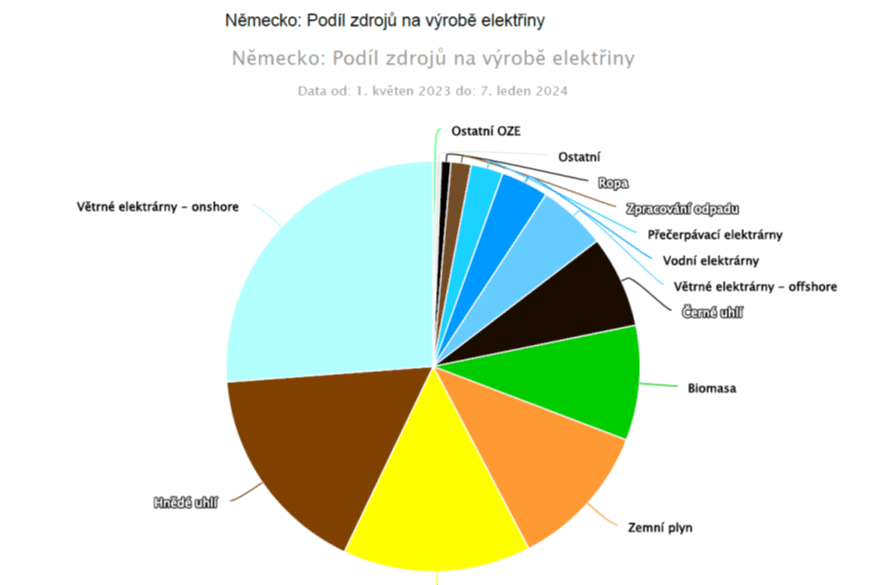
Germany still has to make very intensive use of fossil fuels (source: Energostat).
Let us look at the situation from the end of April, when Germany shut down its last nuclear plants, to the present. During that period, France generated just 4.8 % of its electricity from fossil fuels, while 67.3 % came from nuclear sources. The fossil generation was from gas, with only a minimum produced from coal. Germany generated 36.3 % of its electricity from fossil fuels, with coal accounting for more than two thirds of this. The Czech Republic generated 40.2 % of its electricity from fossil fuels. Following France’s example, Slovakia has embarked on a path towards a low-emission electricity mix based on a combination of nuclear and renewable sources. During the same period, it generated only 9.2 % from fossil fuels, of which just a quarter was coal-fired. Nuclear sources supplied 63.6 % of Slovakia’s electricity.
At the same time, it should be recalled that while France and Czechia remain significant net electricity exporters, Germany has become a net electricity importer since April 2023. Apart from November, when exports and imports in Germany were balanced, it was a significant net importer in every other month since May this year. Overall, almost 8 % of electricity consumption had to be covered by imports. Germany also exported electricity when the wind was blowing and the sun was shining, when a number of other countries also had significant renewable generation. It needed imports when a number of other countries were also facing a generation shortfall. In principle, Germany still has sufficient coal- and gas-fired capacity, so the reasons for imports were largely economic. However, if the plan to shut down coal-fired capacity is implemented, Germany’s dependence on imports will become very significant.
It is precisely the comparison of the outcomes of the French and German energy strategies, and above all Germany’s problems, that is leading a number of European countries to decide to extend the operation of existing nuclear units for as long as possible and to build new reactors, including large Generation III units and small modular reactors.
Let us first look at the overall statistics and then at the details of developments in nuclear energy worldwide last year.
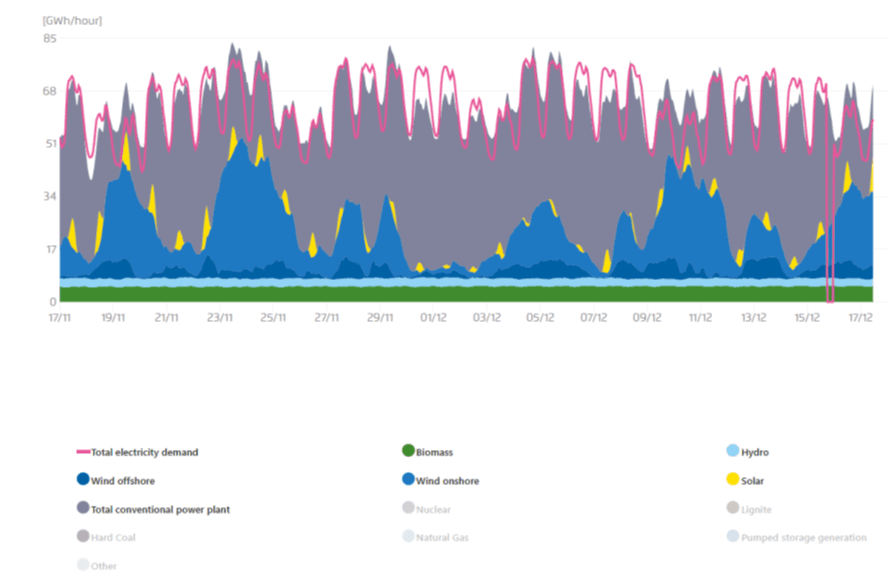
If there is no wind in winter, even Germany’s huge wind and solar capacity cannot ensure sufficient electricity. Fossil-fuel plants must, however, also run when it is windy in order to provide balancing and backup. (Source: Agorameter).
Statistical overview
This overview of nuclear energy developments over the past year is the fifteenth in the series and follows articles from previous years. The latest instalment covered 2022. At the end of 2022, there were 438 reactors with a capacity of 394 GWe, while in November 2023 there were 436 with a capacity of 392 GWe (data from the World Nuclear Association and the PRIS database). There are 62 units with a capacity of 70 GWe under construction. It is clear that roughly the same number of units continue to be shut down as are started up.
A total of five units were shut down during 2023. As noted in the previous overview, Germany’s remaining reactors were not shut down at the end of 2022. Operation of the country’s final three reactors—Neckarwestheim in Baden-Württemberg, Emsland in Lower Saxony and Isar in Bavaria—was ultimately extended until April 2023. This covered the critical winter period.
As stated in the previous overview, on 31 January 2023, the second unit of Belgium’s Tihange nuclear power plant, with a capacity of 1008 MWe, was shut down after forty years of operation. In Taiwan, the BWR-6 boiling water reactor, which was the second unit at the Kuosheng 2 plant, was shut down in March 2023 after forty years of operation.
Four units newly entered operation in 2023. We already wrote in the previous overview about the start of commissioning of the third VVER440 unit at Slovakia’s Mochovce plant. In Belarus, a VVER1200 reactor was started up as the second unit of the Ostrovets plant. An AP1000 reactor was commissioned and entered commercial operation as Vogtle 3. In China, a Hualong One reactor was started up in early January as Fangchenggang 3, but it was already included in the previous overview.
Construction began on six reactors, more than were started up. Construction of a Russian VVER1200 reactor began as El Dabaa 3 in Egypt. In China, nuclear islands began to be concreted for four CAP1000 reactors—Sanmen 4, Haiyang 4, Liangjiang 1 and Xudabao 1—and one Hualong One reactor, Lufeng 6. China now has 22 units under construction.
Nuclear electricity generation reached 2 545 TWh in 2022. Compared with 2021, when 2 653 TWh was generated, it fell by 108 TWh. This confirmed the impact of lost generation at nuclear power plants in France and Ukraine. Generation in 2023 should rise again thanks to the resolution of problems in the French nuclear industry and the start-up of new large units.
Czech nuclear energy marked by the Dukovany tender
For Czech nuclear energy, the key event was the submission of bids in the tender to build a new unit at Dukovany at the end of October. Three suppliers are participating in the tender: South Korean company KHNP with its APR1000 reactor, Westinghouse with its AP1000 reactor, and French company EDF with its EPR1200 reactor. Let us look at their bids in greater detail and mention some of their potential strengths.
KHNP is offering the APR1000 reactor. It was developed using experience with OPR1000 units of similar capacity, incorporating the safety features and other characteristics of the Generation III+ APR1400 reactor. At the beginning of 2023, the APR1000 reactor received certification from EUR (European Utility Requirements), an organisation that assesses whether nuclear energy technologies meet European requirements. The application for reactor certification was submitted in 2019, with the assessment beginning in 2021. European certification is a very important step for the reactor’s entry into the European market. One advantage is that the turbine could be manufactured in Czechia. Thanks also to South Korean company Doosan in Plzeň, the share of local content could be very high. KHNP has also demonstrated at the Barakah plant that it can build nuclear power capacity very efficiently even in a country starting from scratch, and can construct units abroad.
EDF is offering the EPR1200 reactor. This is a smaller version of the EPR reactor. Framatome will prepare engineering studies for the nuclear island, the steam supply system, and the instrumentation and control system. Partner company GE Steam Power will provide an engineering study for the turbine hall and conventional island, where the French Arabelle 1000 turbine will be used. Bouygues Travaux Public will coordinate construction work on the new nuclear project. The company has identified 300 potential Czech subcontractors and has already discussed involvement with 90 of them. A major advantage of this bid is that it comes from the only European supplier.
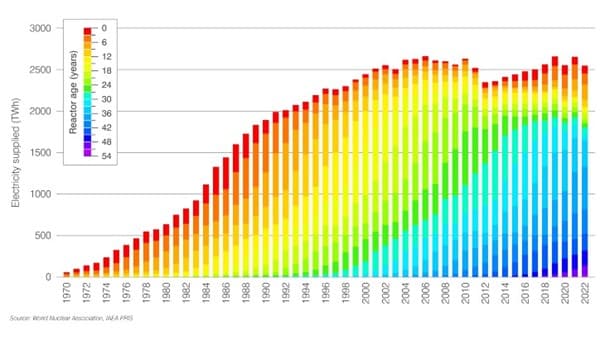
The current trend in global nuclear energy is the ageing of nuclear power plant fleets (WNA).
Westinghouse is offering the AP1000 reactor. Its partner, which will manage construction, is Bechtel. One advantage of this bid is that Westinghouse also supplied the instrumentation and control system for the VVER1000 units at Temelín and has established a chain of local suppliers in this area. It is also certain to supply units to Poland and Bulgaria. As in the previous cases, a number of Czech subcontractors should participate in the project. A major advantage of this bid is that it is the only reactor with the exact offered version already in operation.
As can be seen, all three bidders are able to offer a high-quality and safe Generation III reactor. They have demonstrated that they can build nuclear reactors at home and abroad. Each has its strengths and weaker points. Based on the current situation, it appears that all three reactor types on offer will be built in the European Union. The nuclear industry is highly interconnected, and Czech suppliers can participate extensively in each project. ČEZ will now carefully assess the submitted documentation and will thus be able to make an informed, rational choice. The final decision will then rest with the state. In my view, the reactor ultimately selected is not so important. What is extremely important, however, is that the tender is conducted transparently and clearly, and that its outcome is broadly accepted.
An important event for the project was also the issuance at the end of October by the Czech Ministry of Industry and Trade of a zoning decision for the siting of up to two new nuclear units at the planned new Dukovany site. Let us hope that construction will finally genuinely begin in the coming years. It is also worth mentioning that simultaneous construction of four units—two at Dukovany and two at Temelín—is being considered increasingly often. Such a solution, however, requires a financing model and approval at European Union level.
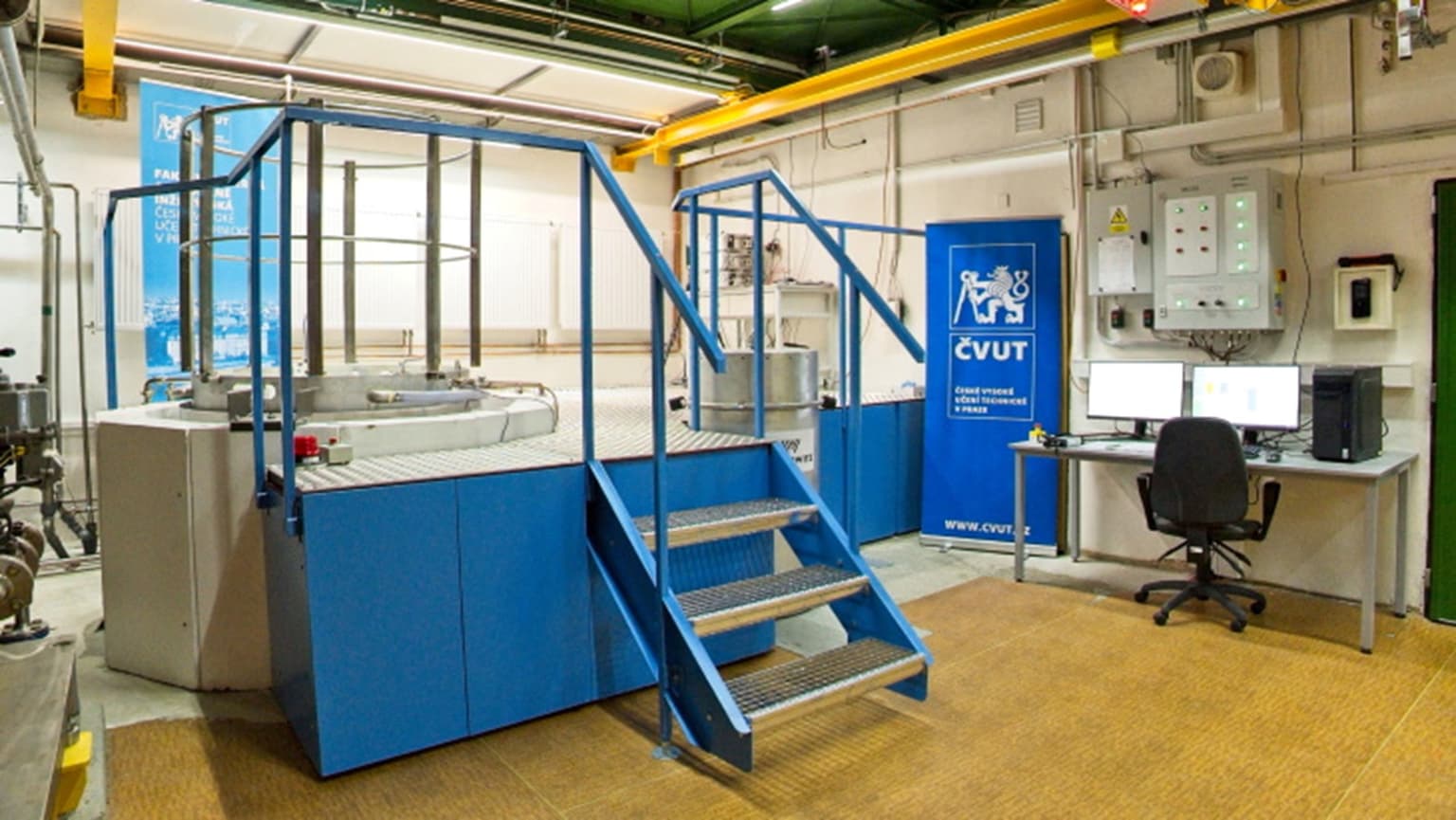
The VR-1 reactor at the Department of Reactors of the Czech Technical University’s Faculty of Nuclear Sciences and Physical Engineering (source: CTU).
Restoring expertise in the field and training new specialists, who will be needed in large numbers, is also crucial for the renaissance of Czech nuclear energy. A significant event took place in this regard last year. In summer 2023, a second training research reactor entered operation in Prague. The Faculty of Nuclear Sciences and Physical Engineering at the Czech Technical University has operated the VR-1 research reactor, named Vrabec, since the 1990s. Since 2014, it has been preparing for the construction of a second research reactor in the same hall, which provides sufficient space for both. A siting permit was obtained in 2020, followed by a permit from the Czech State Office for Nuclear Safety (SÚJB) to build the reactor in March 2022. The VR-2 reactor is a subcritical assembly that operates solely with an external neutron source. Once the neutron source is moved away from the active zone, the fission chain reaction stops. It is therefore a simpler and easily controllable type of facility. Like the VR-1 reactor Vrabec, it is a zero-power pool-type reactor, both moderated and cooled by water. The reactor vessel is cylindrical, with a diameter of 1,3 m and a height of 1,7 m. The fuel assemblies are in the form of rods and use uranium enriched to 10 %. Two openings connect to two aluminium channels. One allows a DD neutron source to be inserted to control the reactor, while the other accommodates various experimental equipment. Like the VR-1 Vrabec reactor, the new reactor is primarily intended to train new nuclear engineers. Students will also carry out their thesis work on it. It should be noted that students at the Czech Technical University’s Faculty of Nuclear Sciences and Physical Engineering also have access to the Golem fusion tokamak. All the facilities are involved in international cooperation and specialist training. Training nuclear specialists is crucial for the forthcoming nuclear renaissance, which is now beginning in Europe as well.
A lecture for future engineers at Brno University of Technology on the present and future:
Translation disclaimer
This article is a machine translation of the Czech original and has not yet been fully reviewed. In case of any doubt, please refer to the Czech version.
Sdílejte článek prostřednictvím:
You might also like
24 September 2026, 11:23
24 September 2026, 10:30
24 September 2026, 06:56