25 September 2026, 09:51
Loading...
Nuclear energy renaissance in the Czech Republic is already under way
Vladimír Wagner
9 May 2026, 08:31
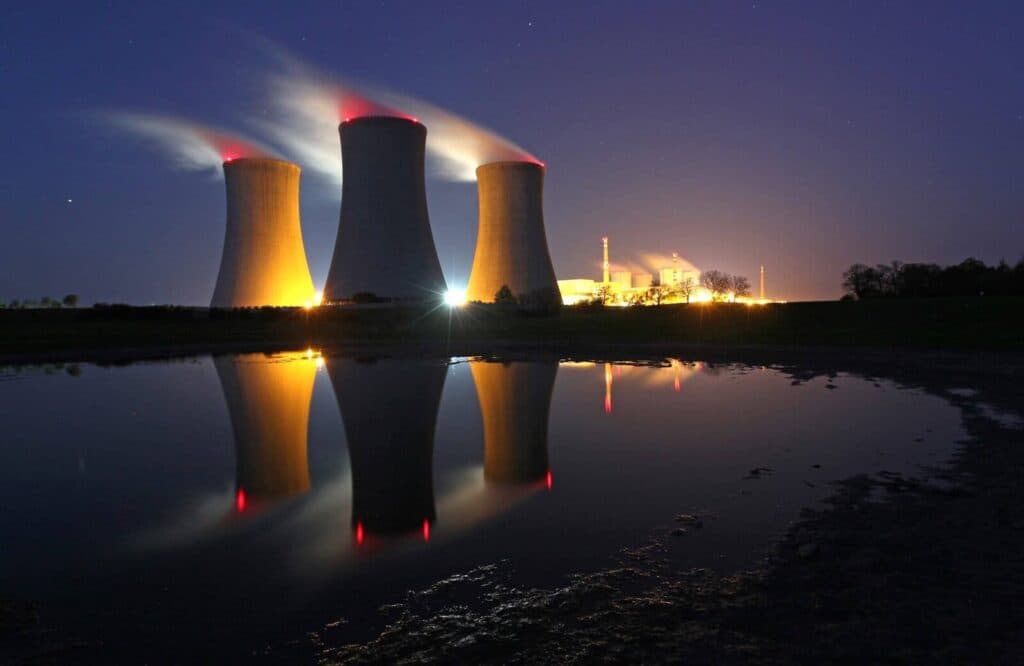
In recent years, key decisions have been made in Czechia that have set the direction for the development of Czech nuclear power. We have very high-quality operating reactors at the Temelín and Dukovany nuclear power plants, which we want to operate safely for as long as possible. The construction of new large Generation III reactors is being prepared, and we have selected which small modular reactor design we will use. On this very solid foundation, nuclear power is now embarking on massive development.
On Wednesday 29 April, I attended a colloquium held at the Faculty of Nuclear Sciences and Physical Engineering of the Czech Technical University (FJFI ČVUT). Bohdan Zronek, director of the Temelín nuclear power plant, and his younger colleague Jiří Puchner from the Dukovany plant gave a joint lecture entitled Nuclear Renaissance: the Comeback of the Century. The presentation was aimed at students, as Czech nuclear power will need a large number of new specialists in the coming years. Both men began as operators at nuclear units after university and gradually worked through other positions, with Bohdan Zronek also reaching the highest levels of management. In my view, their talk, based on the practical experience of two specialists from different generations, was truly inspiring, and I believe it appealed to many students. It inspired me to attempt to summarise the state of the Czech nuclear renaissance, which is already clearly well under way.
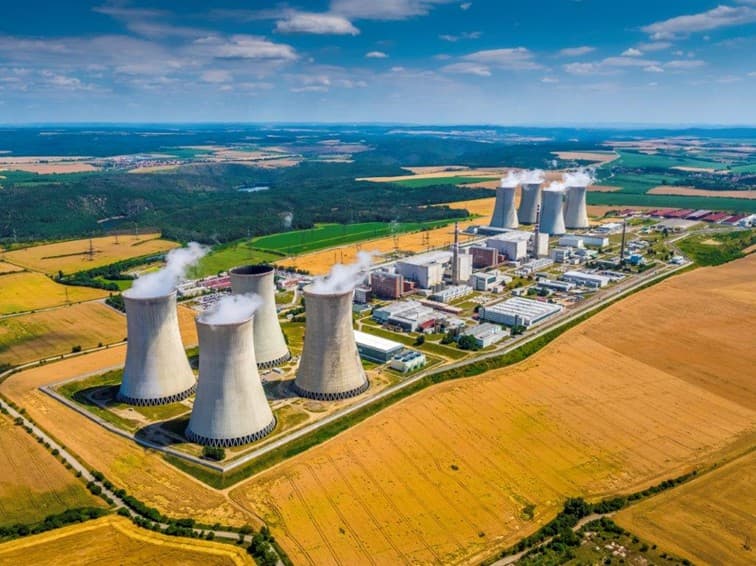
Dukovany power plant (ČEZ)
Extending the safe operation of existing nuclear units
Czechia currently has two nuclear power plants. The older Dukovany plant has four VVER440 units, while the newer Temelín plant has two VVER1000 units. Their output is a pillar of the stability and reliability of our electricity production. Last year, Temelín achieved a record level of nuclear electricity generation, with net output of 16.42 TWh. Nuclear power plant generation overall was also high, with net output reaching 30.31 TWh. This did not surpass the 2022 record of 31.02 TWh of net electricity production, but it fits within the stable results recorded since 2012, when output has exceeded 30 TWh. The exception was 2015 to 2017, when problems with welds had to be addressed. We will return to this event later. Total electricity generation in 2025 was 71.4 TWh, with nuclear power plants supplying 42.5 %. Net exports were 7.56 TWh, meaning nuclear units covered 47.5 % of domestic electricity consumption.
These excellent results were achieved by moving to new fuel cycles, optimising outages and upgrading units, which made it possible to increase their output. The original capacity of the Dukovany reactors was gradually increased by 72 MWe, from 440 MWe to 512 MWe. A phased upgrade programme has been developed for the Temelín units that could eventually increase their output by more than 40 MWe, from 1086 MWe to 1129 MWe.
In any case, continuous attention to ensuring the safe and high-quality operation of nuclear units is crucial. Not only the recent anniversary of the Chernobyl accident reminds us that safety must be the overriding priority. Efforts to cut costs and achieve the lowest possible expenses at all costs can ultimately lead to major losses. The history of weld inspections demonstrates this clearly. In an effort to save money, some maintenance services were outsourced to external contractors. At the same time, the main criterion in selecting them was the lowest price. In some cases, this approach had very negative consequences for the quality of work performed.
The most dramatic consequences emerged in routine weld inspections at the plants. In September 2015, it was discovered that external company Tediko, which carried out weld inspections for ČEZ and Škoda JS, had manipulated their X-ray images to reduce costs. It assigned identical images to different welds and did not repeat failed images that were blurred or illegible. Each weld should properly have had a unique, high-quality image.
The worst situation was at Dukovany, where other inspection methods were often not used. Because thousands of welds had to be X-rayed and verified, as many as three units at the plant were shut down simultaneously at the peak in autumn 2015. Far fewer welds were affected by the incident at Temelín, and ultrasonic inspection data were also available in parallel. Total damages, mainly from electricity not generated, were estimated to have exceeded two billion crowns.
Safety was not directly endangered, but this was a critical failure of control mechanisms. This event led ČEZ to change its approach. In the area of inspections, it stopped relying on external suppliers and created its own teams, specifically within its subsidiary ÚJV a.s. in Řež.
The company adopted the same approach to the maintenance and upgrading of equipment needed for long-term safe operation. Where the necessary work is supplied by external firms, plant staff work with them intensively, seeking personnel stability and the necessary ongoing training to ensure the required top quality of work. Such an approach has had a positive effect on the quality of work performed and the operation of equipment, as well as reducing the number of repairs required. It is the best way to maintain the safe operation of reactors for as long as possible.
For a long time, I have advocated efforts to operate the Dukovany nuclear power plant for more than sixty years. I was therefore very pleased by the current statements from government representatives and ČEZ management that they will aim for its safe operation for up to eighty years. And I dare say that František Hezoučký is pleased too, if he is looking down on us. This would mean that we could use its capacity until the 2060s. It does not necessarily mean that all units will actually operate for eighty years, but there is a high probability that they will operate for more than seventy years and that the full potential for safe and efficient operation will be used in each of them.
An enormous advantage for these efforts is the fact that the dominant share of technologies at both Dukovany and Temelín was manufactured by Czech companies. Here, the quality of our predecessors’ work deserves great recognition. Plant staff have also acquired all the necessary knowledge in maintaining them. In addition, in recent years all drawings and information have been transferred into electronic form, and digital twins of individual components and technological systems have been created. Errors in documentation and discrepancies between it and reality have gradually been eliminated. Before every inspection, repair or upgrade, preparations can first be made in a virtual environment. This reduces the demands and increases the efficiency and quality of the actual work. Modern technology is being used intensively in the form of drones operating both outside and inside the plant. The use of robot dogs is now also being prepared, mainly for inspections in areas with demanding radiation or thermal conditions.
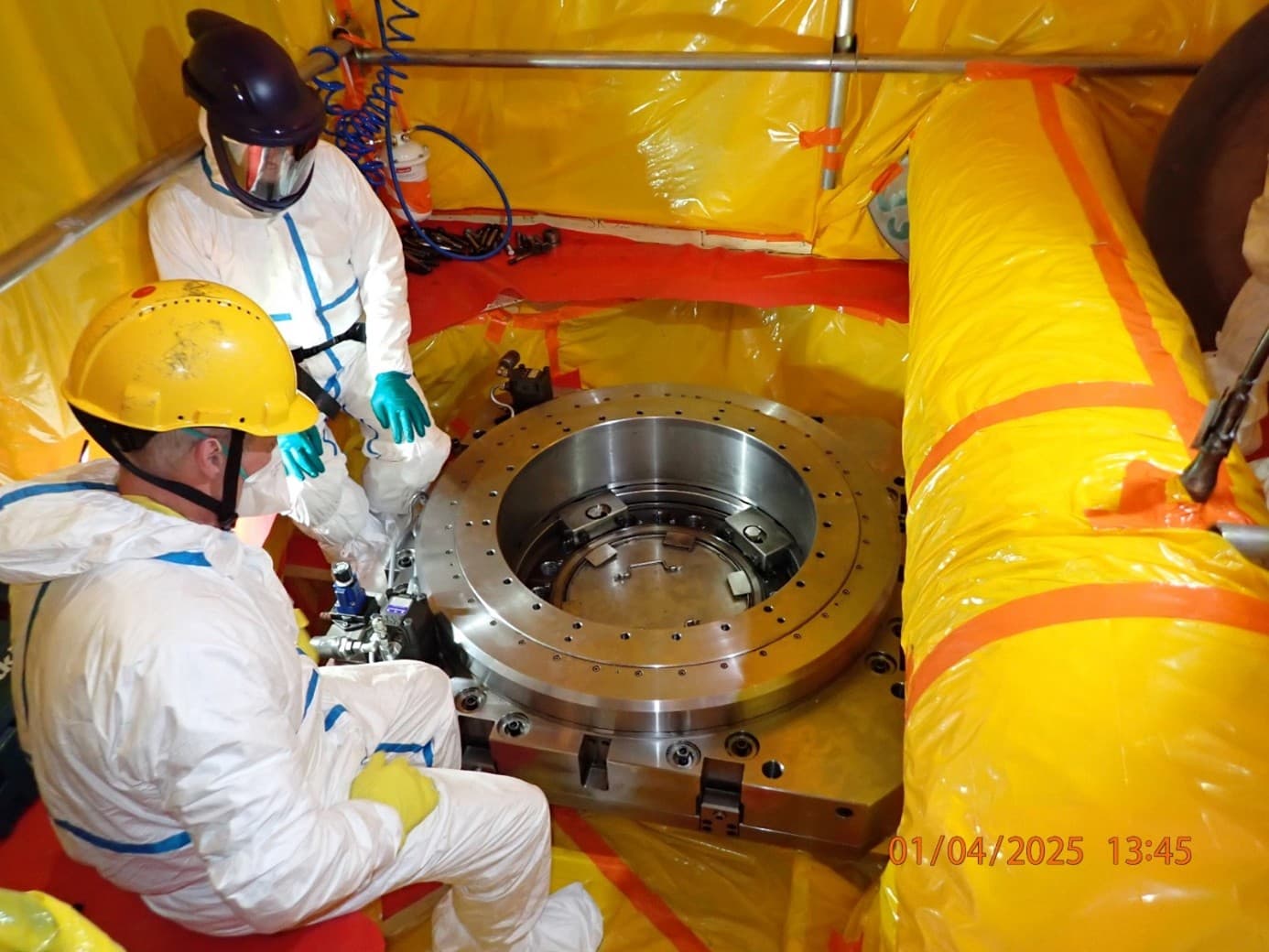
Use of new methods in automatic welding during steam generator repairs at Dukovany (ČEZ)
Following Russia’s invasion of Ukraine, switching to Western fuel suppliers became a key necessity. This was relatively straightforward in the case of Temelín. Fuel assemblies for VVER1000 reactors can be supplied by Westinghouse and Framatome. A new tender for a Temelín fuel supplier was under way at the start of the Russian invasion, with the two Western companies mentioned above participating alongside Rosatom (TVEL). Rosatom was excluded from the tender, and Temelín will soon switch to Westinghouse fuel, the first fuel assemblies of which were recently delivered to the plant site.
The situation is more difficult for VVER440 reactors. So far, only Westinghouse manufactures fuel assemblies for these reactors. Its fuel is already being tested at Finland’s Loviisa plant. This fuel should also be used at Dukovany once the current contract with Rosatom expires. The first samples are already at the plant site. Framatome is still developing fuel of this type, which should be available in 2028.
The objective of long-term safe reactor operation will require continuous efforts in reactor care, which are already under way. There are three critical areas that could lead to a unit being shut down. The first is the end of the reactor vessel’s service life. This is such a demanding component that its replacement cannot be economically justified. The condition of the vessel is carefully monitored, including with surveillance specimens. Vessels manufactured by Czech companies are of very high quality. In addition, appropriate repositioning of fuel assemblies in the core has reduced neutron fluxes at the inner vessel walls. Neutrons cause defects in the vessel material and, when a neutron decays in the material, a proton — hydrogen — is deposited there. This causes material embrittlement. The quality of the vessel material can partly be restored through thermal annealing. Czech companies have already carried out such a procedure for Finland’s Loviisa nuclear power plant. The quality of vessels at our nuclear reactors could support the aforementioned eighty years of operation.
The second critical component is the steam generators. They can be replaced, and such replacements have been carried out at several nuclear units worldwide, but they are economically viable only in some cases. These are cases where the reactor can operate for a sufficiently long period after replacement. The main problem is damage to or blockage of heat-exchange tubes, of which a steam generator contains thousands. They are threatened by corrosion, continuous vibration and deposits. Some tubes serve as a reserve, while damaged ones are plugged. If the reserve is sufficient, there is no need to replace the steam generator. Tube damage is prevented by constant attention to water purity, adding the right additives, checking tube walls, and mechanical and chemical cleaning. At Dukovany, a highly responsible approach in this area has succeeded in keeping the number of tube plugs low.
The third demanding area is cabling. Its service life is also limited, and its replacement can be economically very challenging. The quality and service life of cables at Dukovany proved better than expected. Nevertheless, their gradual replacement is under way during outages. Successfully carrying out this work is one of the important steps towards the desired long-term operation. Another benefit of this operation is the more precise identification of the cables’ specific location and routing for their digital description. Here too, no obstacle to achieving the stated objective is apparent.
The use of a nuclear power plant’s heat for heating can also contribute to operating efficiency. Significant progress has been made in this area. For the third winter season already, heat from Temelín has been supplied to České Budějovice. Work is also progressing very intensively on a hot-water pipeline project from Dukovany to Brno. Based on the experience gained, this use of nuclear heat is likely to expand in the future.
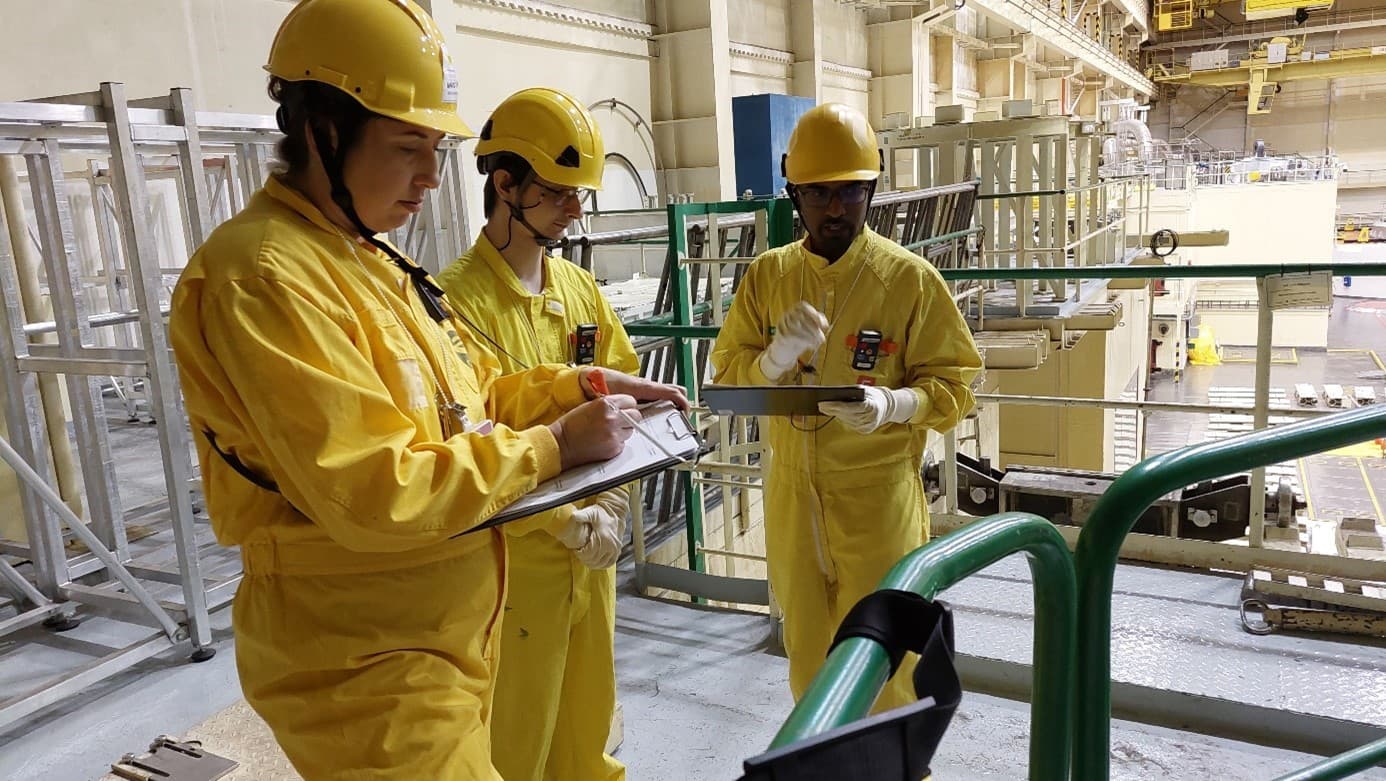
International cooperation is important. IAEA inspector training at Dukovany power plant (ČEZ)
Construction of new large Generation III units
Work to prepare the site and project for two new nuclear units at Dukovany is in full swing. Two Korean KHNP units will be built there. The company has completed the conceptual design for both units, making it possible to begin work on permitting processes. More than one hundred Czech companies have registered as potential suppliers, and dozens of specific partnerships have already been concluded.
Intensive work is also taking place directly at the site. A geological survey involving as many as 300 boreholes has been completed. At the same time, administrative facilities for hundreds of specialists and accommodation capacity for thousands of workers are being built. Work is also under way on the detailed design and preparations for component manufacturing.
Infrastructure projects necessary for the new Dukovany plant are also being developed, including roads, bridge reinforcement, bypasses and other essential works. Facilities for future plant workers must also be strengthened. Following the decision on long-term operation of the existing Dukovany plant, sufficient cooling capacity needs to be secured and the site’s capabilities taken into account for the new units. The transmission connection from the plant also needs to be reinforced.
Intensive efforts are also being devoted to securing the skilled workforce needed for the construction and operation of the new units. Both ČEZ employees and their KHNP colleagues are giving lectures at relevant faculties of Czech universities. For example, Professor Ki-Sig Kang will give a lecture at the FJFI ČVUT in Prague on Wednesday 6 May on the keys to successful construction of new nuclear units.
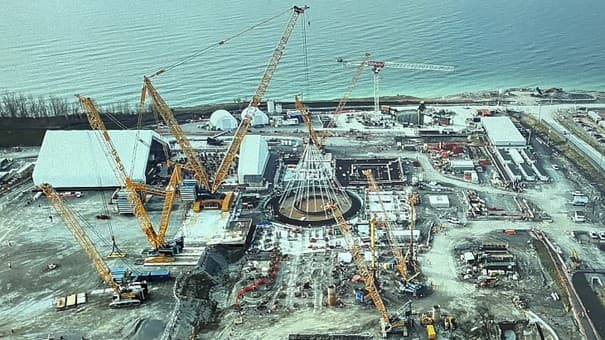
Installation of the BWRX-300 reactor foundation slab at Canada’s Darlington power plant (source: OPG).
Small modular reactors in Czechia
The key decision in this area was the selection of a small modular reactor (SMR) that ČEZ will use to replace its large coal-fired power plants. ČEZ selected the Rolls-Royce pressurised-water SMR. The other highly promising candidate in the tender was GE-Hitachi’s BWRX-300 boiling-water reactor. There were several selection criteria. ČEZ needs replacement capacity for its coal assets as soon as possible, and therefore selected a reactor that would be available at the earliest possible date. In this regard, the BWRX-300 is better placed. This was already the case at the time of the tender, and the first reactor of this type is now under construction at Canada’s Darlington power plant. Four such reactors are to be built there in stages. A 953-tonne foundation slab was recently installed for the first of them.
At the same time, ČEZ wanted to be involved not only in operating reactors but also in their development and production. The company has development and engineering capacity in the form of ÚJV a.s. in Řež, as well as industrial companies such as Škoda JS. However, GE-Hitachi was not open to such cooperation. Rolls-Royce was also at the forefront of SMR development and was moreover willing to accept ČEZ’s involvement in the Rolls-Royce SMR consortium. Crucially in this case, the United Kingdom subsequently selected Rolls-Royce as the main SMR supplier for deployment in the country. ČEZ then became a 20 % shareholder in Rolls-Royce SMR.
The Wylfa power plant site on Anglesey in Wales has now been selected for construction of the first prototype. Work is therefore under way on the specific Wylfa project and its contractual arrangements. Three SMRs are to be built there. In March 2026, the Rolls-Royce SMR design received approval from the UK Environment Agency. In April, Rolls-Royce and the state organisation Great British Energy – Nuclear (GBE-N) signed a contract enabling work to begin at Wylfa and orders to be placed for critical long-lead components. Work at the site was therefore started this year, along with work to finalise the design for the specific location. The first unit should be commissioned in the mid-2030s.
ČEZ wants to build the first prototype of this unit in parallel with the UK project. It should be located at Temelín. Its preparation is therefore at a similar stage. On 24 April 2026, ČEZ and Rolls-Royce SMR signed an agreement on preparatory work. Work can now begin on documentation for the permitting process, preparing a site-specific design and preparatory work at the site to secure a construction permit and complete the EIA process. Temelín should have one reactor serving as a test and training unit. The fact that it is already a nuclear site will be utilised.
Further units should be built as a priority at sites of former coal-fired power plants. The most promising is the Tušimice power plant. The project there is at the survey and legislative preparation stage. The coal site must first be transformed into a nuclear site. In May 2025, ČEZ submitted its project notification for EIA screening to the Czech Ministry of the Environment. Seismic, geological and hydrological surveys are currently under way at the site. The plan is to move continuously into construction of three Rolls-Royce units after the coal units are shut down in 2030. Construction itself should begin in 2034, with the units commissioned around the turn of the 2030s and 2040s.
Further Rolls-Royce SMRs could be built at Dětmarovice. The situation there is more complicated, not only because of the geology of a site with deep mining. Dětmarovice is close to the Polish border, and comments from the neighbouring country will also have to be respected in approving construction of a nuclear facility. It could help that Poland also wants to build SMRs relatively nearby. These should be BWR-300 reactors. This would make it possible to share experience and provide mutual support. In both cases, as well as in any further projects, SMRs should provide not only electricity generation but also heat supplies to the respective areas.
The Rolls-Royce and BWRX-300 reactors are, by their capacity, more medium-sized than genuinely small reactors. Czechia has not yet selected a preferred truly small reactor purely for district-heating purposes, suitable for integration into central heating systems. These would be SMRs with thermal output of up to 100 MWt. Their designs exist, but they are not yet commercially available. That is still ahead of us.
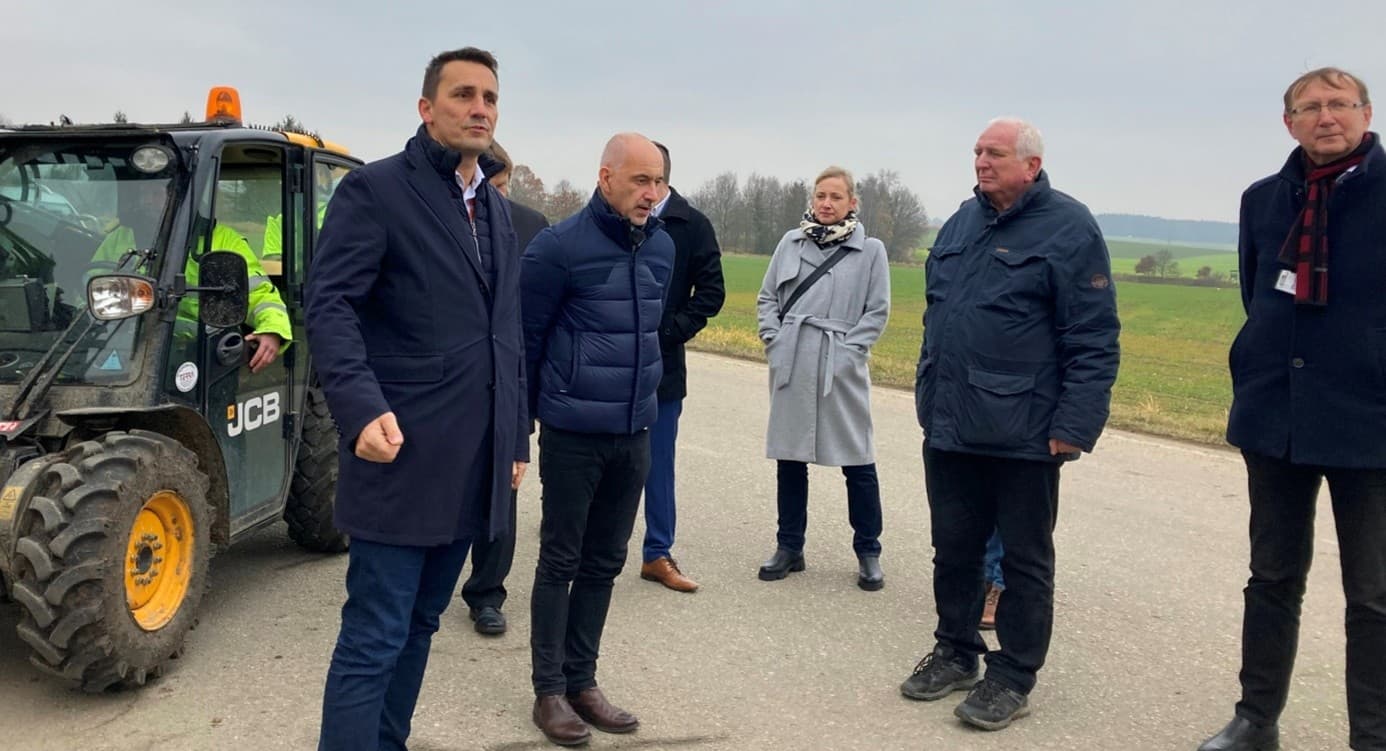
Geological survey under way at the site of the future SMR at Temelín (ČEZ)
Nuclear taxonomy and the question of a final repository
The EU’s approach in this area, expressed in the relevant taxonomy, is also very important for the development of Czech nuclear power. Its current wording has been strongly influenced by pressure from green anti-nuclear activists, who had considerable influence over its creation. For example, they secured a condition that, in order to use financing support for new nuclear units, states must demonstrate their ability to complete construction of a permanent geological repository by 2050.
This requirement is inconsistent with sustainability requirements in the spirit of the taxonomy. The taxonomy assumes an emphasis on recycling nuclear fuel and thereby reducing the volume of nuclear waste per unit of energy produced. Even with an open fuel cycle, there is no need for a final repository for several more decades. This was why no such repository was envisaged in Czechia before 2065, and there was no urgency in its preparation or site selection. If recycling were used, disposal of waste in a final repository would be postponed even further, perhaps until the end of the century.
Anti-nuclear activists hoped that imposing the need to rapidly construct a final repository, combined with public opposition to its construction, would make building nuclear facilities impossible or at least dramatically worsen their financing conditions. Their approach to the repository and taxonomy is subordinated solely to the goal of preventing any use of nuclear power plants. In Czechia, Edvard Sequens is an example of such efforts, focusing specifically on negotiations surrounding the repository.
In Czechia, approval of the taxonomy led to a dramatic acceleration and intensification of work to prepare the repository. Four sites have now been selected: Janoch near the Temelín plant, Horka near Třebíč, Hrádek in the Jihlava region and Březový potok in the Horažďovice region. One primary site and one backup site should be selected from these, with the current deadline set for 2028. Geological and hydrological surveys are currently under way.
An example of an operating final repository is already available in the form of Finland’s Onkalo facility, while another is being built at Forsmark in Sweden. These are entirely sufficient to demonstrate that we can close the fuel cycle. In reality, no further repositories would need to be built for many decades. And if spent-fuel recycling were used intensively, the need for them would be pushed even further into the future. Moreover, the EU would most likely need only several repositories, rather than one being built in every country.
The question is whether unnecessary construction of a number of final repositories can still be prevented. This would require the EU taxonomy to be changed as soon as possible, removing purely ideological and irrational elements imposed under pressure from green anti-nuclear activists. That would be difficult to achieve without those green activist organisations acknowledging their errors and joining efforts towards a rational and genuinely environmental approach to nuclear energy and the taxonomy concerning it. It would also be rational and environmental to allow mutual assistance between states in the disposal of nuclear waste.
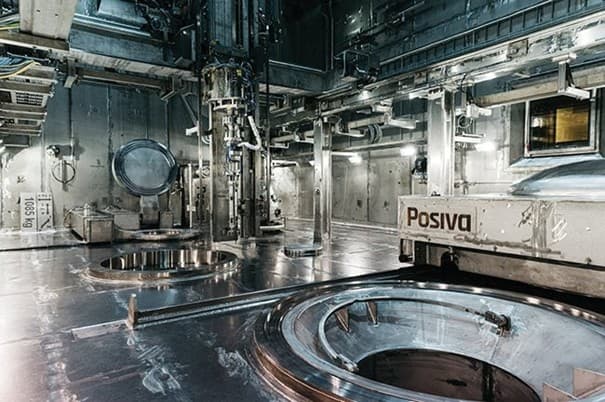
Finland’s Onkalo final repository is already being commissioned (source: Posiva)
Conclusion
The above overview shows that a nuclear energy renaissance is already under way in Czechia. A decision has been made to make an intensive effort to operate existing nuclear units safely for as long as possible. Dukovany could operate for eighty years, until the middle of the 2060s. Temelín could probably operate for more than eighty years, almost until the end of the century.
Preparations for construction of new Generation III units have begun: two at Dukovany and, with high probability, another two at Temelín. Construction of several SMRs is also being prepared. In both cases, the involvement of Czech industry in these projects is crucial. These are advanced, state-of-the-art technologies whose production delivers very high added value. Czechia could participate very intensively in the course of Europe’s nuclear renaissance. Alongside the automotive industry, it could become one of the pillars of our economy. Europe’s changing approach to nuclear power can also be seen in the annual reviews of the state of nuclear energy; the latest, from the beginning of this year, is available (here, here and here).
However, securing the necessary large number of highly educated specialists is crucial. This means not only nuclear specialists; there is an even greater need for energy engineers, electrical engineers, mechanical engineers, civil engineers, IT specialists and others. They need to be available sufficiently early. This is why pupils and students need to be shown how promising a future these fields offer.
In 2022, I gave a lecture on recycling, final repositories and the impact of the EU taxonomy on this issue.
Translation disclaimer
This article is a machine translation of the Czech original and has not yet been fully reviewed. In case of any doubt, please refer to the Czech version.
Sdílejte článek prostřednictvím:
Topics:Opinion
You might also like
24 September 2026, 11:23
24 September 2026, 10:30
24 September 2026, 06:56