
25 September 2026, 09:51
Loading...
ČEZ Distribuce unveils CZK 23bn grid investment plan through 2035

Jakub Malý
17 March 2026, 08:20
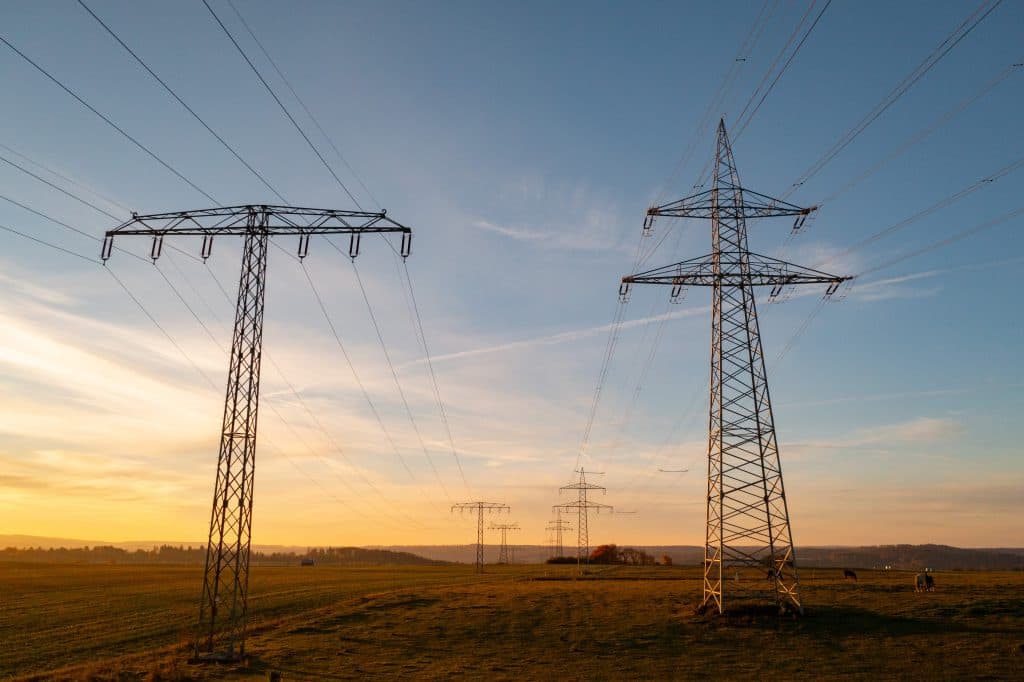
ČEZ Distribuce has published a draft ten-year development plan for its regional distribution system for 2026–2035. The document systematically outlines planned investments in power lines, transformer substations and grid modernisation, intended to respond to growing demand for connections for new generation sources, particularly photovoltaics, as well as rising electricity consumption associated with electric vehicles and heat pumps. Total investment in the main grid projects is set to exceed CZK 22.9 billion in the first five-year period.
ČEZ Distribuce operates the largest regional distribution system in the Czech Republic. Its infrastructure covers approximately 66% of the country’s area and supplies electricity to more than 3.8 million metering points. The total length of lines in the network exceeds 170,000 km, of which approximately 10,000 km are extra-high-voltage lines (110 kV).
The distribution system is used to connect consumers and smaller generation sources. By the end of 2025, more than 155,000 generating facilities were registered in the network, the overwhelming majority of which were renewable energy sources, particularly photovoltaic power plants.
Expected load is also crucial from a grid-planning perspective. The distribution company expects the system’s peak load to rise to approximately 6.2–6.48 GW by 2035, representing a gradual increase from current levels.
The development plan includes dozens of specific projects to build and upgrade 110 kV lines, which form the backbone of the regional distribution infrastructure. Comments on the plan can be submitted until 6 April 2026.
Major planned projects include:
- doubling of the Drmoul–Tachov line (2027–2028),
- a new Nový Bydžov–Staré Místo line (2027–2028),
- a new Horní Heřmanice–Králíky line (2027–2029),
- interconnection of the Česká Lípa–Varnsdorf line (2027–2030),
- a new Moravský Beroun–Šternberk line (2027–2030).
A significant share of investment will go towards expanding substations and transformer substations, which provide transformation between different voltage levels. New or expanded nodes include:
- a new transformer substation in Cheb (Dvory),
- a new transformer substation in Úžín near Ústí nad Labem,
- new transformer substations in Dobřichovice, Kosmonosy and Klecany in the Central Bohemian Region,
- new substations in Komořany and Tachlovice,
Capacity constraints in some regions
Data on spare transformer capacity at individual nodes are relevant for connecting new generation sources or large consumers. Information on available capacity for individual sources can be found on the ČEZ website.
For example, several transformer substations in the Central Bohemian Region no longer have any spare capacity – specifically Český Brod, Kutná Hora, Nymburk, Slaný, Strančice, Třeboradice and Vrané. The situation is similar in other regions – for example, the Náchod, Nový Bydžov, Pardubice North and Ústí nad Orlicí nodes in East Bohemia have zero capacity, while capacity constraints in the Moravian-Silesian region occur, for example, in Dolní Benešov, Kojetín and Studénka.
According to the plan, connection restrictions are concentrated most heavily in the northern part of the Central Bohemian Region, where the situation is not expected to improve until reinforcement projects are completed between 2028 and 2032. Further billions will go towards technology projects, such as the rollout of smart metering and the digitalisation of distribution substations.
The plan also addresses the use of flexibility, meaning managed changes in electricity consumption or supply according to the grid’s current needs. Potential providers include customers able to shift their consumption, generation sources or energy storage facilities, such as batteries, heat pumps or managed electric-vehicle charging.
ČEZ Distribuce also states that a certain form of demand response already exists through two-tariff rates at the low-voltage level. However, flexibility is not yet used in the distribution network as a standard tool for managing congestion, and its need is therefore not quantified in the plan. Moreover, the document is based on the existing tariff framework and does not account for a possible change in the tariff structure.
Translation disclaimer
This article is a machine translation of the Czech original and has not yet been fully reviewed. In case of any doubt, please refer to the Czech version.
Sdílejte článek prostřednictvím:
You might also like

24 September 2026, 11:23

24 September 2026, 10:30
24 September 2026, 06:56