Czechia has no replacement for its ageing coal-fired power plants and is racing against time. The state wanted to put new capacity out to tender this year, but has postponed the auction until early next year. The aim is to enable the construction of large gas-fired power plants. Combined heat and power units and diesel generators running on synthetic diesel will also take part in the competition.
When an analysis was published last December warning that Czechia could face electricity shortages in the coming years, it sparked anxiety, emotional reactions and talk of an energy catastrophe. But for the country, it was positive news.
Based on the results of this analysis, Czechia could go to the European Commission and argue that it needed to subsidise capacity capable of operating flexibly—that is, switching on and off as needed. At last, it had figures showing that although the country had been a net electricity exporter in recent years, it would become an importer in just a few years as coal-fired power plants were shut down. And since neighbouring countries also face a risk of electricity shortages, Czechia should start doing something about it.
The European Commission approved the support in record time, and the selection of capacity for the so-called capacity mechanism is now under way. But the process has not been without problems. Projects were originally due to apply for a preliminary assessment by 20 September. By the end of October, it was supposed to be clear which capacity the state would support. That will not happen.
A week ago, Czech transmission system operator ČEPS announced that, at the request of the Ministry of Industry and Trade, the preliminary assessment period would be extended by two months. “The main reason was the need to add technical specifications for testing and outages under the contract, which has to be done through a measure of general application. At the same time, the president has now signed the Building Act, which includes more detailed legislation on capacity mechanisms and also affects the contract,” says René Neděla, the ministry’s director general for energy.
Two-month delay means a year’s slippage
“We are currently preparing an amendment to the measure of general application. We will then consult on it and revise the timetable. I expect the auction itself to take place around the turn of January and February next year,” says René Neděla.
According to information obtained by Ekonews, one problem is that some major projects the state would like to see in the auction have not managed to secure the necessary bank guarantee. In a public letter to ČEPS, the Ministry of Industry itself also cites the aim of attracting more participants to the auction as one reason for the delay.
The letter also mentions complications in supply chains. Capacity mechanisms auction support for electricity delivery in four, five and six years’ time. The main auction is the one for delivery in six years. Put simply, if a project wins the auction now, it must be ready in six years. The state will then pay it for 15 years for capacity—that is, for being ready to supply electricity to the grid when shortages occur.
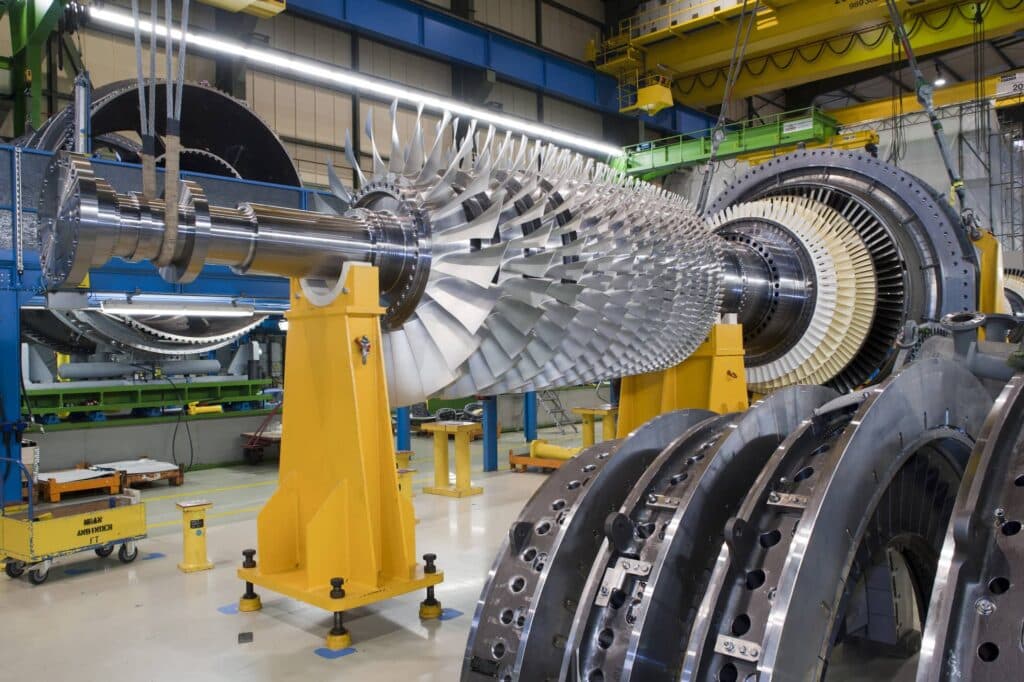
But six years is a very tight deadline. Gas turbine supply is scarce worldwide, and turbines are ordered many years in advance. If a company has not already secured a contract for one, it may struggle to meet the deadline. If it won the auction but failed to start supplying electricity within six years, it would face hefty penalties.
By moving the auction to early next year, the deadline for new capacity under the capacity mechanism to be ready to supply electricity is pushed back by a full year. For the main auction, that means a shift from November 2032 to November 2033.
Auction rules
Through the capacity mechanism, the state will pay capacity providers to be ready to supply electricity to the grid during shortages—for example, in winter during so-called dark doldrums, when neither the wind blows nor the sun shines. At present, gas-fired capacity is the most reliable source on the market for covering such shortages.
There is no greener solution yet. Batteries can smooth out the supply and demand curve in the day-ahead market, but they cannot store electricity for days or even weeks. “Batteries are great for keeping the system running, but on their own they cannot serve as a fully fledged backup source. They cannot, by themselves, ensure a safe phase-out of coal-fired power plants,” warns Jan Krčál, an analyst at the Facts on Climate organisation.
Czechia wants to secure a large share of its new capacity through gas-fired power plants, but under European Commission rules, capacity payments must be technology-neutral. The state cannot say: we will support only gas-fired capacity. So officials had to be rather ingenious when drafting the Czech capacity mechanism.
The document sets out numerous conditions. The basic one is that a capacity provider must not emit more than 550 grams of carbon dioxide per kilowatt-hour. This automatically rules out all coal-fired capacity. Second, capacity that already receives any form of operating support cannot participate in the auction—or, if it does, it must give up that support. The aim is to prevent capacity from being over-subsidised and collecting one form of support after another like tokens in a maze.
“We assume that a supported capacity provider will have no interest in taking part in this kind of mechanism, because if it gives up that support, it cannot be sure whether it will win something better in the auction or even succeed at all,” says Neděla.
Another measure is a form of revenue cap. For example, for nuclear power plants it is set at 70 euros per megawatt-hour. If the day-ahead market price exceeds this threshold during a period of electricity shortage, the power plant would have to pay back part of its revenue. For example, at a market price of 150 euros per megawatt-hour, it would return 80 euros for every megawatt-hour of capacity it had committed to provide. “The reason is to avoid overcompensating existing capacity,” Neděla explains.
Why batteries are not applying
The situation is specific for the battery projects mentioned above. To receive capacity payments, they would have to give up the discounts available under the new tariff structure.
The new structure is due to take effect at the start of next year and changes how the distribution charge paid by every household, business and project is calculated. “Without the discount, a one-megawatt battery would pay roughly 300 thousand crowns a month, which is much more than the facility’s maximum possible gross revenue. There would be no question of paying back the investment,” explains Jan Fousek, executive director of the Energy Storage Association AKU-BAT CZ.
“The payment a battery storage facility would receive from the capacity mechanism over 15 years of operation is significantly lower than what it could earn by trading normally on the energy market without any subsidies, while benefiting from a discount on its measured peak demand under the new tariff structure,” says Fousek.
“Personally, I don’t know anyone in the association from the battery sector who is planning to apply to the capacity mechanism. Although I have heard that several large energy companies are considering it—in other words, they would rather pay the full rate on their measured peak demand under the new tariff structure and try their luck in the capacity mechanism,” Fousek adds.
An opportunity for biogas plants
Besides large gas-fired power plants, the capacity mechanism is particularly attractive to two types of capacity: combined heat and power units and diesel generators. Combined heat and power (CHP) is the joint production of electricity and heat: waste heat that would otherwise escape is captured and used for heating or hot water. The fuel used is natural gas or biogas.
“The capacity mechanism targets connected capacity of at least one megawatt. CHP units can meet this requirement and are technically very well suited to the mechanism. They are flexible sources that can operate when the distribution grid needs them, helping to balance intermittent solar and wind power,” says Lukáš Dobeš, chair of the Cogen CZECH association.
“For natural gas, equipment with capacity in the single-digit megawatt range is available on the market. At biogas plants, CHP units are usually smaller, at around 500 kilowatts, so they will need to be aggregated into blocks to qualify for the capacity mechanism. But that is technically feasible,” Dobeš explains.
The problem is that CHP units currently receive support and are paid a so-called green bonus, which they would have to give up immediately to take part in the auction. “However, many operators—especially biogas plant operators—have already seen their operating support end, or it will end by the prequalification deadline. The capacity mechanism could help these operators improve project economics and keep their CHP units running. But, again, they would not start providing the service for at least four years,” Dobeš adds.
The diesel generators mentioned above usually burn diesel, which means they exceed the emissions limit. However, they can use so-called HVO, a modern renewable synthetic diesel, which lowers their emissions footprint. Alternatively, investors can blend HVO with conventional diesel to stay within the limit of 550 grams of carbon dioxide per kilowatt-hour of electricity generated.
Diesel generators have long been considered one of the cheapest sources of electricity to purchase, which makes them attractive to investors. They are not intended to generate electricity continuously. Their economics depend on operating mainly during periods of peak demand for capacity.
The state wants as much competition as possible
The Ministry of Industry and Trade has calculated how much new capacity Czechia will need to ensure secure electricity supplies, and therefore how much needs to be procured through the capacity mechanism. But it is not yet willing to disclose the figure.
“We want to have as much competition as possible. We don’t want individual investors to know during prequalification how much capacity we are actually seeking. We therefore expect more of them to take part and to offer lower prices,” says director general Neděla.
A figure of around 8.5 gigawatts has already appeared in the media, but according to Neděla, the actual amount will be lower. The 8.5-gigawatt figure is based on the amount of capacity in Czechia that does not receive any subsidy support. “If I take all the capacity in the Czech Republic and subtract the capacity that receives support, I am left with around 8.5 gigawatts. After prequalification, however, we will know whether there is existing capacity that receives no support but will not enter the auction anyway. So 8.5 gigawatts is just a theoretical figure; in reality, it will definitely be lower,” says Neděla.
“If the state takes a cautious approach, it might now want, say, two gigawatts of new gas-fired capacity to be built. I think that may be unnecessarily high, because it would weaken incentives to develop demand flexibility and storage, but it is a realistic figure if the aim is to be cautious about operating the grid,” says analyst Jan Krčál.
“It depends on what we take as our baseline, and what counts as new. It will depend on how demand develops and on peak-load capacity requirements. Last but not least, it will depend on the fate of coal-fired power plants, which is mainly tied to the development of emissions allowance and natural gas prices,” says Michal Macenauer, strategy director at consulting firm EGU. “Our best estimate is that by 2035 we will need approximately 1.5 to 2.5 GW of gas-fired capacity on top of what is more or less certain today,” Macenauer adds.
Uncertainty over gas
There is considerable uncertainty about what will happen to gas-fired power plants after their 15 years of operation. Around 2048, the capacity payments they secure in the auction now will stop.
“The power plants will still be here and operational. What happens to them next will depend mainly on developments in the energy sector and in European regulation,” Krčál says. “They may be needed purely as backup capacity and burn biomethane. Or they could burn hydrogen, although I don’t know whether that is a realistic prospect from today’s perspective,” the analyst says.
During those 15 years, the principle of the capacity mechanism is that gas-fired power plants should operate mainly as backup for renewable sources—that is, generating when neither the wind blows nor the sun shines. But if renewable capacity in Czechia continues to be built at its current pace, the output of new gas-fired power plants will most likely be needed quite often.
“If Czechia were building a large amount of renewable capacity and gas-fired power plants were truly just backup plants, we wouldn’t have to worry so much about whether they burn hydrogen, biomethane or fossil gas. But that is not the situation in Czechia, and everything points to these gas plants running as fairly baseload capacity during the winter half of the year—that is, generating quite often,” Krčál adds.