President Macron: Will he restore France’s glory and its nuclear power industry?
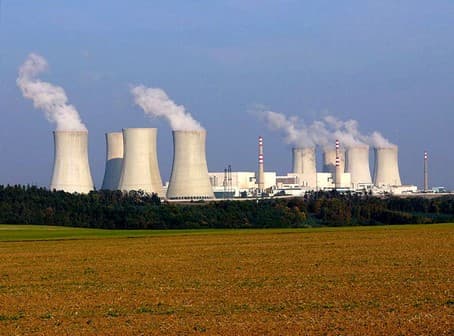
France has traditionally been a bastion of European nuclear power and the nuclear industry. In recent years, however, the sector has been experiencing a major crisis. France and Europe as a whole risk losing their standing.
Now comes France’s new president, Emmanuel Macron, whom his voters expect to end the country’s overall economic malaise. This is naturally expected to apply to nuclear power as well. Nuclear power is one of France’s sources of pride, and many French people still see a future in it. Macron appears to be among them. This is not altered by the fact that he is also a strong advocate of renewables and that, during the election campaign, his rival Marine Le Pen surpassed him in her positive attitude towards nuclear power.
In a way, Macron is paradoxically in a similar position to US President Donald Trump. It is clear that unless France and America recover in nuclear power, the West will cede the field to China, Russia and perhaps South Korea.
A restart will be difficult
The current starting position is far from good for Macron, as too many problems have accumulated around nuclear power. Everyone has long known about the incredible cost overruns and delays in the construction of new French EPR reactors—whether in France itself (Flamanville) or in Finland (Olkiluoto).
And the list goes on: the major economic difficulties of French company EDF, which operates nuclear reactors; the huge financial troubles of Areva, which builds them; outages at French nuclear units over concerns that they contain defective parts; and reports of falsified documentation in the manufacture of these components.
Outgoing president Francois Hollande needed the support of the Greens during the campaign ahead of the previous election and promised them that he would work to reduce nuclear power’s share in electricity generation from 75 % to 50 %. This plan remains in force, although it is highly likely that meeting the stated target by 2025 is unrealistic.
Under Hollande, France effectively relinquished its position as leader among the group of European Union countries seeking to further develop nuclear power. London effectively took over Paris’s role, but Brexit has put an end to that as well.
Czech-French relations also became considerably more complicated—relations between two countries with traditional nuclear industries that, only a few years ago, had sought jointly to promote nuclear power within the European Union. The turning point came after France’s Areva was excluded from the subsequently cancelled tender for the completion of Temelín in 2012. It then took a long time to ease tensions between Paris and Prague again.
The British model
During the election campaign, Emmanuel Macron promised to stick to the plan to reduce nuclear power’s share. However, information obtained in recent weeks by Bloomberg and Reuters from sources close to him suggests that he will be very cautious in this regard. The envisaged reduction to 50 % of electricity generated could reportedly take longer. The original target of achieving this by 2025 appears to be far from set in stone. The Elysee Palace chief’s policy will likely be pragmatic: France should not be overly dependent on a single energy source, but nor should it abandon the potential of its traditional nuclear sector.
Macron, on the other hand, intends to take further steps to strengthen France’s nuclear industry and not only preserve the country’s nuclear power sector, but also rid it of its current problems.
According to a Reuters source from Macron’s team, the new president could even consider introducing the British system of guaranteed electricity prices for new nuclear reactors—the so-called Contract for Difference. The advantage of this mechanism is that it has already been approved by the European Commission in the case of the British Hinkley Point plant—the very plant that the French are to build with Chinese financial support.
If this information is confirmed, it would mean that the construction of new nuclear power plants in France is not over. They could replace some of the dozens of ageing units; France currently operates 58 reactors.
Nuclear realism
If observers of the final duel in the French presidential election also focused on the two candidates’ energy positions, they must have come away with the impression that Le Pen supported nuclear power far more than Macron. The National Front candidate opposed any reduction of nuclear power in France, even rejecting the already approved shutdown of the Fessenheim plant near the German border, while seeking to halt the development of wind power.
Nevertheless, there were also issues on which Macron could have pleased nuclear power advocates more.
For example, Le Pen opposed French company EDF continuing with the British project to build new reactors at Hinkley Point. Macron’s rival wanted EDF to focus on developing nuclear power in France itself. By contrast, the election winner considers the Hinkley Point project very important for the development of the French nuclear industry.
Ultimately, even supporters of nuclear power may find the elected president’s economic realism more appealing than Le Pen’s rhetoric. Emmanuel Macron is a former socialist who has also portrayed himself as an economic reformer—similarly to former British Prime Minister Tony Blair. In many matters, he will probably seek a middle way. Macron intends to limit the role of the state in the French economy, but he clearly also recognises how important a strong, majority state-owned EDF is to the country’s energy sector and industry.
State injection
One of the first issues that must now be addressed is completing the project intended to put French nuclear companies back on a firm footing. These companies are receiving state support, which Brussels must still partly approve. Macron can be expected to defend the French position vigorously—after all, he himself signed off on the project as former minister of economy and industry.
The French state has already participated in EDF’s capital increase. EDF is to take Areva’s reactor business under its wing. EDF will thus become a company that not only operates and finances nuclear reactors, but also develops them itself. At a time of growing competition from Russia, China and Korea, this may be France’s only chance.
With state support, the other part of Areva is then to be transformed into a new company that will remain focused on its other traditional business—uranium mining, nuclear fuel production and related services. The total financial injection from the French state will amount to around ten billion euros. However, Macron does not appear to have any doubts about its merits. Without this state support, the French might as well bid farewell to their global nuclear power ambitions.
The new president will likewise seek to strengthen France’s long-term economic potential by supporting the development of renewable sources.
Unlike Germany
As for the future of nuclear power in France itself, Emmanuel Macron has indicated that he is still awaiting detailed expert assessments in many respects. An audit by the French nuclear regulator at the turn of 2018-2019 should show whether it is worthwhile extending the operating life of existing nuclear reactors. Macron also intends to request an analysis of the real costs of nuclear power and a comparison with other sources.
It also remains unclear how the new president will be able to advance his political vision when he does not represent either of the traditional parties. Much will depend on the result of the next parliamentary election.
Recent years have repeatedly shown that nuclear power is no stranger to sudden reversals—neither in France nor elsewhere in the world. Various surprises may await us in the future as well.
For now, however, Macron’s realism appears to be in line with the wishes of most French voters. “Nuclear power has a future in France and will be here for many decades to come,” Macron declared during one of the recent political debates. At present, therefore, it appears that nuclear power will undergo a modest decline in the French energy mix, balanced by ambitions in foreign markets, and that this remains a far cry from Germany’s anti-nuclear enthusiasm.
The author works as a consultant and energy project specialist at HATcom.
Translation disclaimer
This article is a machine translation of the Czech original and has not yet been fully reviewed. In case of any doubt, please refer to the Czech version.