7 October 2026, 19:33
Loading...
Between politics and technology: Ford reportedly held talks with Xiaomi
Vojtěch Kříž
2 February 2026, 10:20
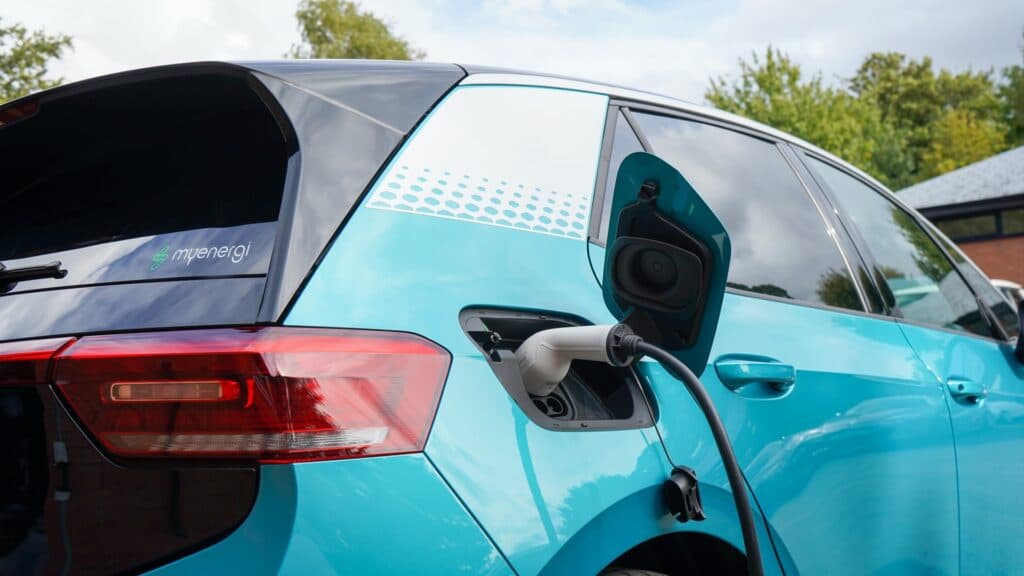
According to Financial Times, Ford held preliminary discussions with Chinese technology company Xiaomi and other representatives of China’s automotive industry. Ford, however, says the information is false, while the Chinese companies declined to comment.
According to the newspaper (which cited four sources inside the company), the preliminary discussions involved Ford exploring the possibility of a joint venture with Xiaomi to manufacture electric vehicles in the United States. Ford reportedly also communicated with BYD and other Chinese automakers.
Can politics be avoided?
Ford CEO Jim Farley expressed admiration for Chinese automakers several times last year, saying they posed an existential threat to Western automakers. He also said their arrival in the United States could not be prevented and that China had “enough capacity to put us all out of business.” Some were also surprised that he had a car imported from Xiaomi—specifically, the SU7 model.
Any such decision would be highly politically sensitive. Chinese electric vehicles are considered a threat across virtually the entire political spectrum in the United States. The current 100% tariffs on electric vehicles from China were implemented in 2024 by the Biden administration, and Trump has of course not repealed them. In the past, Trump also placed Xiaomi on a list of companies that the Pentagon said had ties to the Chinese military.
Biden later removed the company from the list. In December 2025, however, several Republican members of Congress wanted the Department of Defense to put Xiaomi back on it. Chinese BEVs represent essentially everything that a significant part of the US political spectrum sees as a threat—Chinese (communist), electric (green) and a threat to domestic US industry.
For all these reasons, many Chinese automakers are more likely to choose South Asia, Europe or Latin America when deciding where to direct their exports. The only company to announce plans to expand into the US market is automaker Geely, which said at the beginning of this year that it plans to enter the US market within two to three years. Other companies either ignore the US or are trying to circumvent the tariffs by entering Canada and Mexico.
Why Ford?
Many US companies left the Chinese market during the COVID-19 pandemic, roughly between 2020 and 2022. Ford, however, was among the companies that did not withdraw completely. It has several factories of its own, mostly operating as joint ventures with local companies. By 2023, however, Ford had substantially restructured its operations in China.
These changes also included an agreement to cooperate on a battery factory with Chinese giant CATL. One significant difference is that, according to publicly available information, the project was not to be a joint venture, but rather a Ford-owned project operated in cooperation with CATL.
This project has also run into conflict with US politicians—one Republican lawmaker criticized the project and directly reproached Ford for its possible efforts to form joint ventures with Chinese automakers.
Ford is therefore in an uncomfortable position, facing pressure from competitors that, as its CEO himself acknowledges, have a better product. The company is trying to navigate the situation by strategically adopting technologies and modernizing its US operations. However, its involvement on both sides of the Pacific exposes it to considerable risks, according to analysts. Ford’s future is therefore likely to involve not only technological challenges, but also a confrontation with at least part of the political establishment.
Translation disclaimer
This article is a machine translation of the Czech original and has not yet been fully reviewed. In case of any doubt, please refer to the Czech version.
Sdílejte článek prostřednictvím:
You might also like

7 October 2026, 16:15

7 October 2026, 11:20