
28 October 2026, 15:10
Loading...
Czech solar parks benefit insects and boost biodiversity, study finds

Jakub Malý
15 March 2024, 11:34
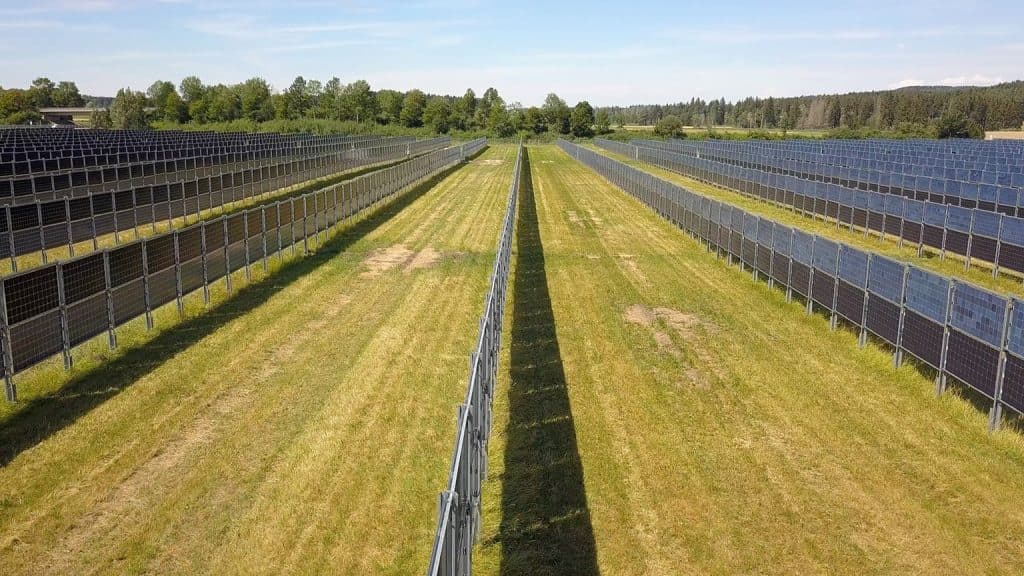
Biodiversity loss is a global problem that also threatens our current way of life. Researchers at Lancaster University, in collaboration with the University of Reading, therefore studied the impact of solar parks on the abundance and biodiversity of pollinators.
The study was published in Ecological Solutions and Evidence and presents data on insects found at 15 solar parks surveyed. Experts recorded more than 1,400 pollinators from over 30 species, including nearly 900 butterflies, more than 170 hoverflies and over 160 bumblebees. Bumblebees visited two-thirds of the solar parks, highlighting the potential importance of these sites in supporting diverse pollinator populations.
The study’s key findings highlight two crucial factors affecting how effectively solar parks support pollinators: the availability of flowering plants and the characteristics of the surrounding landscape. Greater diversity of flowering plant species on solar farms was found to correlate with increased pollinator abundance and biodiversity. The study also highlighted that diversity of flowering species, rather than the number of plants alone, is key for pollinators.
The surrounding landscape proved to be another key factor in pollinator success. Solar parks located in landscapes with limited food and natural features, such as those lacking hedgerows and wildflowers, provided the greatest benefit to pollinators. This suggests that pollinators in these landscapes are more dependent on the resources offered by solar parks, highlighting the importance of strategic siting and management. Professor Alona Armstrong of Lancaster University, who led the research, stressed that while solar parks play a key role in meeting renewable energy targets, their potential to support insect biodiversity must not be overlooked.
What is the situation in Czechia?
Biodiversity loss is a global problem that also threatens our current way of life. The situation in Czechia is not much better, as demonstrated by the Report on the state of the environment in Czechia, prepared by the Ministry of the Environment. The main cause of biodiversity loss in Central European conditions is the disappearance of small habitats as a result of river regulation, intensive land use, the destruction of flower-rich meadows, the felling of old trees with hollows, the planting of monoculture crops in fields and tree monocultures in forests, and the drainage of wetlands. In addition, high doses of nitrogen fertilisers and herbicides eliminate flowering field margins, negatively affecting the insects and birds that feed there. Biodiversity therefore needs to be supported in Czechia too, as the report outlines.
Similar field research linking biodiversity and solar parks has also been conducted in Czechia. A 2015 study examined bird communities in control areas and photovoltaic parks. The study found that: 25 bird species were recorded in photovoltaic power plant areas, with a total density of 25,69 p. / 10 ha, while 29 species with a density of 22,40 p. / 10 ha were recorded in control areas. Thus, bird communities reached higher densities in photovoltaic parks, and overall birds are doing better there than expected. However, it should be noted that further research covering more sites is needed to reach a definitive conclusion, as the study’s authors also point out.
The argument that solar parks can help support biodiversity should therefore not be overlooked. Land occupied by PV panels, if mown appropriately and accessible to animals, can often do more to support biodiversity than land used for intensive agriculture.
Translation disclaimer
This article is a machine translation of the Czech original and has not yet been fully reviewed. In case of any doubt, please refer to the Czech version.
Sdílejte článek prostřednictvím:
You might also like

28 October 2026, 13:08

28 October 2026, 11:10

28 October 2026, 09:08
