
28 October 2026, 15:10
Loading...
European Commission approves French package to support renewable hydrogen production
Veronika Jurcová
2 April 2024, 06:38
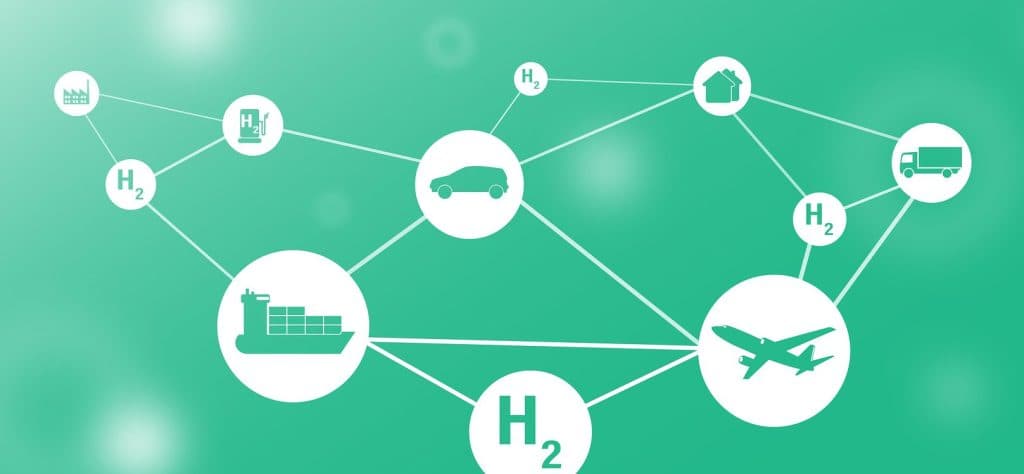
The European Commission has approved a French support scheme worth 900 million EUR for the use of renewable hydrogen in industry and transport. The support is enabled by the extended Temporary Crisis Framework for state aid measures to support the economy following Russia’s aggression against Ukraine, reports H2 View.
France plans to install 6.5 GW of low-carbon electrolysis capacity for hydrogen production by 2030, rising to 10 GW by 2035. To achieve this goal, it introduced a 4 billion euro subsidy package in 2023 to support low-carbon hydrogen projects through so-called contracts for difference (CfDs). France has also introduced broader EU rules mandating the use of hydrogen in transport and industry.
On Wednesday, 27 March, the European Commission approved another subsidy scheme under which France will provide companies with a total of 900 million EUR to support the production of:
- heat and fuels from biomass, such as synthetic gas and biochar, for industrial processes, and
- liquid fuels from biomass and renewable hydrogen for use in industrial processes and transport.
This support, provided in the form of direct grants, will be available for new facilities and projects that substantially accelerate or expand the use of renewable hydrogen. To qualify for a grant, projects must be completed and operational within 36 months of the award of financial support.
Margrethe Vestager, Executive Vice-President of the European Commission, said the 900 million euro package would help companies increase their use of energy and fuels produced from biomass and renewable hydrogen.
“This measure is an important step in the transition to a clean, zero-emission economy while also safeguarding a level playing field in the single market,” Vestager added.
The measure will cover part of the eligible investment costs of projects, with grant support ending on 31 December 2025.
The package was approved under the Temporary Crisis Framework for state aid measures to support the economy following Russia’s aggression against Ukraine
Temporary state aid crisis framework
On 23 March 2022, the European Commission adopted the so-called Temporary Crisis Framework for state aid in response to the serious difficulties facing the EU economy as a result of Russia’s invasion of Ukraine. The framework allows member states to provide timely, targeted and proportionate support to companies in need. The Czech government has used the framework, for example, to provide assistance to large companies hit by rising energy prices.
The simpler state aid regime for companies affected by the crisis was due to end in December 2023. However, the Commission extended it by a further six months, until June 2024, and also broadened its objectives. Under the amended measure, support can be introduced in sectors that are key to accelerating the green transition and reducing dependence on fossil fuels.
Member states can therefore provide:
- Limited grants for companies affected by the current crisis or subsequent sanctions and countermeasures
- Liquidity support in the form of state guarantees and subsidised loans
- Assistance to offset high energy prices
- Measures to accelerate the development of renewable energy
- Measures to facilitate the decarbonisation of industrial processes
- Measures aimed at supporting reductions in electricity demand
- Measures to further accelerate investment in key sectors on the path to a zero-emission economy
Translation disclaimer
This article is a machine translation of the Czech original and has not yet been fully reviewed. In case of any doubt, please refer to the Czech version.
Sdílejte článek prostřednictvím:
You might also like

28 October 2026, 13:08

28 October 2026, 11:10

28 October 2026, 09:08
