10 October 2026, 07:37
Loading...
Five EU finance ministers call for a windfall tax on energy companies
Vojtěch Kříž
7 April 2026, 06:24
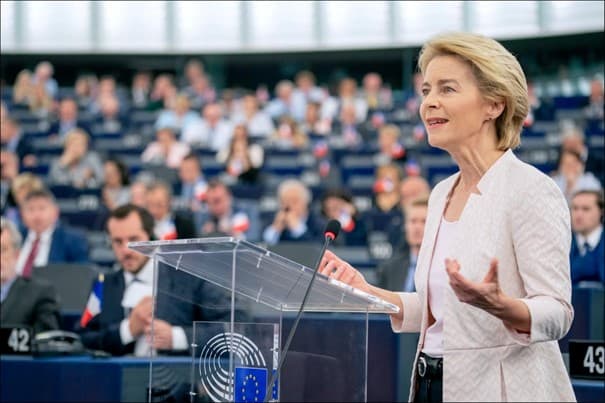
According to Reuters, the finance ministers of Germany, Spain, Italy, Portugal and Austria have sent a letter to the European Commission calling for a tax on “extraordinary” (windfall) profits. The letter reportedly also says that such a measure would demonstrate political unity and the ability to act.
Oil and LNG prices have risen sharply over the past month as a result of the war waged by Israel and the United States against Iran. European markets felt the disruption to supplies early on. Although it is not yet fully comparable to the market reaction in 2022, governments explicitly draw a parallel between the two situations in the letter. However, the letter does not provide details of the proposed windfall tax model. The ministers say that companies must help “reduce the impact on the general population”.
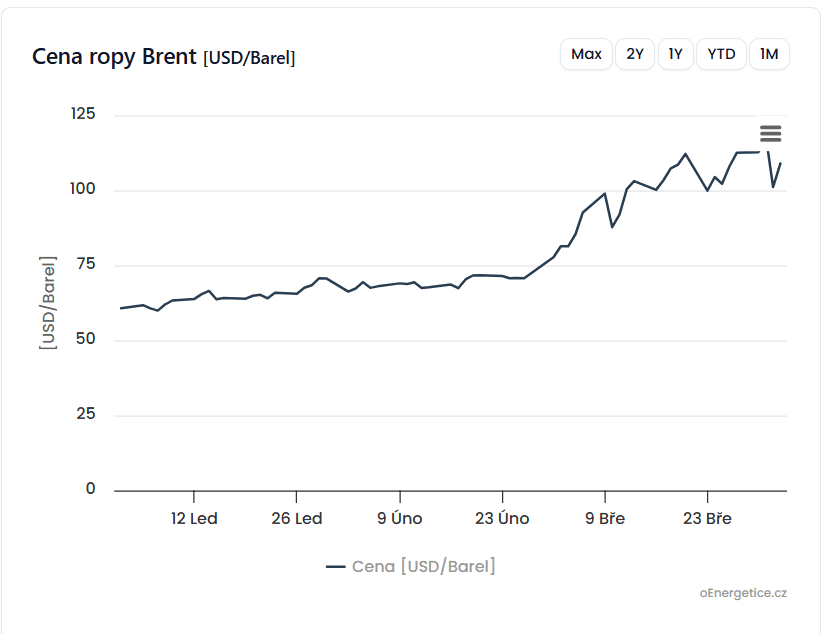
Brent crude price development from the start of the year to 2 April 2026. Source: Energostat
“Given current market volatility and fiscal constraints, the European Commission should quickly prepare a similar EU-wide instrument based on a sound legal footing,” the letter reportedly says. According to Energy Commissioner Dan Jørgensen, the EU is considering using some of the crisis measures implemented four years ago.
At the time, the European crisis response included a cap on gas prices, limits on network charges and electricity taxes, targets for reducing gas consumption, and the windfall tax mentioned above. Jørgensen said Brussels was particularly concerned about short-term supplies of refined oil products, specifically diesel and jet fuel. This is because the EU still imports most of its supplies from areas outside the Middle East.
Even so, the EU is urging countries to prepare and avoid increasing oil and gas consumption. Brussels says national governments should avoid any measures that could boost fuel consumption, restrict trade in oil products or lead to lower refinery output.
A windfall tax aims to tax “excess profits” that companies earn as a result of external factors. It is therefore used during energy crises, when energy companies profit, as well as, for example, by banks that benefit excessively from rising interest rates. In response to the 2022 energy crisis, 25 EU countries implemented some form of this tax, and some countries, including Czechia, extended it for subsequent years.
The merits of windfall taxes are debated, but they certainly brought governments additional revenue during the crisis. On the other hand, according to research by the European Parliament, differences in how these taxes were implemented created investment uncertainty and may have disrupted the investment climate. Moreover, in some cases, including the Czech one, tax revenues were lower than expected because companies (mainly banks) that were due to pay the tax had prepared their accounts in advance.
Translation disclaimer
This article is a machine translation of the Czech original and has not yet been fully reviewed. In case of any doubt, please refer to the Czech version.
Sdílejte článek prostřednictvím:
You might also like

10 October 2026, 07:02

9 October 2026, 13:47