4 November 2026, 14:17
Loading...
France wants to become a driving force in Europe's green economy by 2040

Zuzana Vrbová
29 August 2023, 17:59
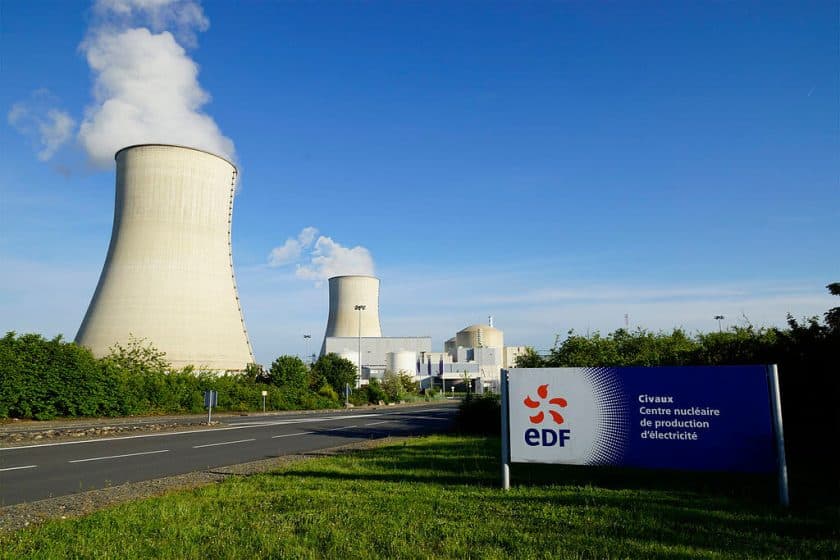
France has an ambitious vision. French Finance Minister Bruno Le Maire said the country would become the European Union's leading "green" economy by 2040. It is preparing a new law to help achieve this.
In remarks reported by Euractiv, French Economy Minister Le Maire outlined a comprehensive strategy to achieve the goal of becoming a European driving force in the green economy. The minister stressed the need to align economic growth with sustainability. Decarbonisation and innovation in green technologies will be the main priorities of France's new economic plan.
France is one of the EU's most indebted member states, with its debt reaching 111.6% of GDP by April 2023, compared with the eurozone average of 91.6%. Its deficit stands at 4.7% of GDP, far above the 3% limit that applies to all EU member states. Le Maire's ministry will seek to reduce the debt, for example by abolishing the energy price cap introduced in response to the war in Ukraine, or by scrapping tax relief on the purchase of certain fuels.
According to the minister, the way out of the crisis and the public debt should be consistent with the principles of the green economy and sustainability. Le Maire said parliament would soon pass a Green Industry Act. The legislation will seek to support new economic sectors, including the production of green hydrogen, batteries, wind turbines, heat pumps and solar panels. It will also include measures to decarbonise existing facilities, including a special tax relief worth 500 million euros.
"We have become a nation of opportunity [and] we must share a long-term ambition: to become the EU's first green economy," Le Maire said.
The bill also aims to channel some of the savings of the French population into green projects by creating a new tax-free "climate future savings plan" with more favourable interest rates than existing state-supported schemes.
New training programmes focused on green industry are also expected, while labour market and unemployment reforms are set to continue with the aim of achieving full employment by 2027.
Translation disclaimer
This article is a machine translation of the Czech original and has not yet been fully reviewed. In case of any doubt, please refer to the Czech version.
Sdílejte článek prostřednictvím:
You might also like

4 November 2026, 12:34
4 November 2026, 09:09