France’s nuclear crisis: Uncertainty will affect EU energy and Czech tender
Who else should build new nuclear units in the Czech Republic if not Europeans? Some commentators asked this even at the time of the cancelled Temelín tender. France was the only European Union country able to offer the relevant know-how.
But then came a shock: ČEZ excluded France’s Areva from the tender. And the previously rather warm French-Czech relations in the field of nuclear energy cooled sharply for a time.
Now the French are making themselves heard again, intending to present themselves once more in the Czech Republic as potential suppliers of new reactors at Dukovany or Temelín. Unfortunately, the timing could hardly be worse. The image of French – and by extension European – nuclear power has been severely damaged. France is being forced to shut down large numbers of its nuclear units because of suspicions that they contain defective components. Reports have emerged of falsified documentation for these components. And there is talk that more than 30 reactors could undergo outages.
The well-known problem of poor-quality X-ray images of welds at Dukovany, which Czech nuclear power had to contend with, now appears almost trivial by comparison.
France, where three quarters of electricity generation is based on nuclear energy, is now paradoxically facing the threat of power shortages despite being a traditional electricity exporter. Pessimists say that if a severe winter strikes, the country could face blackouts.
It will no longer be Areva
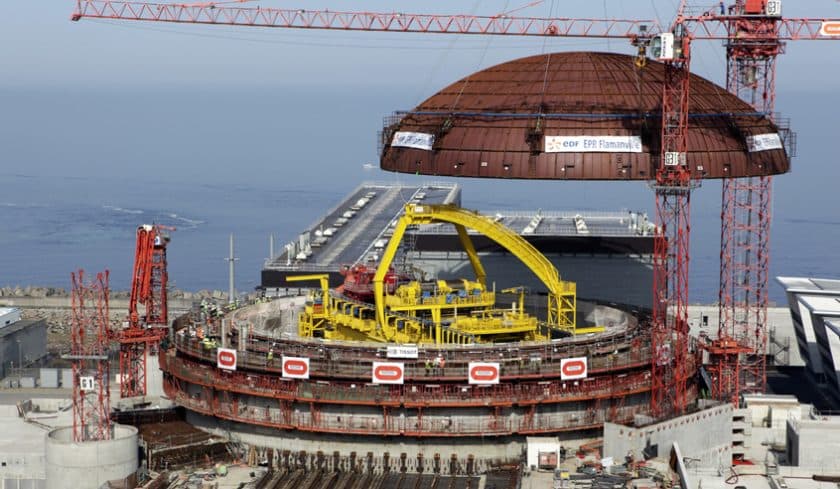
That may be an exaggeration, but even so many in France might sigh: as if there had not already been enough troubles. French suppliers of new EPR nuclear reactors face strong criticism over two “botched” projects that have been subject to incredible delays and cost overruns – at Flamanville in France and Olkiluoto in Finland. France’s reputation is not helped by another planned project at Britain’s Hinkley Point, which critics say faces a similar fate.
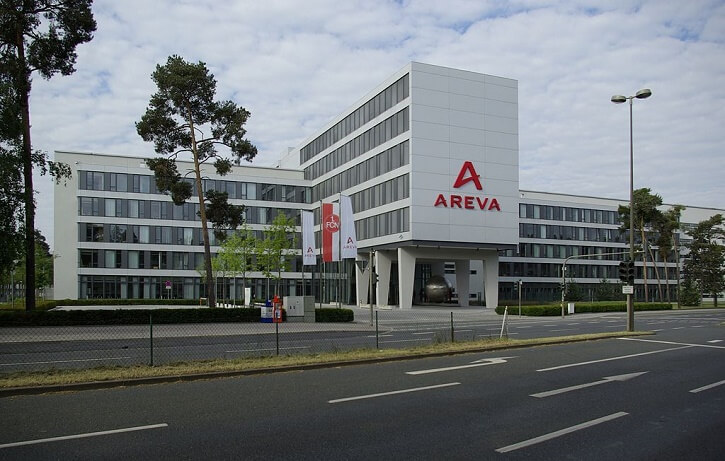
And while many in the Czech Republic associate the French nuclear offering with Areva, which took part in the Temelín tender, that is no longer true at all. The company is going through enormous financial difficulties, is awaiting state aid, and intends to transfer its business of building new reactors to another company majority-owned by the French state – Électricité de France (EDF).
Two wholly or partly French companies are due to present themselves in the Czech Republic in the coming weeks. The first is EDF, which itself also faces major economic difficulties; the second is Atmea, a joint venture between the French and Japan’s Mitsubishi.
A counterweight to Germany?
France was long seen as a counterweight to anti-nuclear Germany, whose government decided after the disaster in Fukushima, Japan, to gradually close all of the country’s nuclear units. If anyone was to support European nuclear power in the future, it was France.
Yet in this respect, too, Paris has disappointed many European supporters of nuclear energy. While still a candidate for the French presidency, Francois Hollande made a pragmatic deal with the Greens in order to secure his election and promised that during his time at the Élysée Palace, the country would move to reduce nuclear power’s share of electricity generation from 75 to 50 percent by 2025. And many may have thought this was only the first step, with the French following Germany’s path after some delay.
The reality, however, is different in this case. President Hollande and the Socialist government today face criticism instead for not intending to close nuclear power plants at a pace that would allow the stated target to be met. The government declares strong support for the development of renewable sources, but is holding off on the final closure of nuclear units.
Opinion polls also suggest that the French are more likely to support a compromise: nuclear energy still has their backing, although they agree with reducing its share in the energy mix.
A rigorous regulator
Today’s dismissive views of French nuclear power may ultimately also prove unfair. The fact is that these are currently the most extensive nuclear unit outages since Japan shut down its reactors after the Fukushima accident. Yet despite all the doubts, the current situation also carries a positive message. It is the French regulator that is demanding operators of the country’s nuclear power plants – namely EDF – carry out thorough tests, regardless of the economic consequences.
One may ask whether nuclear regulators in other countries would proceed with such rigour. The same may, after all, apply to nuclear power plant construction projects involving the French. Areva representatives previously pointed out that while everyone is immediately informed of any problem with their projects in Europe, such overall transparency may not be a given at all in other parts of the world.
Bigger crises elsewhere
Other countries that today boast advanced nuclear power industries have in fact gone through much bigger crises than France. For example, in the ranking of the fifteen most costly nuclear accidents in history (whose authors also include the value of human lives), we do not find a single one in France.
French know-how is also renowned not only in the construction of new reactors, but across the entire spectrum of nuclear energy – including nuclear fuel and all related services. Areva was even once the largest company in the US nuclear power sector.
It is also worth recalling that three years ago, the country that is today an emerging star of global nuclear power – South Korea – also went through a major scandal involving falsified documentation for nuclear reactor components.
Moreover, current doubts about components at French nuclear power plants do not concern only pressure vessels and steam generators made by Areva. The regulator’s objections also concern an excessive concentration of carbon in the steel of steam generators supplied by Japanese company JCFC.
The EPR conundrum
If we consider the current construction of the latest French EPR reactors – especially at the aforementioned Flamanville and Olkiluoto – it is undoubtedly a fiasco. But it is also a fact that the sophisticated EPR reactor, with its many safety features, whose construction is too complex and expensive, was the result of efforts to achieve the highest possible safety standards, which intensified further after Fukushima. In this respect, the French reached the world forefront, but paradoxically have paid a price for it themselves.
EDF chief executive Jean-Bernard Lévy still believes that the EPR is a technology of the future and points out that problems with the first projects are understandable – they are essentially pilot projects. At the same time, however, he speaks of a “new EPR model”, which is intended to offer the same advantages as the existing one but be cheaper to build. The aim is to optimise both costs and construction time.
Atmea for Dukovany?
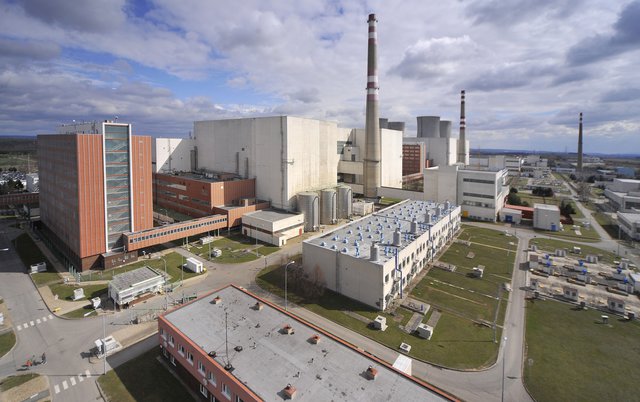
For Dukovany, however, the 1650-megawatt EPR is far too large in any case – given the limited possibilities for water cooling there. The smaller 1100-1200-megawatt Atmea 1 could therefore be a more likely option. It is a reactor jointly developed by Areva and Mitsubishi Heavy Industries, although EDF is now becoming more involved in this case as well – at the end of June, it agreed with Mitsubishi to support the construction of these reactors. As oEnergetice previously noted, if the French return to the race in the Czech Republic, they will do so with Asians behind them. But they must reckon with the animosity between their two potential partners – the Chinese and Japanese – which they underestimated in the past.
So is it realistic that the French will regain their footing in nuclear power? It will not be easy. Even if we assume that the current problems with defective power plant components can be overcome, rescuing the French companies themselves will be far more complicated than it appeared.
Brussels’ doubts
The entire state-aid package for Areva, which is also intended to enable the transfer of its key reactor business to EDF, has been called into question by the European Commission.
According to Brussels sources, Areva’s five-billion-euro capital increase will only be possible if someone besides the French state also takes part. For the European Commission, this would be proof that the “residual” Areva, which will continue to engage in uranium mining and nuclear fuel production, is a viable company.
Here, too, Asian cooperation is awaited – Areva has already held talks with the Chinese and Kazakhs on taking a minority stake. And Japan’s Mitsubishi Heavy Industries is again in the running, having also reached a preliminary agreement with EDF on a future entry into the “reactor division” of today’s Areva.
There may be further complications in the whole process – EDF may conclude that, given Areva’s continuing problems, its value is lower than previous calculations indicated. EDF itself is also due to undergo a capital increase, while total state expenditure (or, more precisely, that of state holding company APE, which currently holds majority stakes in both Areva and EDF) is expected to reach 7-8 billion euros. France is approaching presidential elections – they will take place in the spring of next year, making predictions from the French crystal ball all the more difficult.
The author works as a consultant and energy projects specialist for the HATcom agency.
Translation disclaimer
This article is a machine translation of the Czech original and has not yet been fully reviewed. In case of any doubt, please refer to the Czech version.