28 October 2026, 15:10
Loading...
Gas instead of coal. Czech heating plants and other large facilities need to decarbonise quickly
oEnergetice.cz
7 June 2024, 08:00
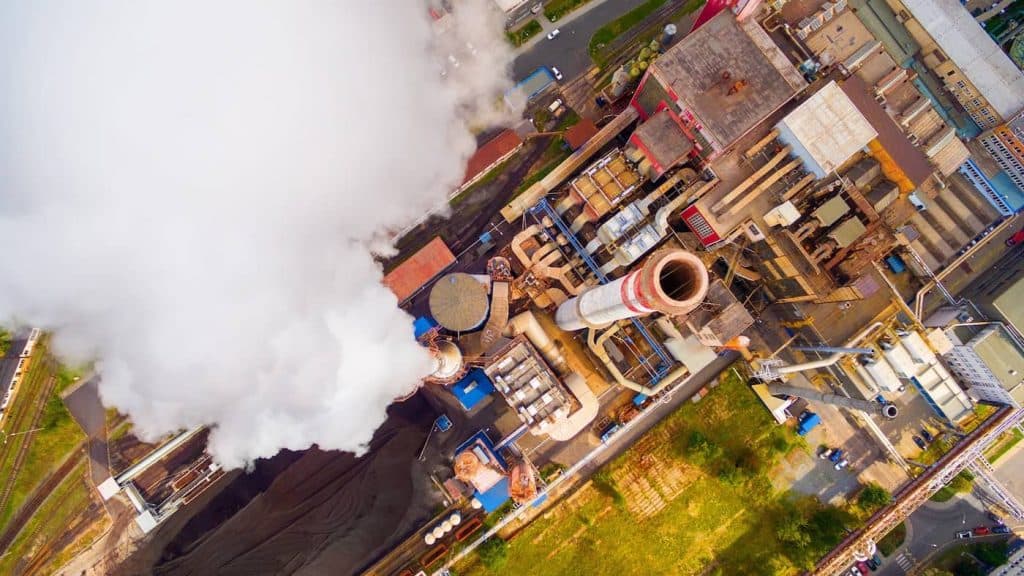
Every second heating plant burns coal. With emissions allowance prices rising and 2033—when Czechia plans to phase out coal—approaching, many heating plants are looking for more sustainable alternatives. In the long term, natural gas appears to be the most suitable option for heat generation: compared with coal, it produces 53 % less carbon dioxide emissions and eliminates entirely the harmful carcinogenic substances released by burning coal. And this is not just an issue for heating plants.
In the Czech Republic, coal still accounts for a large share of electricity generation and district heating (around 150 TWh). Czechia’s geographical location does not allow for wider use of renewable energy sources such as wind and solar, and these sources are also unsuitable for heat and power generation because of seasonal and daily fluctuations depending on the weather.
The way forward from coal is therefore through natural gas, whose consumption is expected to rise in the short term as a result. The gas distribution network is ready for this increase in demand and can meet most connection requests from large industrial customers. In the past, the distribution network was designed across most of the country for considerably higher capacities than are currently being used. This includes connections for power plants, chemical plants, steelworks and industrial production lines whose technologies require direct combustion.
Heating plants need natural gas
Heating plants currently supply heat to the homes of 4 million Czechs. Half of them burn coal and are responsible for 25 % of all domestic carbon dioxide emissions. Given the expected rise in emissions allowance prices, this situation is unsustainable in the long term, both economically and environmentally.
The most common topic in discussions about the near future of Czech district heating is the transition to gas-fired combined heat and power plants. In 2020, the Czech Gas Association and the Heating Association of the Czech Republic signed a memorandum on decarbonising district heating, in which natural gas plays a key role. Gas produces half as much emissions and therefore offers an economically viable way to move away from coal in the era of emissions allowances.
„A good example is the heating plant in Plzeň, which has chosen natural gas as its main energy source. The company will replace its coal-fired boilers with gas turbines and a waste-heat boiler for combined heat and power generation. Natural gas will reach the plant through our pipelines, ensuring safe and reliable energy supplies in the required quantities. By the way, half of the total investment in phasing out coal in Plzeň is being funded through the Heat call for proposals under the European Modernisation Fund. We are ready to connect more large facilities to our gas pipelines in the Czech Republic,“ says Ivo Jirovský, Chief Asset Officer at GasNet, the largest gas distributor in the Czech Republic.
Emissions reductions are a reality
The requirement for domestic heating plants and other industrial businesses to move away from coal stems primarily from European climate plans, represented by the European Green Deal and the European Commission’s Fit for 55 package. Under this package, which focuses on the green transition of the EU economy, greenhouse gas emissions in EU countries should fall by 55 % by 2030 compared with 1990 levels. Natural gas is also recognised by the so-called taxonomy as an energy source that supports the transition to a low-emissions economy.
According to the government’s policy statement, the phase-out of coal should take place by 2033.
As well as significantly reducing greenhouse gas emissions, burning natural gas—unlike coal—does not produce harmful carcinogenic substances that pollute the air in the form of airborne dust. Switching to natural gas can also minimise emissions of other undesirable chemicals commonly produced by burning coal.
Currently, heating plants use gas to generate heat in only about a quarter of cases. This is expected to change significantly in the foreseeable future. The share of gas is expected to at least double over the next few years. Thanks to the extensive gas distribution network, which covers the vast majority of Czech cities, the transition should be possible not only for large heating plants but also for smaller local ones.
„We are prepared for the increased interest in gas and fully support the transition of heating plants and other large businesses to natural gas. Czechia’s level of gas coverage is among the highest in Europe, and it is also very important for industrial operators that the gas network is present in almost every town with more than 2000 inhabitants,“ adds Ivo Jirovský of GasNet.
For power plants, natural gas provides a readily available alternative to coal that can help stabilise the electricity transmission and distribution systems, which need an accessible and reliable source to manage and maintain grid balance. Around 43 % of all electricity in Czechia is generated from coal.
„There are around a hundred coal-fired plants with an installed capacity of more than 3 MW in GasNet’s distribution area. More than half are already connected to the network, and we are working on connecting the rest. We are in talks with the biggest players in the market, such as ČEZ and Veolia,“ concludes Jirovský of GasNet.
Gas has a green future
Another step towards reducing industry’s carbon footprint is the use of biomethane. Its properties are no different from those of conventional natural gas, so the only difference lies in how it is produced. It is made from organic waste that would otherwise end up in landfills or incinerators. The share of biomethane in the distribution network continues to grow. Six biomethane plants are already injecting their gas into GasNet’s pipelines.
„Biomethane has great potential to strengthen the Czech Republic’s energy independence and goes hand in hand with support for a sustainable economy—food scraps and organic waste get a second chance to be used for energy,“ says Martina Šedová, who is responsible for connecting production facilities at GasNet.
In the long term, hydrogen is considered the ideal successor to coal and natural gas. As a fully renewable gas, it should transform district heating and the entire industrial sector in the future. Its use would eliminate direct greenhouse gas emissions from production. GasNet is planning for a complete switch from natural gas to clean hydrogen in the longer term. However, the Czech Republic’s largest distributor is preparing for all possible energy-sector developments and is not ruling out any future opportunities.
„GasNet’s distribution network is already more or less ready for a 20% blend of hydrogen with natural gas. In the coming years, we will continue to make significant investments in developing and renewing our network so that in the future we can meet not only growing demand for natural gas, but also accommodate gas blends and the arrival of hydrogen,“ explains Ivo Jirovský of GasNet.
Translation disclaimer
This article is a machine translation of the Czech original and has not yet been fully reviewed. In case of any doubt, please refer to the Czech version.
Sdílejte článek prostřednictvím:
You might also like

28 October 2026, 13:08

28 October 2026, 11:10
28 October 2026, 09:08