Russian oil industry withstands sanctions, drilling at five-year high

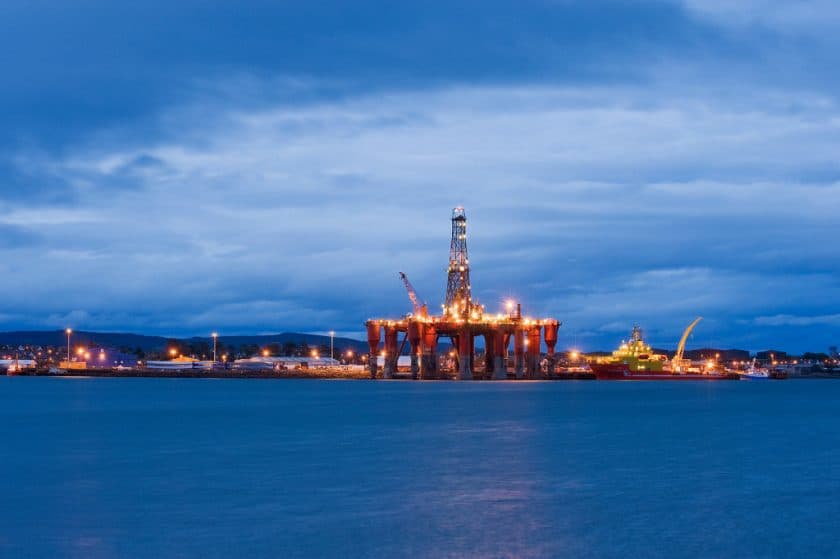
Russian oil producers are now drilling at the fastest pace in at least five years. They are preparing for a possible easing of production quotas within the OPEC+ group, of which Russia is a member, as well as a potential loosening of international sanctions related to the war in Ukraine. Activity among producers is now a third higher than before the start of the war in Ukraine, providing further evidence of the resilience of Russia’s oil sector in the face of Western sanctions. The sanctions were intended to restrict Russian oil companies’ access to modern technologies and cripple Russia’s ability to produce oil over the long term, Bloomberg reported.
Drilling activity means Russia’s total capacity to produce oil and gas condensate—a lighter form of oil produced during natural gas extraction—stands at 11 million to 11.5 million barrels per day. That is almost the same level as in 2016, said Ronald Smith, an analyst at Emerging Markets Oil & Gas Consulting Partners LLC.
“We can say with confidence that Russia’s oilfield services sector has largely succeeded in adapting to the sanctions regime,” Smith said.
“That does not mean suitable substitutes have been found in every case, but suitable alternatives are available more broadly,” he added.
According to the latest available data seen by Bloomberg, Russian producers drilled an average of more than 2,370 kilometers of production wells in January and February. That is above the seasonal average for the first three years of the invasion of Ukraine, which triggered widespread restrictions on the availability of oilfield services in Russia. Drilling activity is used as a measure of activity: the more wells there are, and the longer they are, the more intensive production is.
Although some major foreign oilfield service providers left the country after the invasion, they sold their Russian divisions to local managers. Equipment and expertise thus remained in the sanctioned country. Other smaller suppliers, such as SLB and Weatherford International, continue to operate in Russia, albeit on a smaller scale. Local companies have also managed to find alternative equipment suppliers or develop their own equivalents over the past three years, said Dmitry Kasatkin, a partner at Kasatkin Consulting.
Sergei Vakulenko, an analyst at the independent Carnegie Endowment for International Peace, said the quality and efficiency of drilling technology may have deteriorated. “Overall, the impact of sanctions and the departure of Western service providers has been much smaller than many predicted three years ago,” he added. Vakulenko worked for ten years as a manager at an unnamed Russian oil company.
Russian oil producers must maintain a rapid pace of drilling to increase production in line with OPEC+’s plan to ease production restrictions. OPEC+ comprises the Organization of the Petroleum Exporting Countries (OPEC) and its allies, led by Russia. According to estimates by consulting firm Yakov and Partners, Russia currently relies mainly on fields discovered and brought into production during the Soviet era. They now account for around 95 percent of Russia’s oil and condensate production. However, their reserves are far from depleted.
Analysts say Russia’s strategy is likely to focus on more advanced horizontal drilling at existing fields, particularly in western Siberia. According to Kasatkin, horizontal wells now account for around 80 percent of production wells in the region, and that share could rise to 95 percent by 2030. Data cited by Bloomberg show that the share of horizontal wells in Russia’s total number of wells has risen to around two-thirds, from 50 percent in 2020.
There is one area where Russia is lagging in oil production: exploration. In January and February, producers drilled an average of just 46 kilometers of wells per month to discover new reserves. Last year the figure was almost 68 kilometers, and in 2022, before the war, it was almost 75 kilometers.
“With growing market uncertainty and volatile, low oil prices, greenfield exploration is the first thing producers cut back on,” Kasatkin said.
According to Vakulenko, high interest rates in Russia and a shortage of workers are also holding back exploration.
Anna Volkovova, an analyst at Yakov and Partners, added that the lower number of exploration wells is also due to a lack of the most advanced technologies. These are needed to develop hard-to-reach deposits offshore or in the Arctic. The European Union and the United States prohibit the supply of such equipment and technologies to Russia.
Kasatkin expects Russia’s oil exploration efforts to remain relatively subdued until 2030, when new deposits will be needed to replace reserves in western Siberia. Those reserves could be significantly depleted around 2035. Until then, Russia has plenty of more conventional reserves for which the available technology is more than sufficient, analyst Smith added.
Translation disclaimer
This article is a machine translation of the Czech original and has not yet been fully reviewed. In case of any doubt, please refer to the Czech version.




