The Netherlands invests billions to accelerate the energy transition
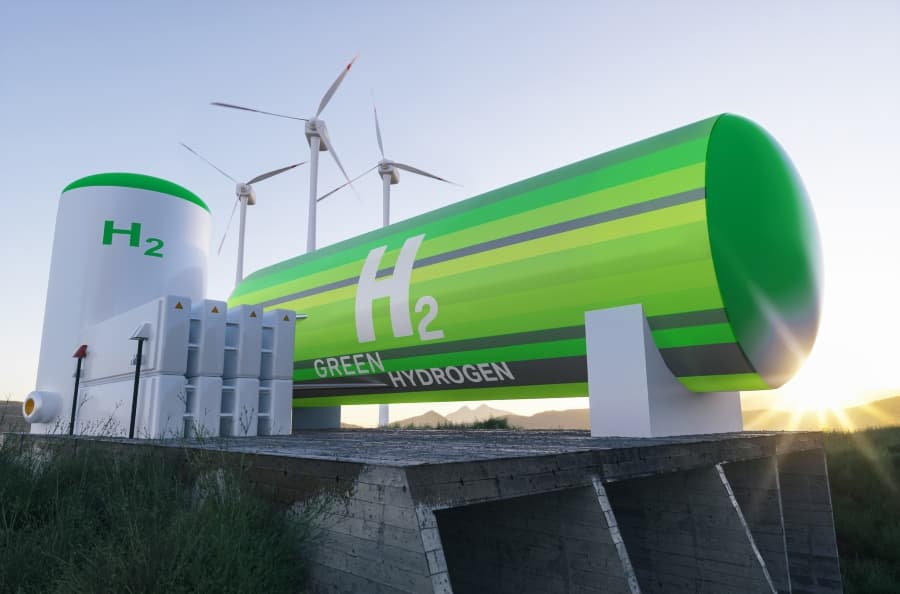
On April 25, the Dutch government announced the approval of a major package of measures worth 11.4 billion euros ($13 billion), aimed at accelerating the country’s energy transition and strengthening the competitiveness of domestic industry. The package also includes support for the production and use of green hydrogen, with 2.1 billion euros ($2.4 billion) allocated in subsidies for domestic hydrogen production. The country will also introduce a mandatory 4% share of renewable hydrogen in industrial applications, reports H2 view.
On April 25, the Dutch government announced the approval of a major package of measures worth 11.4 billion euros ($13 billion), aimed at accelerating the country’s energy transition and strengthening the competitiveness of domestic industry.
Key elements of the plan include:
- Support for industry: The government will extend electricity cost compensation for energy-intensive businesses by three years, helping them remain competitive in international markets.
- Investment in infrastructure: Funding will go toward expanding the transmission grid, particularly to eliminate bottlenecks. The government will take a more directive approach to managing 25 priority grid projects, simplify approval procedures and support the development of key sites.
- Accelerating projects: Transmission system operator TenneT will change its procedures to speed up project construction by as much as one year.
These measures are essential not only for integrating more renewable energy sources, particularly wind and solar power plants, but also for ensuring that consumers in new residential areas can be connected to the grid.
Support for green hydrogen
The Dutch cabinet has allocated 2.1 billion euros to support green hydrogen production and a further 662 million euros to support its use in industrial processes.
The government is also introducing a relatively low green hydrogen mandate, set at 4%. According to Hermans, this step is intended to ensure the mandate does not place an excessive burden on customers and industry in the early stages of market and infrastructure development.
Nevertheless, the 4% mandate is an initial step in a broader decarbonisation strategy designed to prepare Dutch industry for more ambitious European targets. Under the EU Renewable Energy Directive (RED III), at least 42% of the hydrogen used in industry must come from renewable sources by 2030, rising to 60% by 2035.
As the Netherlands is the EU’s largest consumer of grey hydrogen, using approximately 1.3 million tonnes a year, mainly in refineries and ammonia production, the 4% share is estimated to require approximately 52,000 tonnes of green hydrogen annually.
Further planned measures include adjusting refinery rules to make the use of green hydrogen in fuel production more attractive. This step should make a significant contribution to decarbonising the production of conventional fuels, one of the country’s main areas of hydrogen consumption.
All these measures are part of a broader effort to ensure the Netherlands achieves climate neutrality by 2050.
“With this package, we are taking concrete steps to make our country stronger and more energy-independent,” Minister Hermans said. She added that the aim is to adopt only realistic measures that will genuinely deliver the set climate targets.
Investment in carbon capture and nuclear power
As part of its new climate measures, the Dutch cabinet approved the allocation of 639 million euros to state-owned energy company EBN to participate in the Aramis carbon capture and storage (CCS) project. An investment decision on the project is expected in 2026.
At the same time, the government announced further steps in nuclear energy, which it sees as a key reliable, emissions-free energy source. The cabinet has launched a process to establish state participation, with the aim of preparing for the construction of new nuclear power plants. A plan covering site selection, technology and the process for extending the operation of the existing Borssele plant is expected to be published soon.
Support for sustainable development
- In 2026, the SDE++ programme supporting sustainable energy and the energy transition will reopen with a budget of 8 billion euros. Unlike SDE+, SDE++ covers not only renewable energy sources but any technologies that reduce greenhouse gas emissions. The programme subsidises the difference between the market price of energy and the price a project needs to be economically viable.
- In the energy sector, the focus will be on accelerating the transition to CO₂-neutral electricity generation.
- In transport, the government aims to support electric mobility, particularly by promoting business leasing of electric vehicles.
The Dutch government also reaffirmed its long-term goal of achieving climate neutrality by 2050.
Translation disclaimer
This article is a machine translation of the Czech original and has not yet been fully reviewed. In case of any doubt, please refer to the Czech version.




