6 October 2026, 06:14
Loading...
Which small modular reactors will be built in Czechia?
Vladimír Wagner
13 September 2024, 12:17
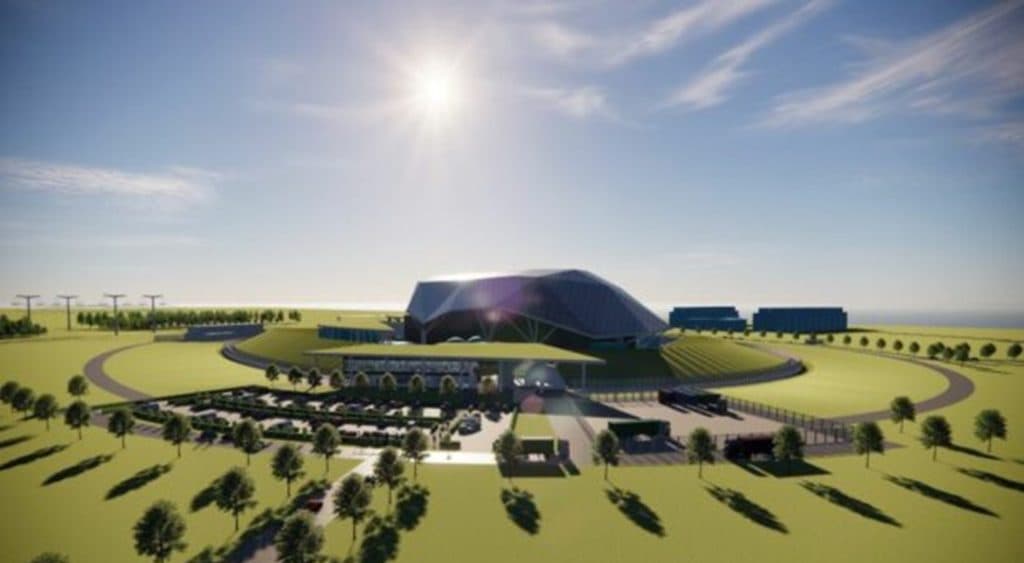
ČEZ plans to decide by the end of 2024 which small modular reactor it will use to replace coal-fired combined heat and power plants and heating plants. The Czech nuclear industry is also expected to play a significant role in its development and subsequent component manufacturing. Three designs are being considered. Let us look at why the decision is being made between these three in particular, and why now.
This week, ČTK published information that ČEZ would like to select a partner by the end of 2024 for the development, manufacturing and operation of small modular reactors in Czechia. Let us examine this information in more detail.
What are small modular reactors?
Small reactors have been built since the beginning of nuclear energy development; in principle, every reactor type began as a small one. The increase in size and capacity was driven by economic considerations. Growth in reactor capacity is faster than growth in the costs of its construction. This is why large power reactors dominate today. More detail on the current state of nuclear energy, including small modular reactors, can be found in the latest annual overview.
Their problem is linked to financing. This is a very large investment that only begins to be repaid once it has been completed and commissioned. In most cases, the investor must borrow the funds, making the cost of capital and an appropriate financial model crucial. At the same time, excessive capacity conflicts with deployment in a more decentralised configuration, particularly in district heating and cogeneration.
Small modular reactors should provide a solution. In reality, these are not entirely small reactors: their electrical output is up to 300 MWe, while some, as we shall see, reach almost 500 MWe. They would make it possible to build large reactors gradually, thus spreading both implementation and investment repayment. Alternatively, they could be deployed in a more decentralised manner, in Czechia, for example, to replace existing coal-fired combined heat and power plants and heating plants.
The economics of these new small reactors should be ensured precisely by modularity. They are expected to consist of modules manufactured in large series in factories and transported to sites for assembly. Series production and modularity should reduce costs. This is why a sufficiently large number of potential customers is needed for a small modular reactor to achieve viable economics.
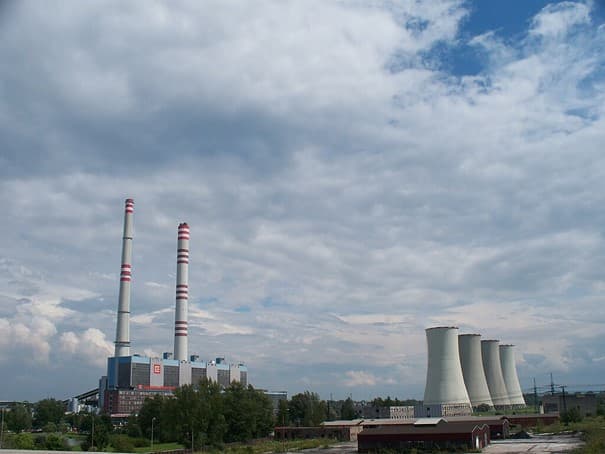
Small modular reactors could also replace the Dětmarovice coal-fired power plant (source: Wikipedia).
Building large or small reactors?
It should be stressed that while the aforementioned modularity and series production should improve the economics of small modular reactors, where a large reactor is needed and an appropriate financial model can be secured, using a large unit remains more economically advantageous in any case. This is also true of the Czech nuclear power plants at Dukovany and Temelín. At the same time, we want to build them to strategically ensure long-term secure electricity supplies, and this determines the financial model, including state loan guarantees. These plants have sites for large units, so it makes sense to build large reactors there. This is precisely what the Czech Republic and ČEZ envisage.
Small modular reactors are therefore envisaged in Czechia as replacements for coal-fired combined heat and power plants and heating plants. ČEZ needs to replace several of them. These plants typically have a number of units with a capacity of 200 MWe. For example, the Dětmarovice power plant originally had four units of this capacity and now has three.
At least in my view, small modular reactors will not displace large ones, and both versions will be used in the future. Not only in Czechia, but also in Europe and worldwide, both large reactors and small modular reactors will be built.
What do we need small modular reactors for?
As already mentioned, small modular reactors should address the problem of the investor financing model. In our case, where large units are being built as a strategic investment under an appropriate financial model, this is not necessary.
Instead, the Czech Republic and ČEZ need to replace a whole range of coal-fired combined heat and power plants and heating plants. A specific feature of the Czech Republic is the widespread use of district heating sources and industrial power and heating plants.
ČEZ itself has a number of combined heat and power plants and heating plants. These include the aforementioned Dětmarovice, with current total capacity of 600 MWe, and the Hodonín power plant, with two units and total electrical output of just over 100 MWe, which now burns largely biomass. The Ledvice power plant currently operates one fluidised-bed unit (4) with a capacity of 110 MWe and one supercritical unit (6) with a capacity of 660 MWe, while the Mělník power plant currently has two units of 60 MWe each. The Prunéřov power plant currently has three units of 250 MWe each, the Poříčí power plant has three units of 50 MWe each, and the Tušimice power plant currently has four units of 200 MWe each.
Given its experience with nuclear facilities, ČEZ is therefore considering using around ten small modular reactors to replace them. Depending on need and the size of the small modular reactors deployed, one to three units would be built at the relevant sites. Preferred sites include Dětmarovice and Tušimice, as well as others. Geological and seismic assessments of the sites are currently under way.
Other operators of coal-fired combined heat and power plants and heating plants are also considering small modular reactors. Since they do not yet have experience operating nuclear facilities, this would potentially come later in their case.
Three reactor designs under consideration
ČEZ is also involved in the development and manufacturing of nuclear technologies; for example, it owns the research organisation ÚJV a.s. and the industrial company Škoda JS. It is therefore interested not only in using small modular reactors, but also in participating in their development and manufacturing. It would thus like to become involved in preparing small modular reactors as soon as possible. This is also why it is selecting a potential partner now. At the same time, it needs to build these reactors as soon as possible. This is why it is choosing from three projects that are at the most advanced stage of preparation.
As already mentioned, for a small modular reactor to be economically successful, it needs a sufficiently high number of potential users. This is also why the selection focused on reactors being considered by multiple interested parties in Europe. There are three designs: the reactor from the British company Rolls-Royce, the BWRX-300 reactor from Japan's GE-Hitachi, and the AP300 reactor from Westinghouse. All three are conventional light-water reactors.
The first prototype unit would be built at the Temelín site, where space has already been earmarked for it. Its output is not fundamentally needed there, but licensing will be easier. It is a nuclear site, so all permitting procedures should be easier and faster. Templates for construction proceedings and other permitting processes would then be created there, enabling smooth and rapid construction at other sites as well. The small modular reactor at Temelín would also serve as a training facility. Let us look at the individual options under consideration.
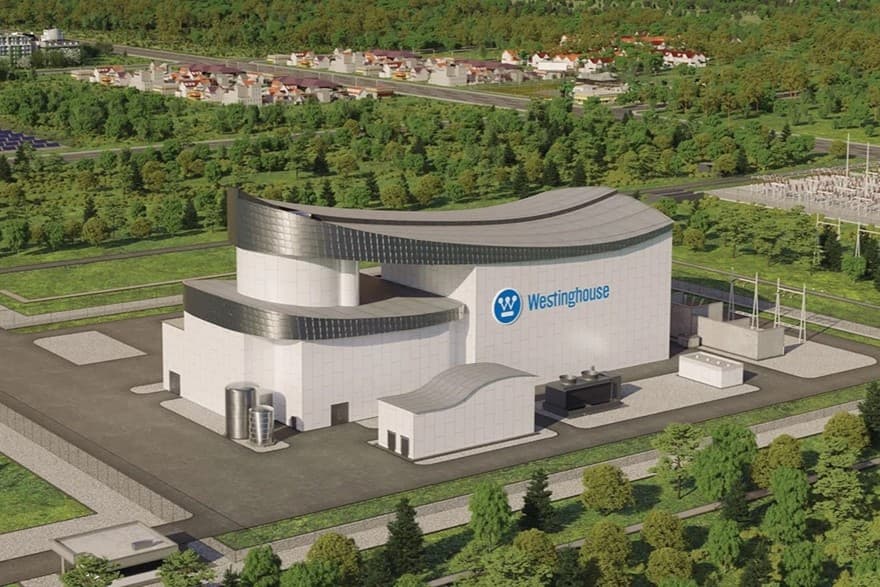
Visualisation of Westinghouse's AP300 small modular reactor (source: Westinghouse).
Rolls-Royce reactor
Rolls-Royce is heavily involved in the nuclear industry. For example, it manufactures reactors for British nuclear submarines. Its project is already at a considerably advanced stage of development. In this case, it is more a medium-sized than a small reactor. Its output has gradually increased and now stands at 470 MWe, almost matching the capacity of the existing Dukovany units. It is a compact three-loop pressurised water reactor with major emphasis on passive safety features. The reactors are, of course, expected to be built extensively in the United Kingdom. Other European countries, such as Sweden and Poland, are also considering them.
AP300 reactor
Westinghouse's reactor is intended to draw on all the experience gained in developing and constructing AP1000 units. It will therefore be a scaled-down version of this reactor, using all of its proven technologies. On this basis, a reactor can be prepared with an advanced passive safety system and a passive coolant circulation system. The United States and Canada, as well as several European countries, are considering deploying these reactors.
BWRX-300 reactor
The project from Japan's GE-Hitachi is the only boiling-water reactor design among the three. Its electrical output is 300 MWe. Again, it is a scaled-down version of its large ESBWR and ABWR designs, using proven components and technologies. Here too, there is a key emphasis on passive natural circulation for cooling and other passive safety features. Canada, Sweden and Estonia are considering using this reactor.
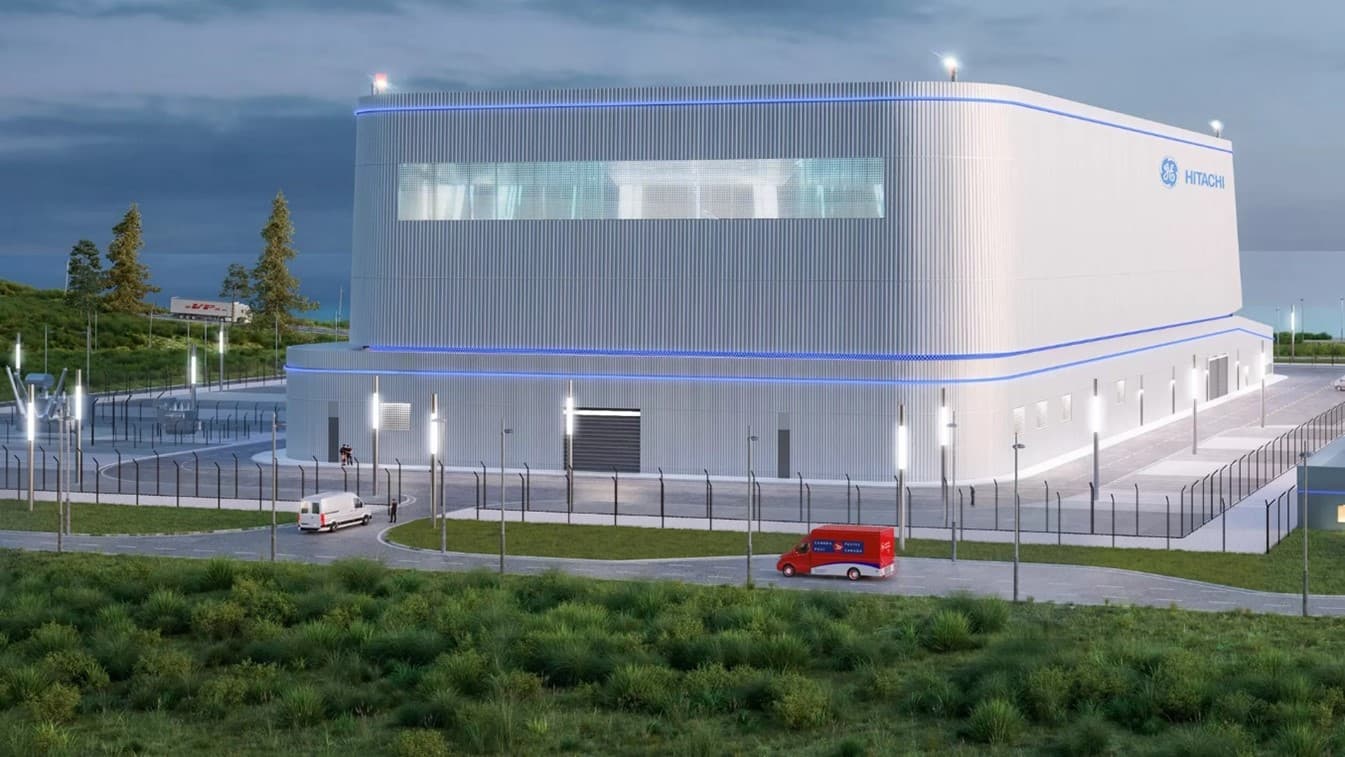
Visualisation of GE-Hitachi's BWRX-300 small modular reactor (source: GE-Hitachi).
Conclusion
If Europe and the Czech Republic genuinely want to transition to low-emission energy, they cannot do without nuclear generation. In addition to electricity production, the Czech Republic needs to address district heating and low-emission sources for district heat supply. This is why it is interested in using small modular reactors. ČEZ also wants to participate in the development and production of these facilities. It therefore needs to join preparations for these reactors as quickly as possible. By the end of 2024, it would like to select a partner for the development of this industrial sector from three potential options: Rolls-Royce, BWRX-300 and AP300 reactors. As already noted, a number of other European Union countries are considering these designs.
It should be recalled that small modular reactors are not yet commercially available from companies. Only a few such facilities operate worldwide, and these are highly specific cases. One is the Akademik Lomonosov floating nuclear power plant, which is economically competitive only under particular conditions, such as those in northern Russia. Another example of an operating small modular reactor is the HTR-PM high-temperature gas-cooled reactor in China. In this case, it is a specific advanced reactor. The first conventional light-water small modular reactor is being completed in China. This is the ACP100 (Linglong-1) reactor, which is currently being completed and is expected to enter operation in 2026. Comparing its economics with those of large Chinese reactors will also show the potential competitiveness of these facilities in Czechia.
The first commercial small modular reactors should appear in the early 2030s, and the three under consideration in ČEZ's selection should be among them. A unit at Temelín should also be among the first projects implemented. Actual construction of small modular reactors cannot therefore be expected before the aforementioned 2030s. If small modular reactors are to replace coal-fired sources, these must therefore be kept operating until then. In my view, existing fossil-fuel sources should not be shut down before their low-emission replacement, whether renewable or nuclear, has been completed and commissioned.
Following the decision on the winner of the tender for large units, primarily for the Dukovany site, which was South Korean company KHNP with its APR1000 reactor, a decision on the supplier of a small modular reactor is also approaching. This would be a key milestone on the path to low-emission energy in the Czech Republic, helping to address our electricity and district-heating needs. An extremely large amount of work will then need to be done, requiring a large workforce. It is also a huge opportunity and challenge for Czech industry, which could establish itself in the most advanced technologies.
I have recently taken part in two events. I gave a lecture to students at the annual Summer School of Nuclear Engineering, where it is fantastic for me to meet students from a range of Czech technical universities and observe their enthusiasm for the field. They will be the ones implementing these plans. I am currently attending the second event: Nuclear Days at the University of West Bohemia in Plzeň, where I am participating in panels focused specifically on the potential use of small modular reactors in district heating. There are many students here too, suggesting that people will be ready to implement the planned projects.
A presentation on the possibilities for transitioning to low-emission energy in Czechia for the Vysoké napětí podcast:
https://www.youtube.com/watch?v=5wiOqFuXU-g&list=PLGLb3t59V9EZGvSEoPBOvY-kIfYce5bRG&index=8
A presentation on the results of the tender for the construction of Dukovany II for the E-15 FLOW podcast:
Translation disclaimer
This article is a machine translation of the Czech original and has not yet been fully reviewed. In case of any doubt, please refer to the Czech version.
Sdílejte článek prostřednictvím:
Topics:Opinion
You might also like
5 October 2026, 16:20
5 October 2026, 15:34
5 October 2026, 13:26