
28 October 2026, 15:10
Loading...
Berlin hosts second German-Polish energy forum: What was on the agenda?

Libor Láník
22 May 2024, 11:16
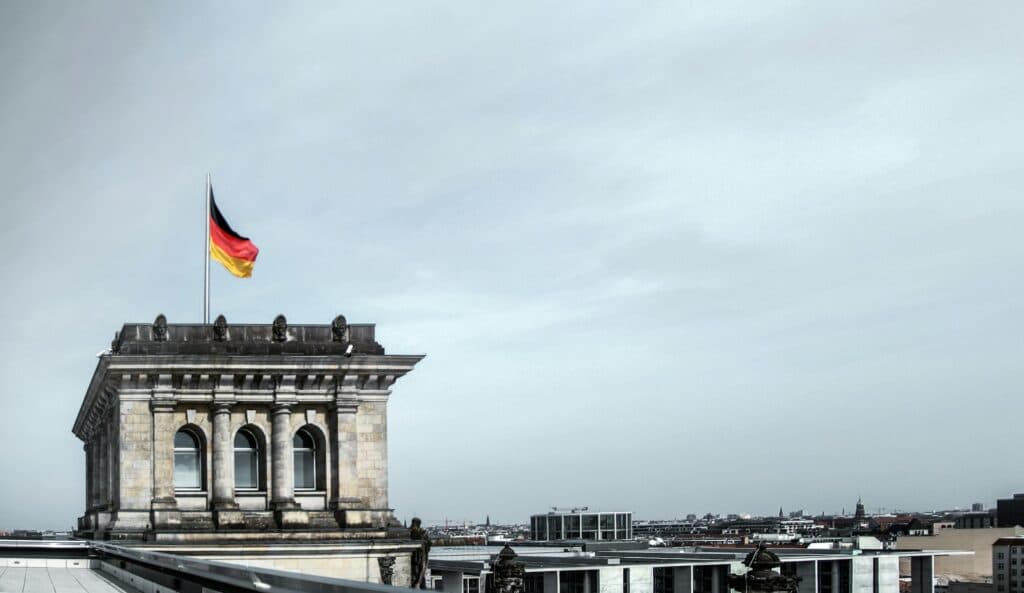
Germany is strengthening energy cooperation with neighbouring Poland through a joint platform. The second German-Polish Energy Transition Forum (Deutsch-Polnisches Energiewendeforum) took place in Berlin on 17 May. The following article looks at what was on its agenda.
Representatives from both countries, including officials from ministries, industry, academia and non-governmental organisations, met at the Federal Foreign Office in the German capital. The event was held under the auspices of, and organised by, the German Energy Agency (dena) and the Polish National Energy Conservation Agency (KAPE). The first forum took place last year in Warsaw, and both countries intend to hold it annually.
The neighbouring countries agree that they face similar challenges in the energy transition, and that mutual cooperation is crucial in today’s geopolitical environment. The forum’s main topic was heating, specifically the socially responsible transition to climate-neutral heating. In addition, participants discussed the decarbonisation of industry, whose successful implementation could drive economic growth.
One solution for heating, which accounts for almost 40 % of total CO2 emissions in Germany, for example, could be to transform district heating into low-temperature networks combined with heat pumps and heat storage powered by renewables and green renewable biogas. All of this can be achieved with modern digital control, said Urszula Zielińska, Poland’s State Secretary at the Ministry of Climate and Environment.
As for the decarbonisation of industry as a driver of growth, the conclusions of the dialogue emphasised the need to create new jobs and ensure the competitiveness of European markets. This energy transition must ensure quality of life, increase prosperity and leave no one behind, stressed Jennifer Morgan, Germany’s State Secretary and Special Envoy for International Climate Policy at the Federal Foreign Office.
In addition to the agenda items mentioned above, forum participants placed considerable emphasis on the geopolitical situation, referring to Russian aggression in Ukraine and the unstable situation in the Middle East. Among other things, the forum therefore sought to highlight the European Union’s continued dependence on Russian energy commodities. Zielińska pointed to supplies of Russian oil flowing into Europe through third-party traders, such as India and Turkey.
Translation disclaimer
This article is a machine translation of the Czech original and has not yet been fully reviewed. In case of any doubt, please refer to the Czech version.
Sdílejte článek prostřednictvím:
You might also like

28 October 2026, 13:08

28 October 2026, 11:10

28 October 2026, 09:08
