Czech Republic above EU average for renewables only in heat production, lagging in electricity and transport

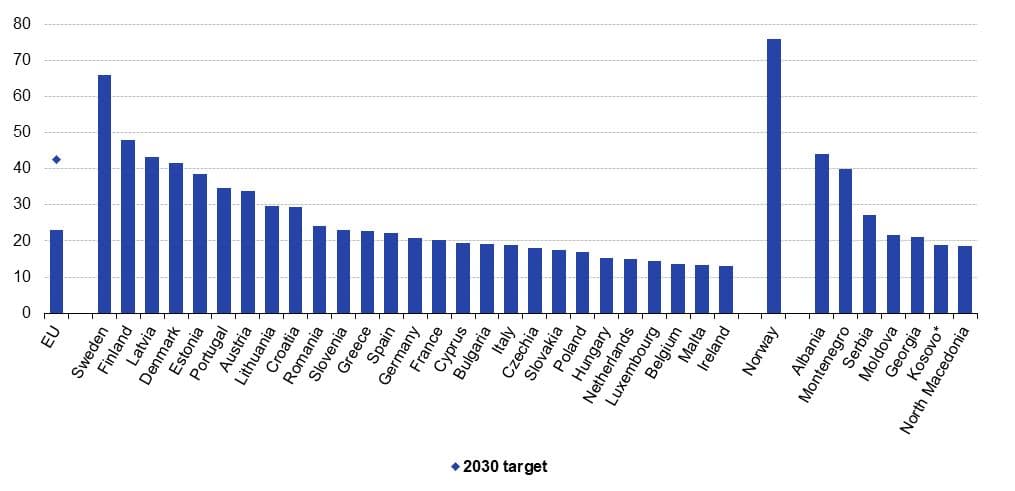
The share of energy from renewable energy sources (RES) in gross final energy consumption in the EU has more than doubled since 2004, reaching 23 % in 2022. In the electricity generation sector, the share stood at 41 %, while in heating and cooling it was just under 25 %. The share has long been lowest in transport, where it was 9,6 % in 2022. The Czech Republic is above the EU average only in the heating and cooling sector.
As we reported last week, the share of RES in gross final energy consumption in the EU increased by 1,1 percentage points in 2022 and, following the first year-on-year decline ever recorded in 2021, returned to a growth trend.
In addition to the overall share of RES, it is also interesting to look at the individual sectors, where both RES shares and their growth rates differ quite substantially.
Most “green” electricity from hydro and wind
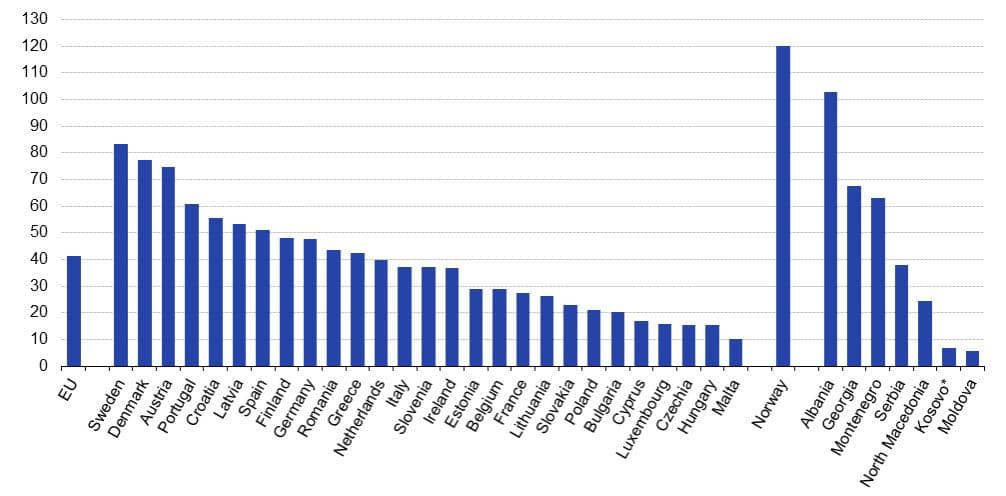
The share of electricity generation from RES in gross electricity consumption in EU countries rose from just under 16 % in 2004 to 41 % in 2022.
Wind and hydropower plants account for more than two-thirds of electricity generation from RES, with shares of 38% and 30%, respectively. Just under one-fifth of “renewable” electricity is generated by solar power plants, 7 % by plants burning solid biofuels, and the remaining roughly 8 % by other renewable sources.
"Solar power plants are the fastest-growing source: in 2008, they had a share of just 1%. This means that growth has been truly dramatic, from 7,4 TWh in 2008 to 210,3 TWh in 2022,"Eurostat stated.
Countries with the highest shares of electricity generation from RES include Sweden (83,3 %), Denmark (77,2 %) and Austria (74,7 %). By contrast, the lowest shares are in the Czech Republic (15,5 %), Hungary (15,3 %) and Malta (10,1 %).
Almost one-quarter of heat and cooling from RES
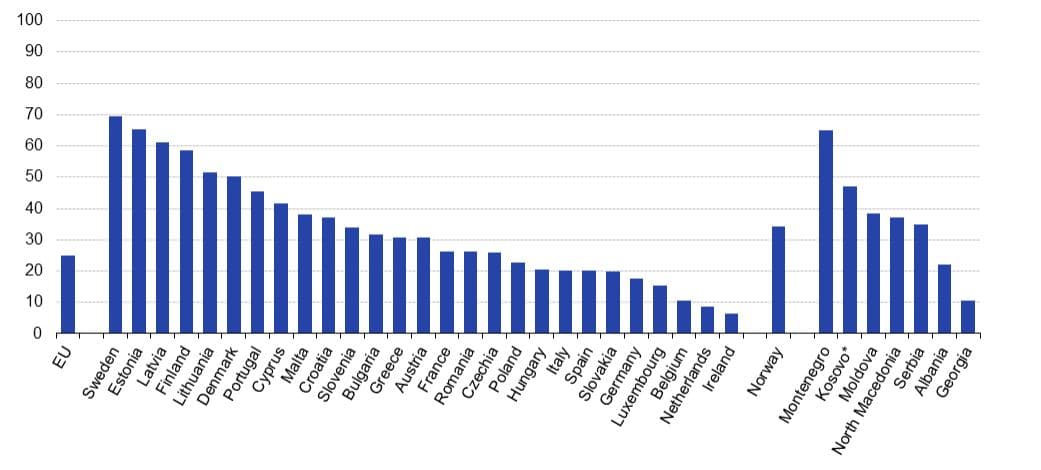
The share of RES in energy consumed in the heating and cooling sector in EU countries roughly doubled between 2004 and 2022 (from 12 % to 25 %). According to Eurostat, this growth was driven primarily by the expanding use of RES in industry, services and households.
As in electricity generation, Sweden has the highest share in this area, at just under 70 %. It is followed by Estonia (65,4 %), Latvia (61 %) and Finland (58,5 %). At the other end of the ranking are Belgium (10,4 %), the Netherlands (8,6 %) and Ireland (6,3 %).
With a share of just under 26%, the Czech Republic is above the EU average, primarily thanks to the widespread use of biomass in both individual and district heating.
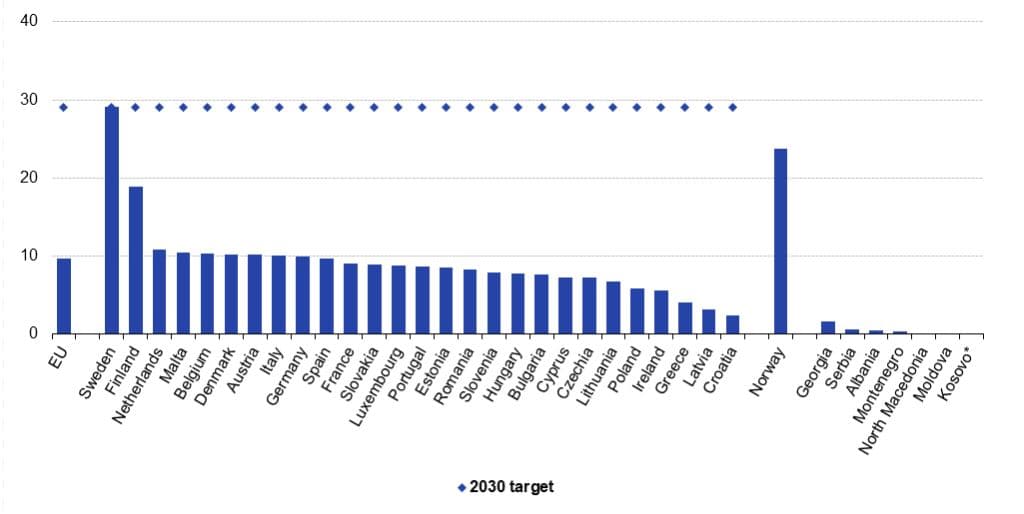
Transport below 10 %
The share of RES in energy consumed in the transport sector increased from 1,6 % to 9,6 % between 2004 and 2022. According to Eurostat, renewable energy in this area includes biofuels, hydrogen, biomethane and “green” electricity.
As in the previous two areas, Sweden leads in this area as well, with a share of nearly 30%. It is followed by Finland (18,8 %), the Netherlands (10,8 %) and Malta (10,5 %). Greece (4,1 %), Latvia (3,1 %) and Croatia (2,4 %) have shares below 5%.
With a share of 7,2%, the Czech Republic is below the average for EU countries, as it is in the electricity generation sector.
Translation disclaimer
This article is a machine translation of the Czech original and has not yet been fully reviewed. In case of any doubt, please refer to the Czech version.