25 September 2026, 09:51
Loading...
Renewables permitting stalls. EU, France and others pass laws to speed it up

Martin Voříšek
17 May 2023, 06:50
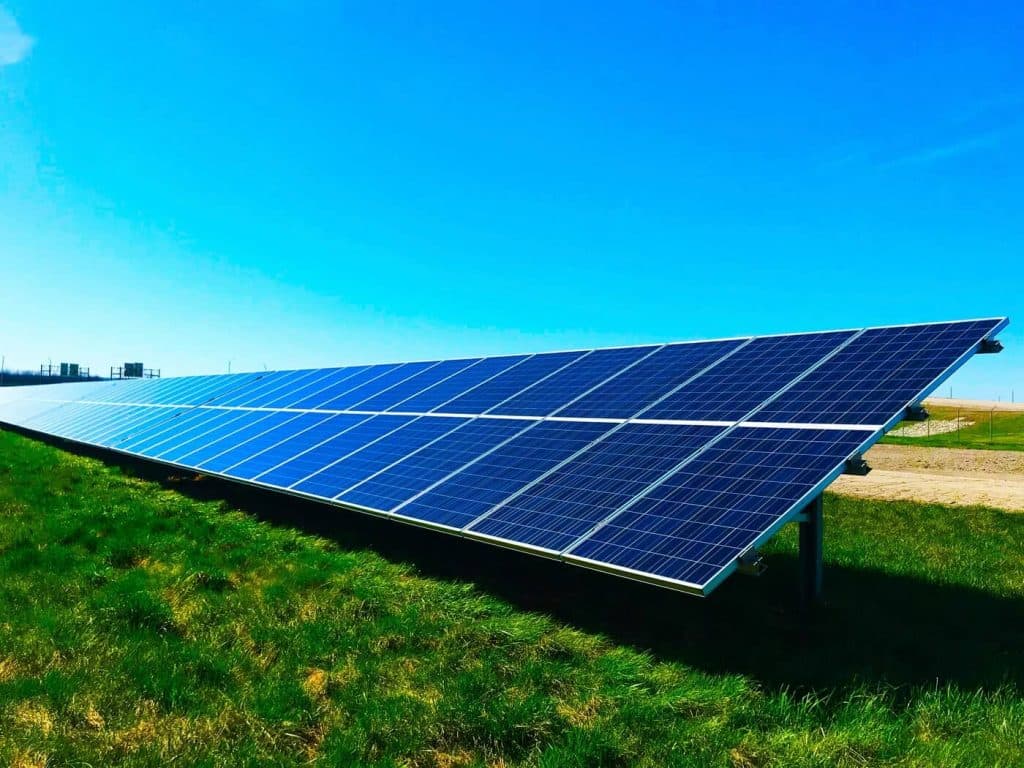
The development of renewable energy sources is often hampered by permitting procedures. To speed them up, the European Union has adopted rules intended to accelerate them. In some cases, if authorities do not respond within one month of an application being filed, the permit is deemed granted. Some European Union countries are also adopting similar measures to accelerate renewable energy construction. In the Czech Republic, the necessary legislation is still being prepared.
The European Union is gradually raising the targets it wants to achieve by 2030 for the share of renewable energy in total consumption. While the European package entitled “Clean Energy for All Europeans”, whose legislative process was only completed in 2019, set the renewable energy share target at 32%, the latest update now refers to a 42.5% share. However, the European Union’s efforts should aim as high as 45%.
But how can these targets be achieved? The European Union is not alone in recognising that one of the main barriers to the development of renewables, and thus to meeting the stated targets, is lengthy permitting procedures. Up to 80 GW of installed renewable capacity is currently at various stages of permitting. Onshore wind farms account for as much as 59 GW of the total capacity.
The European Union is not the only one responding to delays in permitting procedures. Individual EU Member States are also introducing their own measures. They are currently preparing, or have already adopted, laws intended to ensure faster permitting of renewables.
EU adopts temporary regulation to speed up renewable construction while preparing permanent rules
Part of the so-called REPowerEU plan, published by the European Commission after the onset of the energy crisis, was also an objective to accelerate renewable energy construction. This was one of the main priorities, which is why the relevant legislation was adopted during the Czech Presidency, before the end of 2022.
The fact that their construction is deemed to be in the overriding public interest should help speed up renewable deployment. This may be important when assessing certain environmental impacts, where different public interests are weighed against each other; priority is given to the overriding interest, namely the construction of renewables. The other interest must yield to the first.
Firmly set time limits are intended to help accelerate permitting processes. The permitting procedure, including all necessary permits, is to be completed within these limits. This should result in approval of a specific project. For example, solar power plants with battery storage should be permitted within no more than three months.
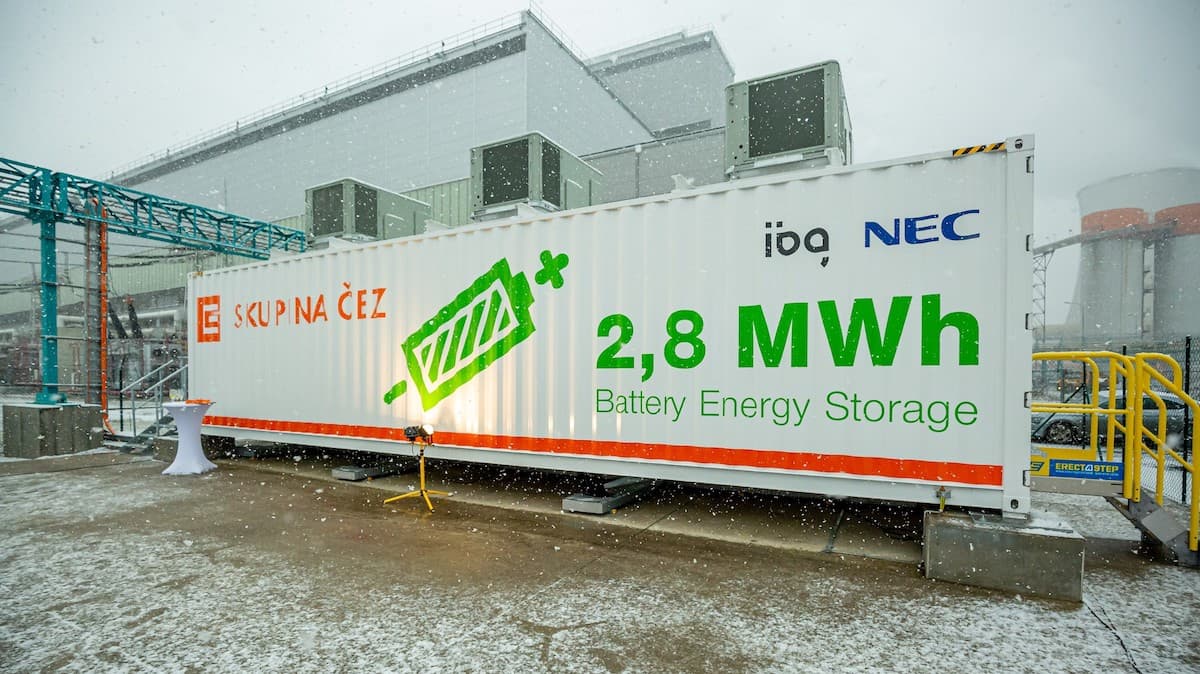
Battery at Tušimice power plant. Source: ČEZ
Permitting procedures for solar installations with installed capacity of up to 50 kWe are to be even simpler. In the case of such a power plant, the permit is deemed granted if the applicant has not received a response from the relevant authority within one month of filing the application.
The modernisation of renewable energy sources is also expected to be accelerated – their permitting should take no more than six months.
However, these rules are only temporary and will apply for 18 months. Although their validity can be extended, they will likely be replaced by a revision of the Renewable Energy Directive, which also addresses the acceleration of permitting procedures.
Spain has its own rules, while France and Germany are preparing theirs
The remaining EU countries are already responding to the new EU legislation and preparing their own laws intended to accelerate renewable energy construction.
Germany seeks a way to meet targets for renewables’ share of electricity generation
For example, Germany responded to the new European legislation as early as January this year, with the country’s cabinet preparing its own rules building on the European ones. They have not yet been approved by the German parliament, but they should apply to all permitting procedures from June 2024.
The new legislation should enable Germany to meet its ambitious targets. By 2030, as much as 80% of electricity is to come from renewable energy sources. From 2025, the country should therefore add 10 GW annually in onshore wind power alone. In recent years, however, only 2-3 GW has been built annually (the entire Czech Republic has roughly 340 MW of installed wind capacity; see the report on the operation of the Czech electricity system in Q4 2022).
Germany has long struggled with the length of permitting procedures. The problem particularly affects linear infrastructure, especially transmission lines. The backbone transmission lines that would carry electricity from northern Germany, with its favourable weather conditions, to the south of the country have long been lacking.
The construction of transmission lines and onshore wind farms should receive the greatest preferential treatment under the new legislation. Solar power plants will also be favoured alongside them. Their permitting procedures may only be carried out within a limited time period, similarly to the proposed European Union rules.
France finalises controversial law – it is unclear whether it will slow construction
Similarly, France, which failed to meet its commitments on the share of renewables in electricity generation by 2020, has prepared special rules for renewable energy permitting procedures. The objective is to accelerate these procedures.
Lengthy procedures are particularly an issue in offshore wind. Their permitting and construction can take 10-12 years. Although this has been shortened somewhat – to around seven years – it still represents a significantly longer period than in other countries. In the United Kingdom, for example, permitting is expected to take around four years, while the government there is targeting just one year.
The law is described as controversial because it is unclear whether its wording could conflict with the planned directive on promoting the use of energy from renewable sources.
Under the proposed new law, which should enter into force in France this year, it will be possible, for example, to designate specific locations where permitting procedures for renewables are easier. However, offshore wind locations may be at a minimum distance of 22 km from the coast, which some organisations describe as unnecessarily restrictive.
Spain accelerated renewable permitting procedures after the onset of the energy crisis
The Spanish market is an attractive market for renewable energy construction, especially solar power plants. By 2030, electricity from renewable sources is expected to account for roughly three-quarters of electricity generation.
Shortly after the outbreak of the war in Ukraine, the Spanish Ministry of Energy adopted a measure under which construction of solar installations up to 150 MW and wind farms with capacity up to 75 MW will be accelerated. Although this is a temporary measure, the new legislation is expected to halve permitting procedures for some projects, to around two years.
Length of permitting procedures in the Czech Republic? More than several years
In the Czech Republic, too, the length of permitting procedures is a limiting factor. The permitting procedure for a wind turbine can exceed ten years, and in many cases developers must contend with opposition from local residents.
"Building a wind turbine in the Czech Republic is very difficult and time-consuming because of permitting legislation. Development and construction take 10 years or more. That is also why negotiations with local governments and local residents’ acceptance of the project are crucial for us,"says Jan Kalina, member of the board of directors of ČEZ and director of the renewable and conventional energy division.
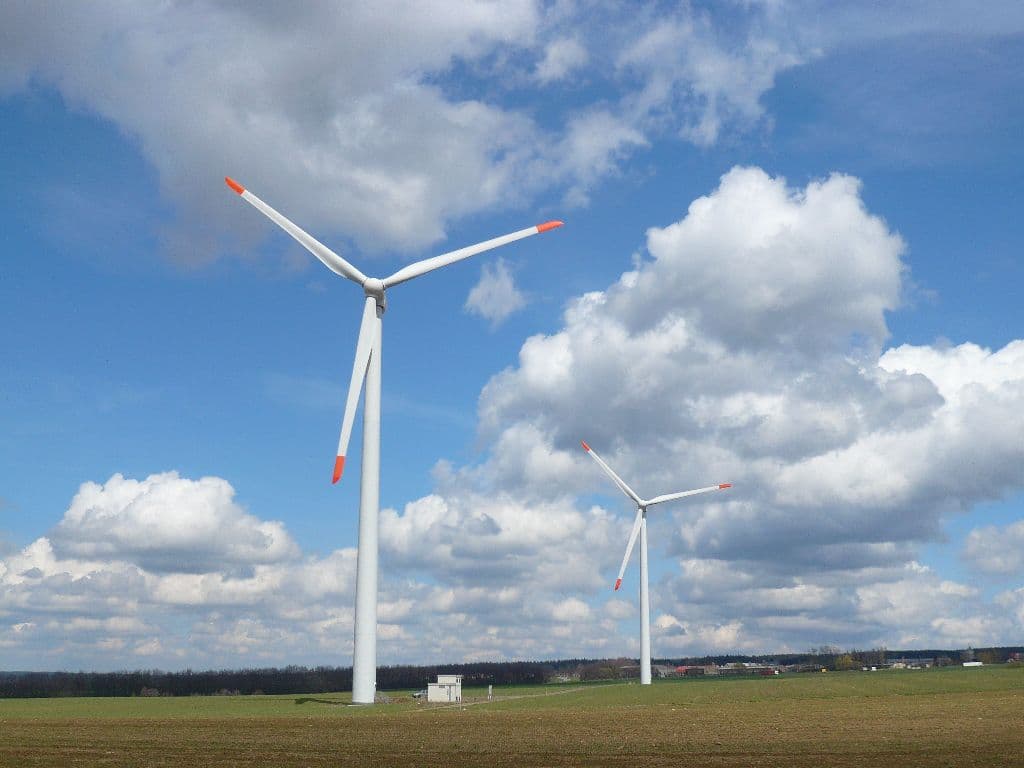
Janov wind power plant. Source: ČEZ
The Czech Ministry of the Environment is also preparing an amendment intended to simplify permitting for wind power construction. However, the amendment has not yet been adopted.
"At the Ministry of the Environment, we want to simplify the process for wind turbines in connection with permitting procedures. Areas subject to special protection would be differentiated. In areas without protection limits, permitting would be simplified. It cannot be just about photovoltaics, which have limitations over the course of the 12 months of the year," said Marian Jurečka.
Translation disclaimer
This article is a machine translation of the Czech original and has not yet been fully reviewed. In case of any doubt, please refer to the Czech version.
Sdílejte článek prostřednictvím:
You might also like
24 September 2026, 11:23

24 September 2026, 10:30
24 September 2026, 06:56