
10 November 2026, 16:31
Loading...
Floating wind farms: How the technology of the future is built and operated

Lukáš Lepič
21 September 2023, 14:46
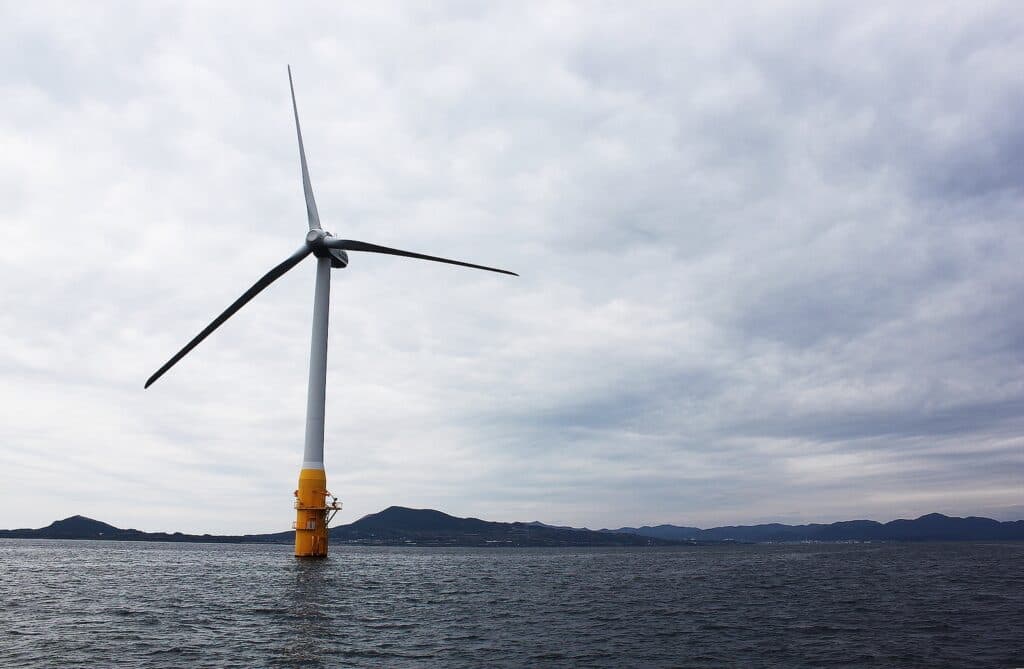
The installed capacity of wind farms on bodies of water has grown significantly in recent years. However, making full use of the potential of offshore wind energy remains a distant prospect for now. Turbines with floating structures, which can be installed in coastal locations that have so far been inaccessible, are expected to bring significant change in this respect. This article offers a brief introduction to the technical design of floating wind farms and the main challenges involved in developing this technology.
The main reason for installing and continuing to develop floating wind farms is simple: because there are no obstacles, wind speeds and flows farther offshore are higher and more stable than on land. The minimum wind speed required for a wind turbine to start generating electricity is typically between 2.5-4.5 m/s, depending on the size of the turbine. Unlike inland sites, a large proportion of offshore locations comfortably exceed this threshold. For example, average wind speeds in the waters of the North Atlantic range from 7.4 to 9.3 m/s.
Translation disclaimer
This article is a machine translation of the Czech original and has not yet been fully reviewed. In case of any doubt, please refer to the Czech version.
The article continues for subscribers
Premium content
The rest of this article is available to premium subscribers only. Get access to all premium articles on oEnergetice.cz.
You have read only 10% of the article — unlock the remaining 90% with a premium subscription.
Best value: annual subscription
Monthly option 4 € / month
3.25 €/ month
You might also like

10 November 2026, 15:19
10 November 2026, 10:23

10 November 2026, 09:48

10 November 2026, 06:21