29 October 2026, 16:16
Loading...
Trump administration wants to revoke permit for wind farm already supplying electricity to the grid

Lukáš Lepič
29 October 2026, 13:28
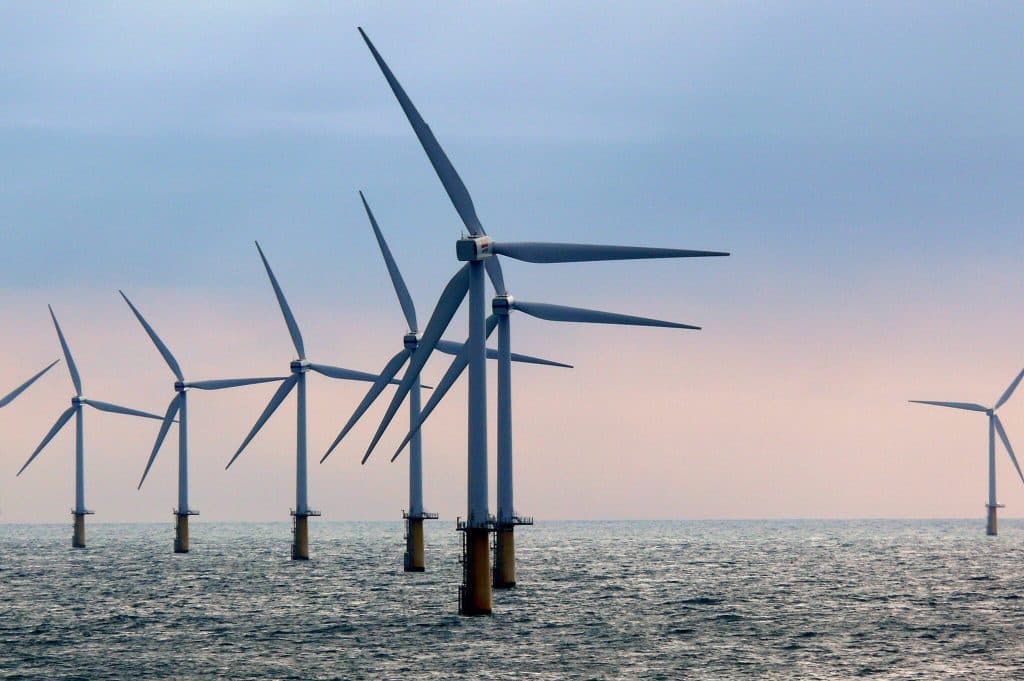
In October, the US Department of Justice asked federal courts to revoke key permits for three offshore wind projects with acombined capacity of around 5.5 GW. One of them is Revolution Wind, whichhas been supplying electricity to the New England grid since March. Regulatory uncertainty in the US thus affects not only projects under construction, but also an operating power plant. It also threatens a fragile Senate deal on permitting reform.
The US Department of Justice filed motions in cases brought against the projects by their opponents. In the case of Maryland Offshore Wind, the lawsuit was filed by the mayor and city council of the resort town of Ocean City. For New England Wind and Revolution Wind, the government joined lawsuits brought by New England groups ACK For Whales and Green Oceans, which oppose wind farms on grounds of protecting marine life.
The targets are the plans for construction and operation. In other words, the cases concern key federal permits without which a project cannot be built or operated in federal waters. The government argues that approvals granted under the Biden administration may have violated the Outer Continental Shelf Lands Act and that the Department of the Interior must reassess them.
In the Maryland case, the department points out that decision documents from the Bureau of Ocean Energy Management (BOEM), which is part of the Department of the Interior, themselves describe “moderate” and “major adverse” impacts, for example on endangered species. The project was nevertheless approved. In the case of Revolution Wind, the department's filing criticises the agency for not adequately explaining in 2023 how the project's impacts are compatible with other uses of the sea, including fishing and recreation.
In practical terms, this is a so-called remand, meaning the permit is sent back to the agency for a new decision. If the court allows it, the federal government could revoke the permit or add new conditions to it. The Department of the Interior told CT Mirror that it is simply following the court filing schedule and that this does not signal a change in its approach to offshore wind energy. Judge Royce Lamberth, who is overseeing the Revolution Wind case and has already ruled in favour of the developers twice, has not yet decided on the new motion.
Revolution Wind is no longer a construction site, but a power plant
Revolution Wind is a 50:50 joint venture between Ørsted and Skyborn Renewables. It installed its final, 65th turbine in September and, according to the developers, is expected to reach its full capacity of 704 MW by the end of the year. It has been supplying electricity to the New England grid since March, with its output covered by contracts with energy companies in Connecticut and Rhode Island.
The other two projects are at different stages. Neither US Wind's Maryland Offshore Wind nor Avangrid's New England Wind has begun construction. The threat alone, however, is enough to freeze a project. According to a February filing in a Maryland federal court, US Wind is not taking further steps because of the high costs and the risk of losing its investment.
For Revolution Wind, this is another round in a lengthy dispute. In December 2025, the administration suspended all five projects under construction, but courts allowed them to proceed in January and February. At the same time, the government is buying back offshore leases from developers. It usually makes payment conditional on their investing the same amount in oil, gas or geothermal energy in the US.
The dispute undermines a deal Trump himself helped broker
The timing is politically sensitive. In September, senators introduced the Bipartisan American Affordability and Jobs Act, a bill that would reform the permitting process. One of its provisions would prevent federal agencies from favouring certain energy sources. The deal to advance the bill was reached after Trump reportedly promised Democratic lawmakers that wind and solar projects would receive more favourable treatment under the legislation.
Democratic Senator Sheldon Whitehouse of Rhode Island, one of the bill's co-sponsors, described the department's actions as an attempt to break the permitting deal, according to Utility Dive. Paradoxically, part of the fossil fuel industry is also backing the reform. Erik Milito, head of the NOIA association, which represents companies in offshore wind, oil and gas, said that challenges to permits already issued are precisely why Congress must pass the bill.
For Europe, the value of permits is at stake
The most exposed to current developments are European investors, namely Denmark's Ørsted and Germany's Skyborn Renewables. Ørsted has already written off more than half a billion dollars on the under-construction Sunrise Wind project in New York because of supply chain problems and delays. Norway's Equinor lost around $50 million a week during last year's suspension of work on Empire Wind, according to its executives.
The US dispute comes at a time when the industry is also under pressure in Europe. Investment in offshore wind farms fell by 72% year on year in the first half of 2026. In Germany, investors are hesitating to build in areas they have won in auctions.
None of the companies involved has yet publicly quantified whether US actions will affect the cost of capital or European companies' investment decisions. Ørsted may provide part of the answer: it has promised further information on Revolution Wind when it publishes its results on 5 November..
Translation disclaimer
This article is a machine translation of the Czech original and has not yet been fully reviewed. In case of any doubt, please refer to the Czech version.
Sdílejte článek prostřednictvím:
You might also like
29 October 2026, 11:22
29 October 2026, 10:12
