28 October 2026, 15:10
Loading...
WindEurope: EU on track to reach 400 GW of wind power by 2030, thanks to faster permitting

David Vobořil
11 March 2024, 06:32
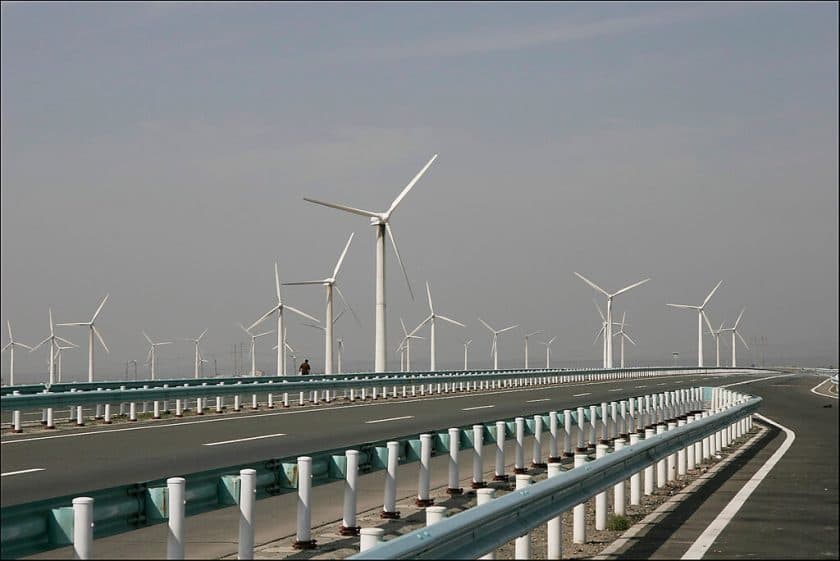
Meeting the EU’s 2030 wind power target is within reach, primarily thanks to improvements in permitting and a revival in investment. However, obstacles remain, particularly in grid development. Industry association WindEurope said in its annual outlook.
Faster permitting and a revival in investment in wind power are bringing the EU closer to achieving its 2030 target. This is for wind power to cover 35% of EU electricity consumption.
Wind power accounted for 19% of total EU electricity consumption in 2023. Denmark had the largest share, at 56%, while seven other countries generated more than a quarter of their electricity from wind.
“The outlook for wind energy in Europe is beginning to brighten again,” said WindEurope CEO Giles Dickson, adding that new EU rules have sped up permitting for new power plants.
A record 18.3 GW of wind power capacity was installed in Europe last year. Onshore wind farms accounted for 79% of this. More than 1 GW came from repowering old wind farms.
Germany installed the most new capacity, followed by the Netherlands and Sweden. Total installed wind power capacity in Europe rose to 272 GW.
Europe will install nearly 30 GW a year on average
WindEurope expects an average of 29 GW of new wind capacity to be installed in the EU each year between 2024 and 2030. After accounting for decommissioned power plants, the EU’s installed wind capacity is expected to reach 393 GW in 2030, according to the association.
A total of 425 GW is needed to meet the EU’s climate and energy targets. Analysts at S&P Global Commodity Insights forecast that installed wind capacity in the EU’s 27 member states (EU27) will reach 380 GW by the end of 2030.
Although annual additions are expected to gradually decline, next year could see record growth, analysts at both WindEurope and S&P Global predict. Additions are expected to total approximately 21 GW this year, rising to around 28 GW next year and 30 GW in 2026.
Compared with its previous outlook for 2023–2027, WindEurope forecasts 2 GW less new capacity in total for 2023 and 2024, and 4 GW more for 2025–2027.
Onshore wind farms are expected to continue making up two-thirds of new installations between 2024 and 2030. However, WindEurope expects the share of offshore wind installations to grow steadily towards the end of the decade. It is expected to match the share of new onshore wind installations in 2030.
Improving conditions for wind energy
“There was significant progress in 2023 in areas that are critical to the development of wind energy,” WindEurope says.
Permitting is improving. In 2023, Europe approved significantly more permits for new onshore wind farms than in previous years. This is largely thanks to new EU rules on permitting renewable energy projects.
Germany and Spain permitted 70% more onshore wind capacity than in 2022. France, Greece, Belgium and the United Kingdom also recorded higher numbers of approved permits.
Investment in new power plants was also higher than in 2022. Easing inflationary pressures and greater certainty in electricity markets created a more favourable investment environment. New investment in offshore wind alone reached 30 billion euros, in sharp contrast to the 0.4 billion euros invested in 2022.
Grids are the biggest problem
The biggest threat to the accelerated development of wind power is now delays in expanding electricity grids onshore and offshore. Long waits for grid connections are delaying the timely connection of new wind farms.
“Hundreds of GW of new wind capacity are currently waiting to be connected to the grid,” WindEurope says.
In Germany, authorities recently announced that grid connection delays affect up to 6 GW of installed offshore wind capacity. The wind farms concerned will now be commissioned up to two years late.
Translation disclaimer
This article is a machine translation of the Czech original and has not yet been fully reviewed. In case of any doubt, please refer to the Czech version.
Sdílejte článek prostřednictvím:
You might also like
28 October 2026, 13:08
28 October 2026, 11:10

28 October 2026, 09:08