
23 October 2026, 14:38
Loading...
Central Bohemia to launch the Czech Republic's largest hydrogen bus fleet next year

oEnergetice.cz, ČTK
5 August 2024, 15:21
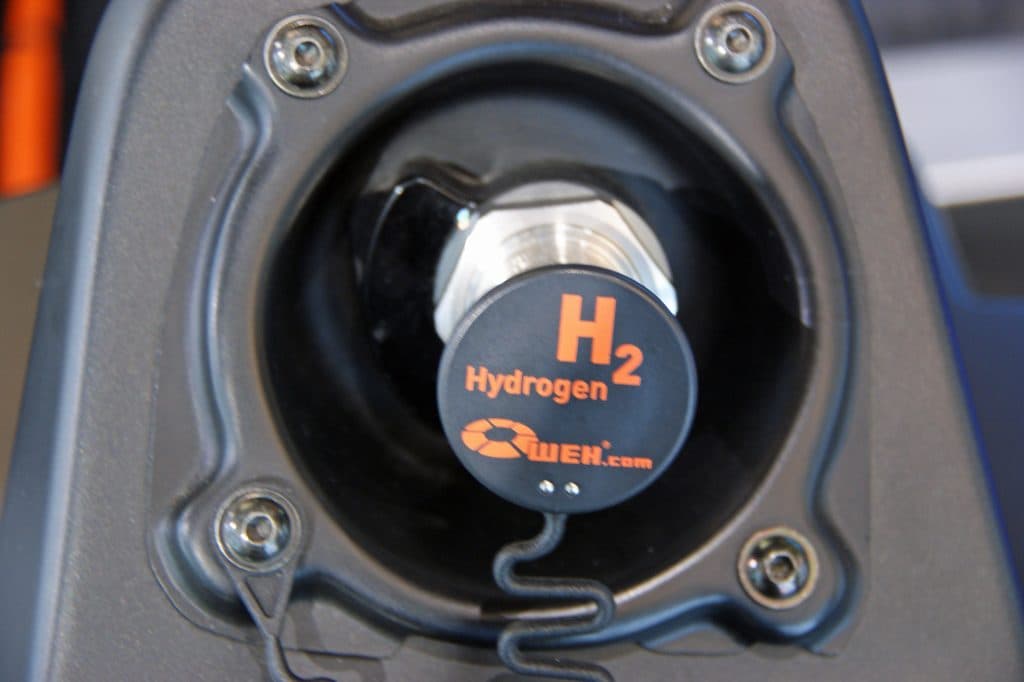
The Czech Republic’s largest fleet of hydrogen buses will begin operating in the Central Bohemian Region at the end of 2025. Ten hydrogen buses will start running around Mníšek pod Brdy, near Prague. It is the first project of its kind among the regions. The zero-emission vehicles will use so-called green hydrogen, produced from renewable sources. The cost of purchasing the vehicles will exceed 154 million crowns, most of which is expected to be covered by an EU grant. ČEZ ESCO will provide the technology for producing and dispensing hydrogen, but did not disclose the investment value. Central Bohemian Governor Petra Pecková (STAN) and ČEZ Vice-Chairman Pavel Cyrani told reporters today.
According to them, Mníšek pod Brdy will be home to the largest electrolyser in the Czech Republic for hydrogen production. The electricity needed to produce the hydrogen will be supplied by ČEZ’s hydropower plant in Vrané nad Vltavou.
The Central Bohemian Regional Authority has been working on the so-called decarbonisation of public transport for a long time. Electric buses are already running on regional public transport routes in Kutná Hora, Kladno and the Benešov area. Hydrogen buses are expected to perform better than battery-electric buses on hilly terrain, such as the area around Mníšek. In rail transport, planned use of synthetic fuels is among the measures intended to help reduce emissions in the region. „I think public transport in the Central Bohemian Region will be emission-free within a few years,“ the governor said.
Regional councillor for public transport Petr Borecký (STAN) estimates the operating cost of a hydrogen-powered bus at 100 to 150 crowns per kilometre, compared with approximately 45 to 60 crowns per kilometre for diesel buses and around 70 crowns per kilometre for electric buses. Costs are affected not only by fuel consumption, but also by maintenance and other expenses. Synthetic fuels will be tested in RegioFox railcars in the period around late August and early September. According to Borecký, they reduce the carbon footprint by up to 90 per cent. Their use increases overall operating costs by approximately 15 to 20 per cent.
The buses will run on routes 446, 517 and 688. Their range is expected to be 300 to 350 kilometres, and a full hydrogen refill takes around 15 minutes. The buses will specifically be low-floor Solaris Urbino 12 hydrogen vehicles. The Integrated Transport of the Central Bohemian Region (IDSK) had previously signed a cooperation agreement with operator Martin Uher Bus. The company will operate the hydrogen buses.
Hydrogen propulsion is significantly more expensive than diesel, and the purchase price of the buses is also higher. Its disadvantages include low energy efficiency, the need to build refuelling stations and a shortage of green hydrogen suppliers. Its advantages, on the other hand, include fast refuelling, long range, low noise and the long service life of fuel cells. According to the Czech Republic’s hydrogen strategy, estimated demand for the commodity in the Czech Republic in 2050 ranges from 1.1 to 1.8 million tonnes. Hydrogen is expected to be used mainly in sectors that are difficult to electrify, such as the chemical industry, as well as in freight, long-distance and regional transport.
Translation disclaimer
This article is a machine translation of the Czech original and has not yet been fully reviewed. In case of any doubt, please refer to the Czech version.
Sdílejte článek prostřednictvím:
You might also like


23 October 2026, 11:01


23 October 2026, 06:34