23 October 2026, 14:38
Loading...
All EU member state leaders, including Czech Republic, back higher emissions target
Jan Kroneisl
18 October 2020, 12:34
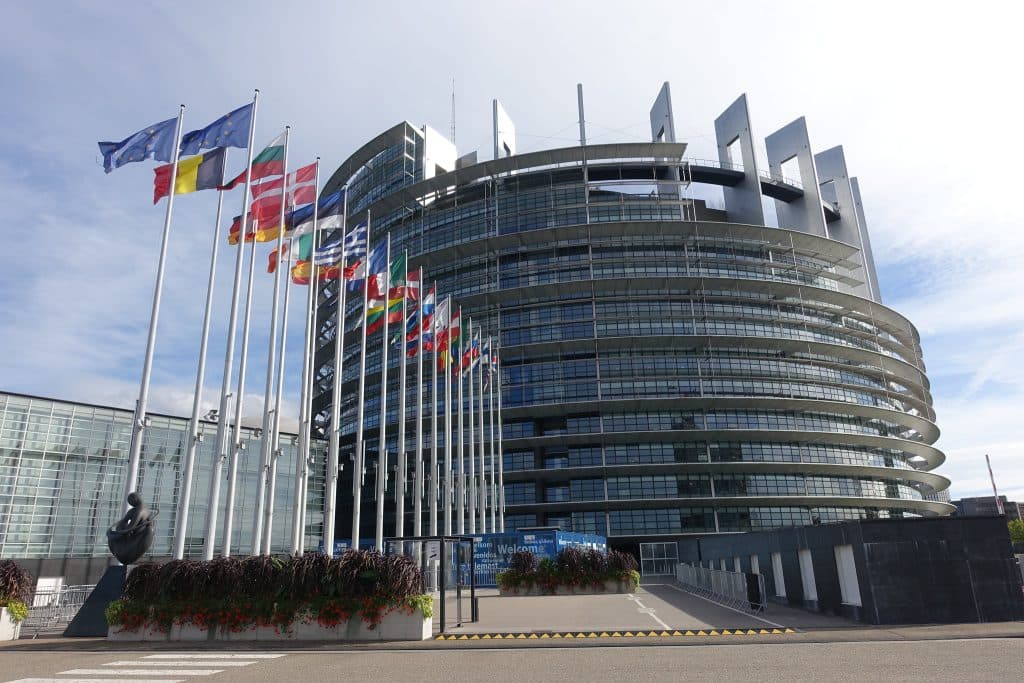
At the EU summit held on Thursday and Friday, agreement was reached on stricter limits on greenhouse gas emissions. As early as Thursday, the prime ministers and presidents of EU countries, including Poland and the Czech Republic, agreed on this.
The summit was primarily intended to open a debate and align the positions of individual member states on the proposed tightening of 2030 emissions targets, which currently require a 40 % reduction compared with 1990. However, the European Parliament already approved an increase in this target to 60 % last week. The summit discussed the option proposed by the European Commission, namely increasing the target to 55 %. A binding position is not expected until the EU summit in December.
Leaders of western countries had already signalled their willingness to raise the target. However, states that had previously rejected higher targets have now also voiced their positions. Besides Poland, this includes the Czech Republic. Poland, whose Prime Minister Mateusz Morawiecki is in quarantine, asked Andrej Babiš to represent him at the summit. Although Poland accepts the increase in targets, it is also calling for greater financial support from the EU for its energy transition and continues to oppose the EU target of zero greenhouse gas emissions by 2050.
The Czech Republic supported increasing the targets by 2030 through Prime Minister Andrej Babiš. However, it makes its support conditional on this being an EU-wide target that must be divided among individual countries according to their capabilities, and on EU support for the completion of the Dukovany nuclear power plant.
“We have no problem with the (55%) target if it is an average across the entire EU. However, the individual capabilities of individual member states must be taken into account,” said Andrej Babiš, Prime Minister of the Czech Republic.
Secretary of State for European Affairs Milena Hrdinková said that the Czech Republic understands that most member states are ready to support higher emissions targets, but stated that this figure is unrealistic for the Czech Republic itself. She also said, as did Industry Minister Karel Havlíček, that EU support for the development of nuclear energy in the Czech Republic will also be necessary for the country to contribute effectively to meeting the EU's emissions reduction targets.
Translation disclaimer
This article is a machine translation of the Czech original and has not yet been fully reviewed. In case of any doubt, please refer to the Czech version.
Sdílejte článek prostřednictvím:
You might also like
23 October 2026, 11:01
23 October 2026, 06:34