3 October 2026, 13:01
Loading...
Analysts: Emissions allowance changes will ease pressure on Czech industry, change nothing for households

oEnergetice.cz, ČTK
17 July 2026, 20:49
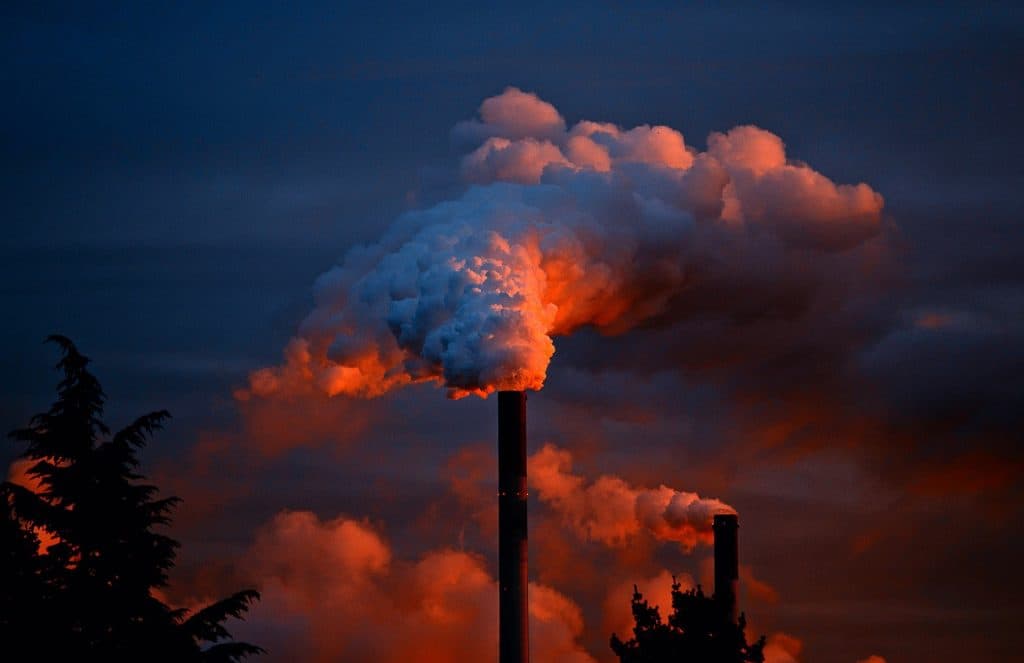
The planned changes to the emissions allowance system, presented today by the European Commission, are no revolution but rather a modest adjustment. They should primarily ease pressure on industry somewhat, while making no difference to households. This is according to comments by analysts to the Czech News Agency (CTK).
The European Commission wants to maintain free allocation of allowances after 2030, but now plans to link it more closely to investment in decarbonisation. To continue receiving this support, companies will have to submit and implement plans to cut emissions. This is part of the long-awaited review of the system presented today by the European Commission. It also envisages auctioning allowances after 2040.
According to Jiří Tyleček, an analyst at XTB, the announced review is no revolution, but the changes are moving in a generally favourable direction. From a Czech perspective, however, they may not be sufficient, as the Commission has only partly heeded domestic demands, Tyleček said. Among the proposal’s positive steps, he cited, for example, more lenient conditions in some areas and the recognition of the electrification of production, which could help the chemical industry and refineries, for instance. Free allowances have also been retained, subject to investment in decarbonisation. By contrast, the introduction of allowances for fuels and heating has not been reconsidered.
“For Czechia, the proposal is therefore mildly positive, primarily from an industrial perspective, because it reduces the risk of a sharp increase in costs after 2030. But it does not yet bring significant relief for households and drivers. Overall, it is a step in the right direction, but a less substantial one than the Czech government had called for,” Tyleček added.
Tomáš Krejčí, chief analyst at Greenbuddies, also highlighted changes favouring industry. The Commission is making free allowances conditional on electrification and will now also grant them for electricity purchased by industry. “But the more industry electrifies, the more the price of electricity will depend on the price of carbon,” Krejčí said. He noted that in 2018, wholesale electricity cost 46 euros and an allowance cost 16 euros, while last year the figures were already 97 euros and 75 euros, respectively. “Industry will be compensated for the carbon component, but households will not. This creates a system in which consumers pay for the electrification of industry,” Krejčí added.
According to Jiří Gavor, an analyst at ENA and executive director of the Association of Independent Energy Suppliers, the Commission responded to pressure from member states and slowed the rate at which the number of allowances is reduced, thereby easing upward pressure on allowance prices. Other positives, he said, include retaining the Modernisation Fund after 2030 and increasing support for the transformation of the energy sector and industry through additional financial instruments.
“But we are only at the beginning of negotiations. Pressure on the Commission must continue to ensure that its priority is not solely climate targets—which the Commission is not abandoning—but above all preserving Europe’s competitiveness,” Gavor added.
Under the proposal, the EU would provide companies with 80 percent of their free allowances in advance if they submit plans to invest in decarbonisation in Europe. Companies would receive the remaining 20 percent after making those investments. The revised ETS would also reduce the emissions cap more slowly than under the current rules. While the current setup would lead to all allowances being gradually exhausted around 2039, allowances would now continue to be auctioned long after 2040. The proposal also includes the option of using international carbon credits between 2036 and 2040, covering up to two percent of emissions obligations.
Translation disclaimer
This article is a machine translation of the Czech original and has not yet been fully reviewed. In case of any doubt, please refer to the Czech version.
Sdílejte článek prostřednictvím:
You might also like
3 October 2026, 07:43
2 October 2026, 21:55
2 October 2026, 15:14