9 October 2026, 06:22
Loading...
CO2 capture will cost billions. So far, only scientists are testing it in Czechia
Ekonews.cz
25 March 2024, 14:29
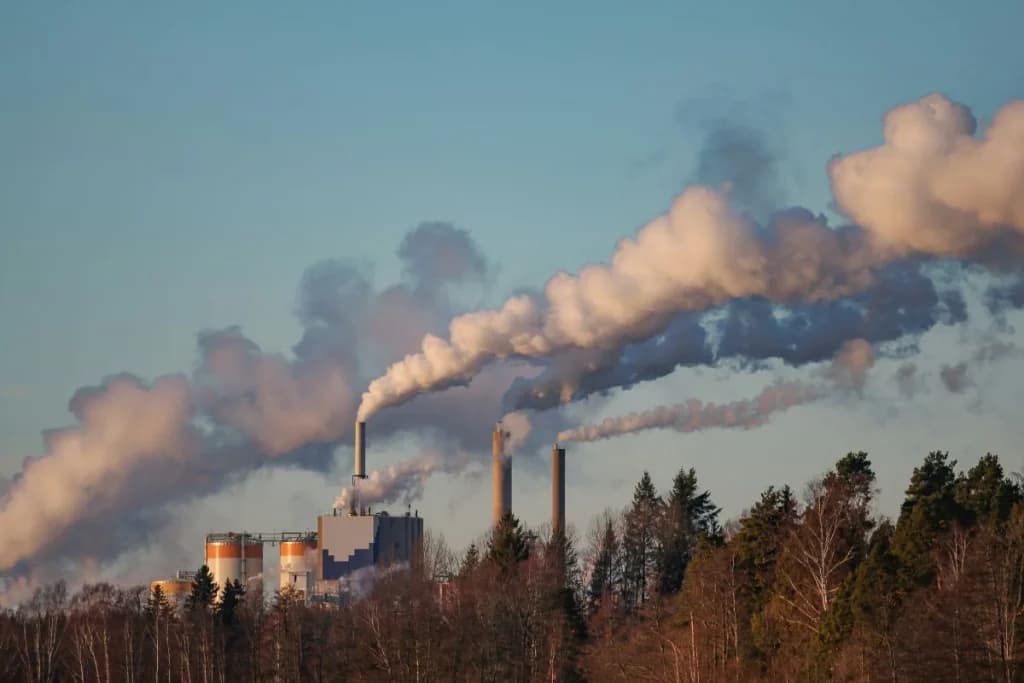
Without carbon capture and storage, the European Union will not achieve carbon neutrality. However, the technology still costs billions. This is also why no such facility is yet operating in Czechia, where scientists are launching pilot projects.
Existing carbon capture and storage (CCS) facilities operating around the world can collectively remove around 40 million tonnes of carbon dioxide annually, according to the Facts about Climate project. The European Union alone, however, is estimated by the European Commission to need to capture up to 550 million tonnes a year by 2050. Otherwise, it will not meet its net-zero emissions target.
A number of sectors are likely to be unable to do without CO2 capture technologies in future; those currently active include cement and lime producers. In Czechia, only a few small projects are attempting CO2 capture so far. The state strategy does not envisage this option before 2035.
“Given that no comparable facility has yet been established in the Czech Republic, either in the cement industry or anywhere else in the world, the first CO2 capture project at a cement plant will be at Heidelberg Materials’ plant in Brevik, Norway,” says Klára Šestáková, spokesperson for Heidelberg Materials CZ, which was called Českomoravský cement until the end of last year. Cement plants, lime works and steelworks in particular argue that they cannot decarbonise their operations without these technologies.
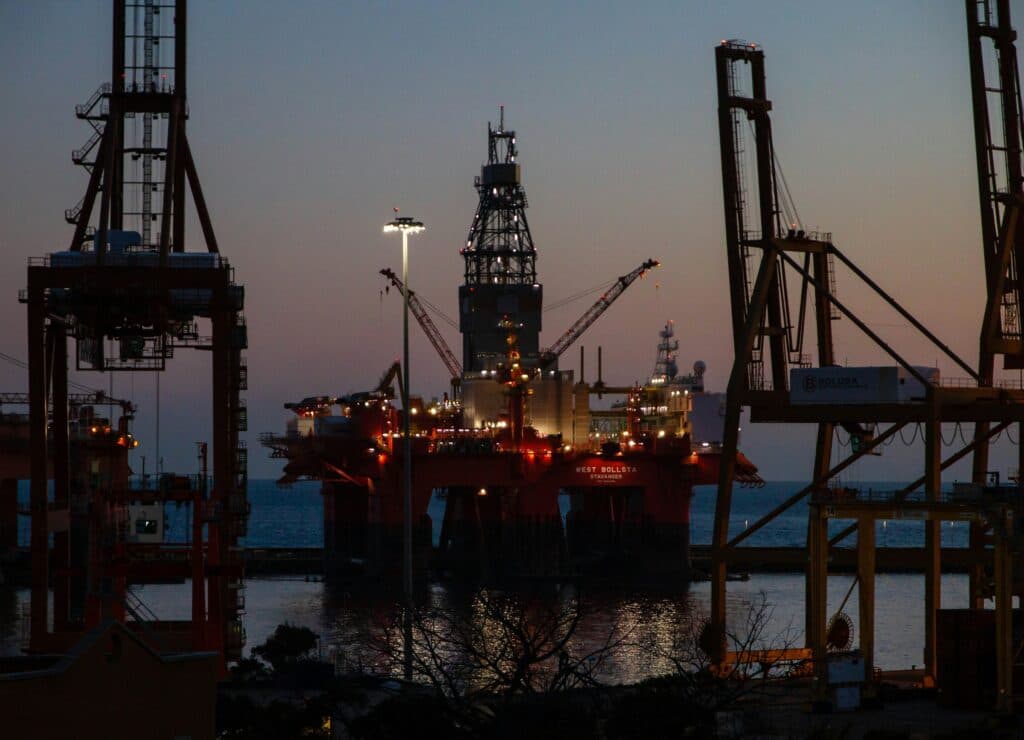
The captured CO2 will subsequently be stored in subsea caverns left after gas extraction. In Czechia, the discussion has focused more on storage sites or transporting CO2 abroad.
When major players join in
The fact that the global market for CO2 capture and storage technologies is still in its infancy, and that industrial-scale projects currently being implemented can be counted on the fingers of both hands, is also confirmed by Marek Palička of 2JCP. This manufacturing and engineering group supplied several large-capacity process vessels for the Brevik cement plant last year.
“Scandinavia and the UK are the most advanced regions, with several more significant projects under execution or undergoing FEED (Front End Engineering Design) studies. Czechia itself is negligible from this perspective and, frankly, unfortunately not commercially interesting for us at 2JCP,” says Palička. However, he expects the situation in Czechia to change over time once major players in energy, petrochemicals and chemicals become involved.
“We consider the biggest barriers across Europe to be unclear legislation that does not actively push for immediate solutions, and uncertain subsidy support. However, this applies generally to virtually all areas of green energy,” Palička adds.
Investments running into billions
The Czech Lime Producers Association is also addressing the issue. Carbon dioxide generated in lime production is primarily “process CO2”, created by firing limestone and its decomposition. Carbon dioxide is also produced through fuel combustion in kilns.
“It is clear from the above that, in order to fully meet decarbonisation targets, we will above all have to capture process CO2. (…) Lime production is therefore in a completely different position from, for example, the energy sector, where electricity and heat generation is expected to shift to alternative sources that do not produce CO2 emissions,” explains Lukáš Peřka, executive secretary of the Czech Lime Producers Association.
According to him, among the biggest problems are unresolved storage and transport arrangements. The Czech Lime Producers Association therefore commissioned an expert study on the potential for storing CO2 in geological formations in Czechia, submitted it to state institutions and is seeking to open a discussion on a CO2 storage strategy for Czechia. “The state must ensure transport and storage as part of strategic planning. As for capture, the sector is exploring options for using technological equipment through its corporate colleagues abroad,” says Peřka. CO2 capture technology alone would cost lime works between CZK 1.5 billion and CZK 3 billion, he says.
It depends on the permit price
According to Miroslav Jícha from the Department of Thermomechanics and Environmental Engineering at the Energy Institute of the Faculty of Mechanical Engineering at Brno University of Technology, chemical absorption is currently considered the most mature technology. “In this process, CO2 is absorbed into a sprayed chemical solvent (a liquid chemical, most often amine-based, editor’s note), with which the CO2 reacts. The liquid is then fed into a so-called stripper/desorber, where the absorbed CO2 is released when heated. It is like shaking a plastic bottle of cola, or heating it and opening the cap, causing CO2 bubbles to escape,” the scientist explains. The released carbon dioxide is then compressed, liquefied and prepared for transport.
The entire CO2 capture process is very costly. Jícha’s institute is therefore promoting rotary technologies known as Rotating Packed Bed (RPB) systems. “This technology can reduce investment costs by up to tenfold and operating costs by up to 80 percent compared with static columns,” Jícha believes. In his view, the Polish company Prospin is the furthest advanced with this technology and is already selling it to industrial facilities. Jícha’s team and Prospin, together with Lodz University of Technology in Poland, are working on its further development.
In Czechia, Jícha’s institution is now looking for partners to test the technology in practice. He notes that published studies show CO2 capture pays off if the emissions allowance price exceeds EUR 70. “At a price of around EUR 5, which was the case before the pandemic, capture did not pay off and nobody pursued it without subsidies. Since then, however, the allowance price has jumped to as much as EUR 100 (today, allowances are selling for around EUR 56, editor’s note), so more and more industrial companies are turning to CO2 capture technologies. This trend is particularly evident in Western Europe, where captured CO2 can be injected into subsea storage sites left by oil and gas wells,” he adds.
Czechia will export CO2 abroad
The updated National Energy and Climate Plan of the Czech Republic from October last year states that, based on the expected development of the energy mix, Czechia will need to ensure the capture and storage of 8.1 million tonnes of CO2 annually. However, capture technology is not envisaged before 2035. Moreover, given the limited capacity for storing CO2 in rock formations, a significant volume of captured CO2 emissions will need to be transported abroad, ideally by pipelines.
According to the press department of the Ministry of the Environment, which is responsible for the matter, the operation of storage sites is regulated by the Act on the Storage of Carbon Dioxide in Natural Rock Formations. However, government regulations setting out the terms of financial security mechanisms and guarantees are still missing. These would cover, for example, funds to monitor storage sites, funds earmarked to remedy unexpected events, or the surrender of allowances for leaked CO2.
“Under current European methodologies, these mechanisms would be set so strictly that capture and storage would not be possible. The European Commission is currently rewriting this methodology. Once it is issued, it will be possible to prepare a government regulation on the mechanisms,” said Veronika Krejčí, spokesperson for the Ministry of the Environment.
Republished from EkoNews.cz, a website covering business and sustainability.
Translation disclaimer
This article is a machine translation of the Czech original and has not yet been fully reviewed. In case of any doubt, please refer to the Czech version.
Sdílejte článek prostřednictvím:
You might also like
8 October 2026, 10:05