South Korea wants to lead the green revolution. It will mobilize nearly $750 billion by 2035
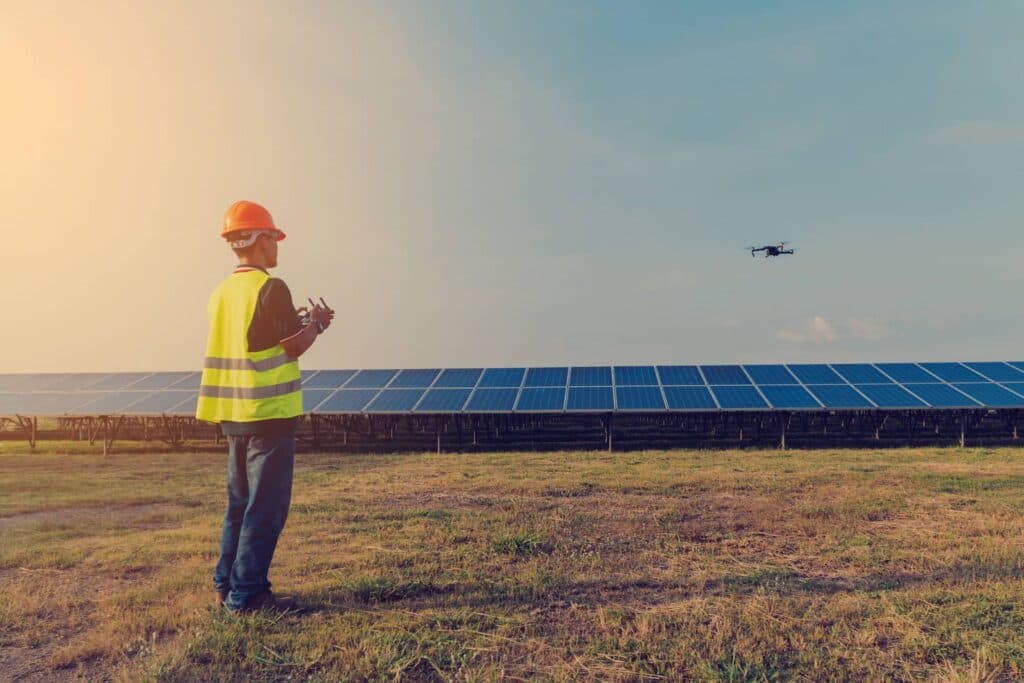
The South Korean government on Wednesday unveiled a 1,000 trillion won ($747 billion, or around CZK 16.3 trillion) energy transition and decarbonization strategy running through 2035. Its aim is to expand renewable energy generation, transform heavy industry and create new sources of economic growth.
The K-GX plan, or Korea-Green Transformation, combines public and private funding, as do many climate plans. Under the plan, 200 trillion won is to come from public spending and more than 790 trillion won from climate finance. The plan also includes a separate 220 trillion won investment by the private sector, Finance Minister Lee Hyeong-il said during a presentation attended by senior government and business representatives.
President Lee Jae-myung wants his country to harness its technological and innovative potential and take the lead in the global green economy.
“We must move away from the practice of catching up with others and become creators and leaders of the green market ourselves,” the president said.
Energy sector still “dirty”
South Korea still has a heavily fossil-fuel-based energy mix. Renewables accounted for just 7.3% of electricity generation in 2023. Coal, at 32%, nuclear power, at 28%, and gas, at 25.8%, still make up the world’s seventh-largest electricity generation sector.
According to a government statement, the government aims to reach 100 gigawatts of renewable energy capacity by 2030. That would represent a very significant increase on the current capacity of just under 160 GW. The plan also includes support for sectors such as green steel and battery manufacturing, solar and wind power, hydrogen and small modular reactors.
In addition to power generation and green technologies, the plan also covers transport. As part of a broader effort to electrify transport and reduce emissions, it aims for electric and hydrogen-powered vehicles to account for more than 70% of new vehicle sales by 2035. The strategy is intended to accelerate the decarbonization of all Korean industries and support green technologies such as power semiconductors and carbon capture technologies. It also aims to build domestic supply chains for these technologies, which are often dominated by China.
A leader in green steel
The plan aims to establish a leading position in the global green steel market and become the first country to mass-produce hydrogen-reduced steel. This is an ambitious goal, given that steelmaking is one of the hardest industrial sectors to decarbonize. The plan also seeks to support new industries such as advanced batteries and small modular reactors.
Climate ministry officials said the initiative is intended to respond to growing climate risks, energy security concerns and tightening global regulation of carbon emissions. It is also intended to turn efforts to achieve carbon neutrality into a new source of economic growth. Projects supported through climate finance will be assessed based on their impact on reducing greenhouse gas emissions. Decarbonization plans will also be drawn up for individual sectors to help meet South Korea’s 2035 emissions targets.
Could the plan have spillover effects in Czechia?
Given KHNP’s successful bid to build nuclear units at Dukovany, the question arises as to whether the plan will have any impact on the project and, potentially, on Czechia. It is unclear how much funding will reach the Korean nuclear industry. Small modular reactors are expected to play a role in it. The impact on the Dukovany project is unlikely to be significant.
If, however, this financial injection into the economy goes ahead, it could greatly strengthen commercial ties between Czech and Korean parties in both the private and public sectors.
The Dukovany project alone is already creating a significant link between Korean industrial policy and the Czech economy. KHNP expects around 60% of the contract value to go to Czech companies. Companies already involved in the project include Doosan Škoda Power, which will supply steam turbines, as well as firms involved in the design and licensing of the plant. Any increase in Korean investment in nuclear and other low-emission technologies could therefore boost demand for Czech suppliers beyond the Dukovany construction project itself.
For Czechia, it will therefore be important to turn the current cooperation into longer-term industrial ties with South Korea. By participating in Dukovany, Czech companies can gain references and know-how that could be applied in other Korean or international projects in nuclear power, hydrogen and other clean technologies. Whether this potential is realized will depend above all on whether Czech companies remain part of supply chains after Dukovany is completed, and whether cooperation leads to the development of their own technologies and capabilities rather than just one-off contracts.
Translation disclaimer
This article is a machine translation of the Czech original and has not yet been fully reviewed. In case of any doubt, please refer to the Czech version.