Czechia should bet more on geothermal energy and CO2 storage, geologist says

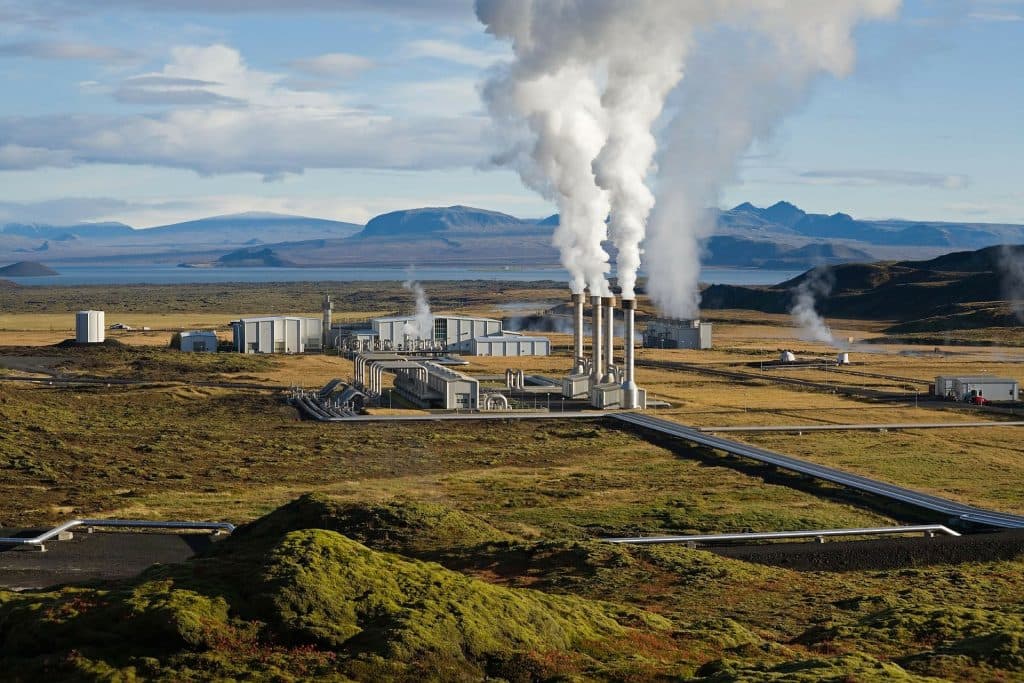
To reduce greenhouse gas emissions, it is desirable to expand the use of geothermal energy, drawing heat from the Earth’s crust, according to Zdeněk Venera, director of the Czech Geological Survey (ČGS). This energy source produces no emissions, while the deep boreholes from which heat is extracted have a long service life. Using this type of energy is therefore just as important as seeking ways to reduce the emissions burden on the atmosphere, Venera told ČTK.
"One thing is removing emissions from the atmosphere, and another is not producing them in the first place. That is why we advocate wider use of geothermal energy," he said.
The simplest way to use heat from the Earth’s crust is through heat pumps in boreholes.
For example, in shallower boreholes, a double plastic pipe is used to heat water: the water descends into the ground through one leg, where it is heated, and returns to the surface through the other. The whole process is then repeated. "No groundwater is extracted from the surrounding area," the geologist explained.
This method is used, for example, to heat the historic ČGS building at Klárov in Prague, he said. "Behind the building, we have 15 boreholes 200 metres deep, and the heat from them provides heating for the entire building," he said. At that depth, the water has a temperature of around 17 degrees, but heat exchangers raise it to a level suitable for heating. In winter, however, when cold weather persists, additional electric heating is needed, Venera noted.
He also mentioned the Synergys project in Litoměřice in the Ústí nad Labem region, where a series of boreholes 100 to 300 metres deep is being developed, along with two planned boreholes to a depth of around 3.5 kilometres, which could heat water to 70 to 80 degrees. According to Venera, the heat will be used by the Ringer research infrastructure complex and potentially, in the future, by the city’s district heating system. The project, funded by the Just Transition Operational Programme, is due to be completed in 2028.
One of the main advantages of geothermal energy over fossil fuels such as oil, natural gas and coal is that its use does not release unwanted substances such as carbon dioxide into the atmosphere. Carbon dioxide accounted for 74.5 percent of all greenhouse gas emissions in 2024, according to the Emissions Database for Global Atmospheric Research, operated by the European Union’s Joint Research Centre.
One option for removing carbon dioxide from the atmosphere is to capture it at the source, such as an industrial plant, and subsequently store it in suitable, deeply situated rock formations. In Europe, this approach is at an advanced stage of development in Norway, for example, where carbon dioxide storage in sedimentary basin rocks beneath the North Sea seabed is being tested. According to Venera, the country has a technological lead in preparing underground storage facilities, enabled by major subsidy programmes and a developed petrochemical industry.
"I think that, in the future, carbon dioxide capture could be carried out in Czechia at facilities that produce it during manufacturing processes. These include cement works, lime plants and steelworks," Venera said.
Suitable geological formations for storage have already been selected, he said, and the technology now awaits testing in a pilot operation.
So far, ČGS and Moravské naftové doly have only modelled the process of carbon dioxide capture and storage theoretically in Czechia, using existing hydrocarbon deposits as an example. The project was financially supported by the Czech Technology Agency and the Norway Grants, but, according to Venera, funding for the pilot experiment itself has not yet been secured.
He said the entire technology is financially demanding and requires a joint effort by the industry that produces carbon dioxide and geologists focused on preparing storage sites. Transporting the captured gas to the storage location is also challenging. However, the geologist said an incentive for its development could be that industrial companies would be exempted from the obligation to pay for emission allowances once they have successfully eliminated emissions. Subsidies will nevertheless be crucial in the initial stages of the technology’s development, he said.
In February, ČGS submitted a project to the Technology Agency, which funds applied research, for further analysis of the potential for geological carbon dioxide storage. "We are waiting to see whether the project is approved," he concluded, adding that a decision is due by the end of the year.
Translation disclaimer
This article is a machine translation of the Czech original and has not yet been fully reviewed. In case of any doubt, please refer to the Czech version.