
28 October 2026, 15:10
Loading...
Decarbonisation at risk: allowance price has fallen sharply over the past year

Zuzana Vrbová
6 March 2024, 07:10
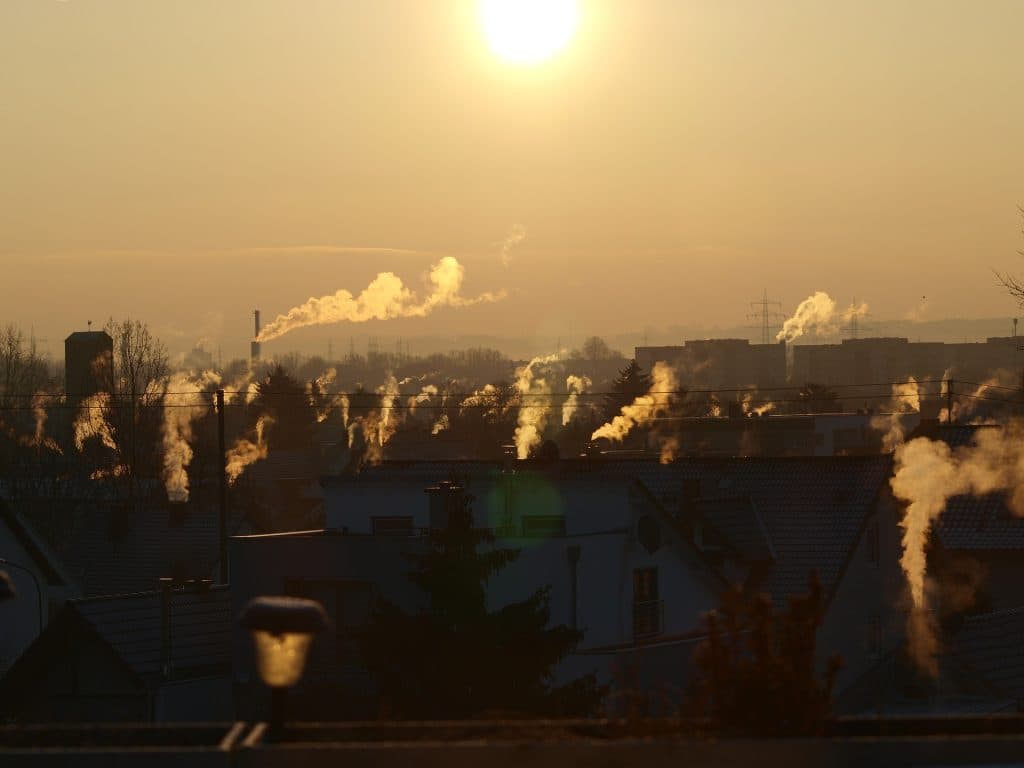
The price of emissions allowances under the EU Emissions Trading System (EU ETS) fell by almost half in a year, from EUR 95/t in February 2023 to EUR 52/t in February this year. The market is being affected by high energy prices and political uncertainty.
Low allowance prices are a worrying signal for the decarbonisation of European industry, as reported by Euractiv. Carbon pricing was introduced precisely to support structural decarbonisation by providing businesses with a long-term incentive to move away from fossil fuels. EU countries are required to direct some of their revenue from emissions allowance sales towards supporting the green transition – money that has already been disbursed, often years in advance. If carbon prices were to remain persistently below the expected level, public funds would have to make up the shortfall.
Not all market players are sounding the alarm, however. The EU chemicals industry association Cefic, for example, says higher carbon prices could lead to carbon leakage and investment moving to countries outside the EU, slowing global climate action. Low carbon prices therefore mean a lower risk of companies relocating production outside the EU, where environmental standards are often lower than in Europe.
Why did prices fall?
According to Matthias Buck, director of the Agora Energiewende think tank’s Europe programme, the current price of emissions allowances is simply the result of supply and demand. Supply currently exceeds demand – the EU has agreed to release allowances from a future period to finance the bloc’s move away from Russian fossil fuels.
“On the demand side, modest growth in Europe and rising energy prices have reduced fossil fuel consumption, and therefore the need to use allowances,” Buck adds.
The industrial sector traditionally buys almost half of the allowances under the EU ETS, but it is being held back by high energy prices and political uncertainty. The Potsdam Institute for Climate Impact Research (PIK) also said that demand is currently not particularly high, as multi-year investments and speculation are currently limited for financial and strategic reasons.
Decarbonisation models indicate that the price per tonne of carbon should be between EUR 90 and EUR 190 in 2030. The models assume a recovery in the European economy and a reduction in the number of allowances in circulation. The volume of CO2 emissions in 2026–27 is expected to be roughly the same as today. The EU aims to bring the EU ETS to an end in 2039, when emissions in the sectors covered by the system are expected to be close to zero.
Translation disclaimer
This article is a machine translation of the Czech original and has not yet been fully reviewed. In case of any doubt, please refer to the Czech version.
Sdílejte článek prostřednictvím:
You might also like

28 October 2026, 13:08

28 October 2026, 11:10

28 October 2026, 09:08
