
28 October 2026, 15:10
Loading...
Delays to Czech emissions allowance reform threaten industrial investment, industry group says

oEnergetice.cz, ČTK
15 April 2024, 13:14
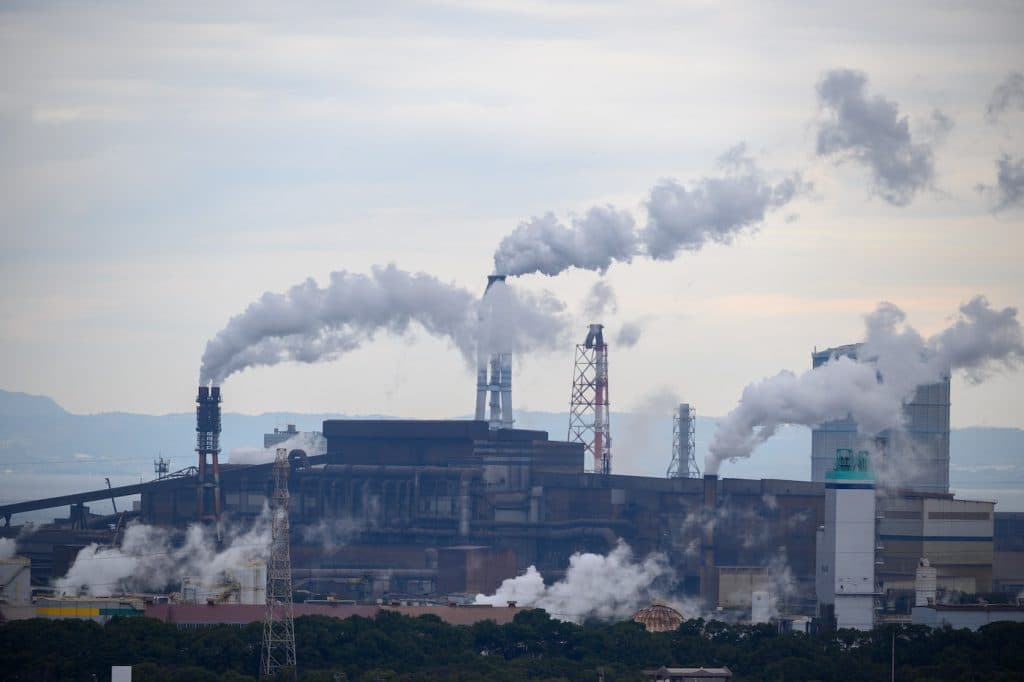
Delays in introducing the new emissions allowance system in Czechia are threatening investment in the country’s industry and energy sector. The current situation is also making it harder for companies to prepare for the new market conditions. The Confederation of Industry of the Czech Republic said this in a press release today, urging the government to address the situation urgently. Emissions allowances, which are expected to generate around 40 billion crowns this year, are purchased by power plants and other industrial companies that emit greenhouse gases, such as carbon dioxide. One allowance entitles a company to emit one tonne of carbon dioxide into the atmosphere, or an equivalent amount of another gas.
The government has postponed consideration of an amendment revising the emissions allowance system twice this year. The draft responds to a revised EU directive requiring all proceeds from allowances to be used for climate protection. The state will likely also have to report this to the EU. Until now, half of these proceeds had to be used in this way, while use of the remaining funds was only recommended. Approval of the amendment is increasingly delayed. Under the original plans, it was supposed to take effect at the beginning of this year.
“The delay is already threatening the investment and business environment, as grant programmes are tied to the use of the proceeds, meaning companies cannot access them. This could make it impossible to deliver some planned projects in industry and energy on time,” said Bohuslav Čížek, deputy director general of the Confederation of Industry of the Czech Republic and director of its Economic Policy Section.
According to the confederation, the delay in approving the amendment also carries other risks. Under the EU directive, fossil fuels should no longer be supplied to the market from the beginning of next year without the relevant permit, granted on the basis of a submitted monitoring plan. Suppliers should also begin reporting their customers’ emissions and prepare for the system’s full launch in 2027, but they lack details of the requirements they will have to meet.
“Suppliers have legitimate concerns not only about deliveries to the Czech market, but also about their operations abroad. It is unclear how the absence of a permit would be treated by authorities in Czechia, and especially in neighbouring countries,” Čížek noted.
Consideration of the amendment by the government has so far been complicated by disputes over the new allocation of emissions allowance proceeds. Several ministries want oversight of the funds. According to Labour and Social Affairs Minister Marian Jurečka (KDU-ČSL), the ministries will continue talks until the end of April; if they fail to reach an agreement, he expects a meeting of coalition leaders.
Translation disclaimer
This article is a machine translation of the Czech original and has not yet been fully reviewed. In case of any doubt, please refer to the Czech version.
Sdílejte článek prostřednictvím:
You might also like

28 October 2026, 13:08

28 October 2026, 11:10

28 October 2026, 09:08
