
13 September 2026, 08:47
Loading...
Emissions head beneath the seabed as Netherlands opens Europe’s largest CO2 storage facility
Adam Sosna
12 September 2026, 12:58
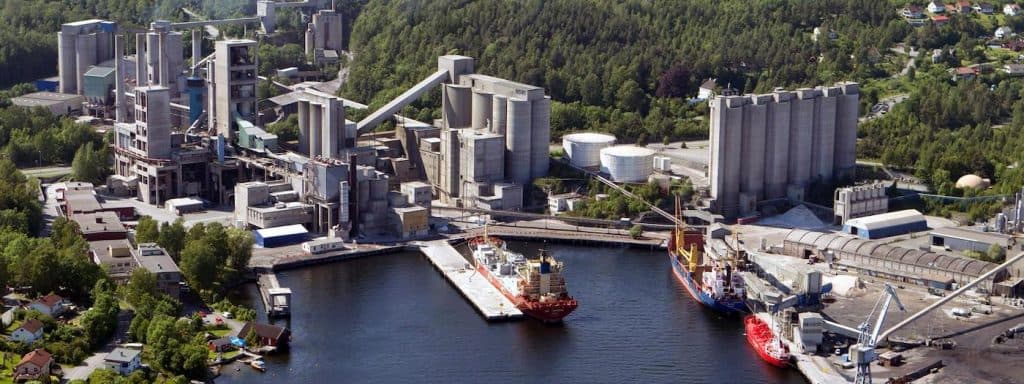
In the Dutch town of Sluiskil, Europe’s largest commercial CO₂ capture and storage project began operations. It was developed by Norwegian multinational Yara, one of the global leaders in fertiliser and ammonia production. The project, which is the result of the EU-Norway Green Alliance, is expected to prevent up to 12 million tonnes of CO₂ from being released into the atmosphere over the next 15 years. Instead, some emissions from Dutch industry will be sent beneath the Norwegian seabed.
The carbon capture and storage (CCS) facility in Sluiskil, in the Dutch province of Zeeland, began operations on Monday, 7 September. The project was developed by Norway’s Yara International and represents Europe’s first complete cross-border chain for the capture, transport and permanent geological storage of CO₂.
Each year, the facility will capture and liquefy up to 800 thousand tonnes of carbon dioxide produced during ammonia manufacturing at one of Europe’s largest agrochemical plants. Emissions from Dutch production will then be transported to Norway. There, they will be permanently stored geologically at a depth of 2,600 metres beneath the Norwegian continental shelf by another Norwegian company, Northern Lights. Over its first 15 years of operation, the project is expected to handle around 12 million tonnes of CO₂ in this way.
In addition to their strategic importance, the captured emissions also have a strong economic dimension for the company. They will not be subject to payments for emissions allowances under the EU ETS. The global leader in nitrogen fertiliser production will thus save tens of millions of euros each year.
The project’s European dimension
Europe’s largest facility of its kind is a direct outcome of the so-called Green Alliance concluded by the European Union and Norway in 2023. Under this agreement, the project was co-financed from EU funds through the Connecting Europe Facility (CEF). In addition to the prime ministers of both countries, European Commissioner for Climate Wopke Hoekstra also attended the official opening.
“Europe needs practical climate solutions that deliver real emissions reductions while strengthening industrial competitiveness. The CCS project in Sluiskil shows what is possible when innovation and cross-border cooperation come together. This is exactly what Europe needs to link climate ambition with a strong and resilient industrial base.” Hoekstra said of the project.
In Europe, CCS is focused primarily on sectors where emissions are part of the production process itself, such as ammonia, cement and steel production. More than 190 commercial CCS projects are currently in the planning or construction stage in the EU. They are intended to contribute to the target of building CO₂ injection capacity of 50 Mt per year, which the EU set under the Net-Zero Industry Act.
Whether this target can be met will be determined in the coming years. The implementation of planned projects will depend on financing, regulation and public support. However, the newly opened facility could make a significant contribution to the development of a technology crucial to maintaining the competitiveness of energy-intensive sectors of European industry.
Translation disclaimer
This article is a machine translation of the Czech original and has not yet been fully reviewed. In case of any doubt, please refer to the Czech version.
Sdílejte článek prostřednictvím:
You might also like
12 September 2026, 12:58
12 September 2026, 07:53

11 September 2026, 10:30
10 September 2026, 18:23