3 October 2026, 13:01
Loading...
ETS review aims to support industrial investment as Brussels plans more free allowances

oEnergetice.cz, ČTK
10 June 2026, 14:51
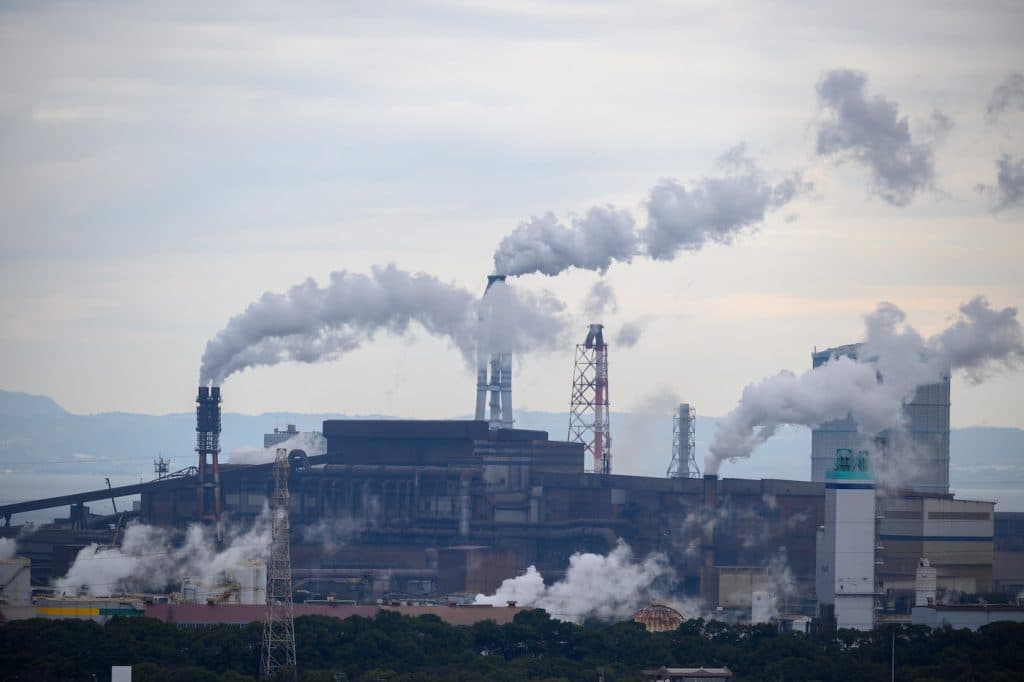
Brussels, 10 June (CTK correspondent) - The upcoming review of the ETS 1 emissions trading system will extend the free allocation of emissions allowances to industrial companies in exchange for investment in the European Union. This is stated in a European Commission (EC) document seen by Reuters. European Commissioners were due to discuss changes to the system at the EC’s regular meeting today, but no details of the discussion have been made public so far. The Commission is expected to present the review on 15 July.
The emissions trading system is intended to encourage companies to reduce their emissions. Businesses have to buy allowances for every tonne of CO2 they emit. The more they emit, the higher their costs, giving them an incentive to invest in so-called cleaner technologies. European Commission President Ursula von der Leyen has previously said that the ETS remains a “proven tool for supporting the transformation of industry”, but that it needs to be modernised and made more flexible.
The Czech Republic is one of the EU countries loudly calling for changes to the EU emissions trading system. After the EU summit ended in March, Prime Minister Andrej Babiš said Czechia would continue to seek allies for its proposals, including exempting energy-intensive industry from the emissions trading system until 2034.
The European Commission presented the first change to the emissions trading system at the beginning of April. It proposed adjusting the so-called Market Stability Reserve (MSR), which regulates the emissions allowance market. Under the new proposal, allowances would no longer be invalidated if the reserve holds more than 400 million. Instead, they would be kept as a reserve for the future. The aim is to increase stability and predictability.
According to the document cited by Reuters, the review should comprehensively reform the Market Stability Reserve. “The EU ETS review will extend the system of free allocation of emissions allowances and link it more closely to investments made in the European Union. It will also require member states to use a greater share of revenues from emissions allowances to decarbonise sectors covered by the EU ETS,” the EU executive’s document says.
According to CTK sources, the Commission would also like the planned review to make the emissions trading system a stronger incentive for investment and innovation, and to ensure that those who pay for allowances get their money back. The European Commission apparently plans to make more allowances available for free, but wants to make this conditional on companies having decarbonisation plans. Industry Minister Karel Havlíček said this approach would also be acceptable to the Czech Republic.
“We recognise that a certain degree of decarbonisation and greening is necessary, but it must not be imposed in the top-down manner of the past. I believe Europe is coming to its senses,” Havlíček recently told reporters in Brussels.
A group of nearly five dozen investment companies managing assets worth around 12 trillion euros (almost 300 trillion Kč) today urged EU leaders not to dilute the emissions trading system as part of the planned review. “A robust and predictable emissions trading system must remain the foundation of Europe’s clean industrial future,” their statement says. The planned review, it adds, “is an opportunity to develop the ETS, not to dilute it”.
Walter Hatak of investment company Erste Asset Management warned that weakening the ETS would increase regulatory uncertainty and could punish businesses already investing in electrification, clean industrial processes and low-carbon technologies.
The ETS 1 is Europe’s main emissions allowance market, covering energy, heavy industry and aviation in the EU. The expansion known as ETS 2 is due to start in 2028, after a one-year delay, and is expected to cover road transport and building heating. The introduction of ETS 2 is also to include a Social Climate Fund, which should mitigate the impact on low-income households.
Translation disclaimer
This article is a machine translation of the Czech original and has not yet been fully reviewed. In case of any doubt, please refer to the Czech version.
Sdílejte článek prostřednictvím:
You might also like
3 October 2026, 07:43

2 October 2026, 21:55
2 October 2026, 15:14