3 October 2026, 13:01
Loading...
EU emissions allowances set for change as Brussels seeks swift agreement

oEnergetice.cz, ČTK
22 July 2026, 17:35
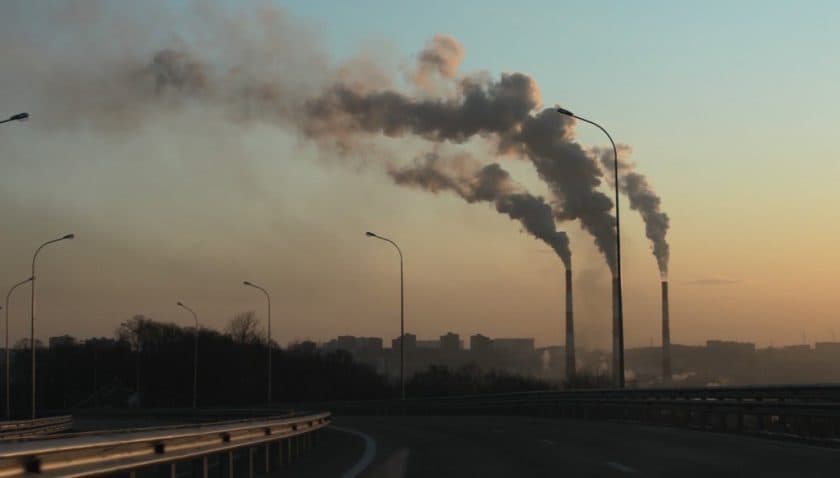
Brussels, July 22 (CTK correspondent) - Representatives of EU member states heard a presentation in Brussels today by the European Commission on its proposal to change emissions allowances for industry under ETS 1, which it presented last Friday. According to a spokesperson for the Irish presidency, reaching a common position among the bloc’s countries is one of Dublin’s main priorities. Final approval is expected at a meeting of environment ministers in Brussels on December 11.
As part of the “One Europe, One Market” plan, EU leaders, the European Parliament and the European Commission called for the ETS review to be fully completed by the first quarter of 2027. The Irish presidency must therefore move quickly.
Ambassadors of EU member states (the so-called Coreper) heard a presentation today by Kurt Vandenberghe of the European Commission’s Directorate-General for Climate Action (DG CLIMA), followed by the first reactions from countries, which pledged “to discuss the proposals constructively,” an unnamed EU source said. The Irish presidency then presented its plan.
The Environment Working Party discussed the main part of the ETS review on Monday, July 20, and member states were tasked with preparing comments on the individual proposals over the summer. The political debate intended to pave the way for an agreement is expected to take place at the environment ministers’ meeting in Luxembourg on October 12.
“We began work on the ETS review immediately and will ensure that the views of all member states are heard. We must move this complex proposal forward at a rapid pace—certainty about the ETS is essential for European competitiveness,” the presidency spokesperson said.
According to the published proposals, the European Commission wants to maintain the free allocation of emissions allowances beyond 2030, but now intends to link it more closely to investment in decarbonisation. Companies will therefore have to submit and implement emissions reduction plans to continue receiving this support. The review also provides for allowances to be auctioned after 2040. Under the proposal, the EU would provide companies with 80 percent of their free allowances upfront if they submit plans to invest in decarbonisation in Europe. They would receive the remaining 20 percent once the plans are implemented.
The revised ETS also provides for a slower reduction in the emissions cap than under the current rules. While the current system would lead to the gradual exhaustion of all allowances around 2039, allowances are now to continue to be auctioned long after 2040. The rate at which the emissions cap is reduced will slow: from today’s 4.3 percent, it will fall by 3.7 percent a year from 2031 to 2035 and by 1.7 percent a year from 2036. This will keep the emissions trading system operational beyond 2040. In practice, this means a slower pace of emissions reductions.
The proposal also allows the use of international carbon credits from 2036 to 2040, up to a limit of two percent of emissions obligations. Companies will thus be able to meet part of their obligations through high-quality emissions reduction projects abroad instead of buying European emissions allowances. The Commission wants to maintain the principle of solidarity within the ETS, meaning that some revenue from emissions allowances will continue to help poorer member states with the energy transition, including Czechia.
Translation disclaimer
This article is a machine translation of the Czech original and has not yet been fully reviewed. In case of any doubt, please refer to the Czech version.
Sdílejte článek prostřednictvím:
You might also like
3 October 2026, 07:43

2 October 2026, 21:55
2 October 2026, 15:14