
23 October 2026, 14:38
Loading...
First-generation biofuels are inefficient in Czechia: they occupy more than a tenth of farmland but cover a hundredth of consumption
Ekonews.cz
5 December 2022, 10:33
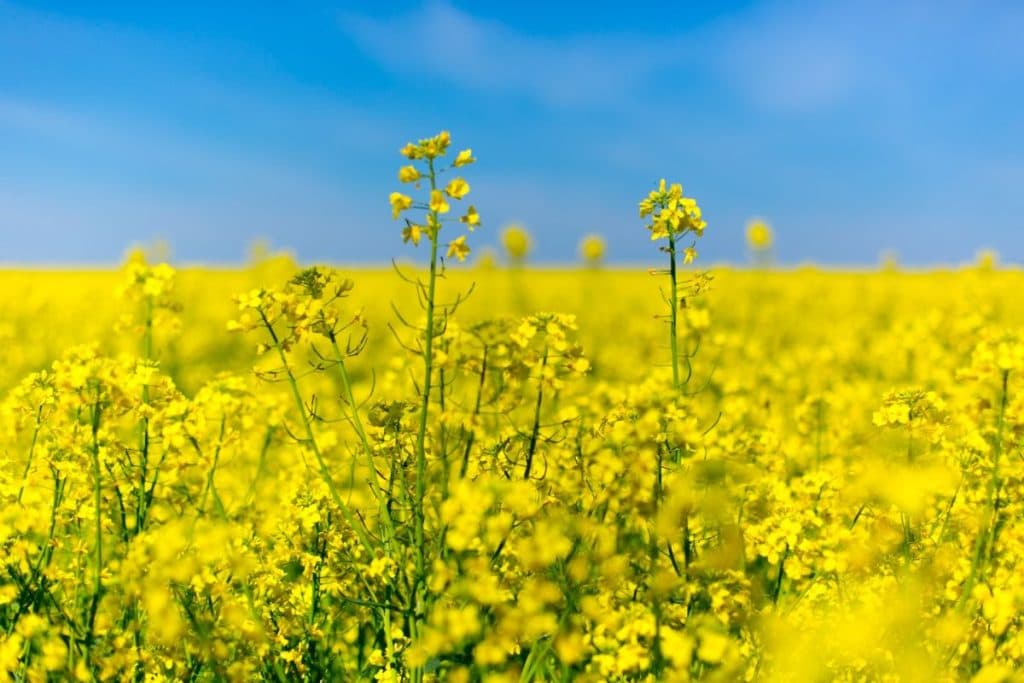
First-generation biofuels were grown on 12 percent of domestic arable land last year. Yet they covered only around 0.8 percent of final energy consumption. This is according to a new study by the climate team at the non-governmental non-profit Association for International Affairs, entitled “Biofuel production and its impacts on the Czech landscape”. Fuels for cars and power plants thus occupied an area almost the size of the entire Karlovy Vary Region.
“It is a striking imbalance, but not particularly surprising given the low energy potential of the photosynthetic process, unlike photovoltaics, which can produce much more energy,” comments the study’s author, Martin Abel. According to Abel, biofuels’ low efficiency stems from the limited energy potential of the crops grown and from our inability to make maximum use of the energy obtained.
“Our ability to use biofuels is linked to the technologies through which they are consumed. If we are talking about biodiesel and bioethanol, i.e. mainly liquid biofuels, these are most often burned in the internal combustion engines of cars or other means of transport. These have an efficiency of around 30 to 35 percent, so they waste a large amount of the heat generated and do not convert it into work,” he explains.
If biofuels are not consumed domestically, they are exported
Today, fuel suppliers can use first-generation biofuels made from sugar beet, maize or rapeseed. Second-generation biofuels are made from waste or non-food biomass, such as algae, straw or sewage sludge. In the spring of this year, the government abolished the obligation to blend a mandatory bio-component into fuels, which should give fuel producers and suppliers a wider range of options for meeting emission-reduction targets.
They can meet the target using liquefied petroleum gas, or bio-LPG, natural gas, or biomethane, electricity supplied to road vehicles, recycled fuels, renewable fuels of non-biological origin (renewable hydrogen or synthetic fuels made from renewable hydrogen), or so-called reductions in emissions from oil or natural gas extraction.
“But the question is whether this should be the case, because Czech production capacity, typically owned by the Agrofert holding company, is geared towards producing these biofuels. So, once the system is set up this way, it is not enough simply to leave it to market forces; intervention is needed, for example by actively disadvantaging first-generation biofuels,” Abel comments.
Biofuel infrastructure, unlike infrastructure for electric vehicles or hydrogen cars, has already been built, giving an advantage to the less efficient technology. “Czech legislation (Act No. 201/2012 Coll. on air protection) targets reductions in greenhouse gas emissions from fuels. It therefore favours biofuels made from used cooking oil, while advanced biofuels have a better emissions factor than conventional biofuels,” says Environment Ministry spokesperson Ondřej Charvát. “In addition, the law limits the contribution of conventional biofuels towards emission reductions to a level of seven percent of the energy supplied by a motor petrol or diesel supplier,” Charvát adds.
“Reporting on the share of renewable energy sources in transport, compiled annually by the Ministry of Industry and Trade, shows that the total share of renewables in transport in Czechia was 9.4 percent in 2020. The share of first-generation biofuels was only 4.6 percent. For example, the share of first-generation biofuels was 4.8 percent in Germany, 5.1 percent in Poland and as much as 7.6 percent in Sweden,” says Charvát. Some biofuels produced domestically are therefore exported to countries where there is demand for them. According to Czech Statistical Office data, biodiesel exports have risen in recent years.
Second-generation biofuels are scarce, while third-generation fuels are being researched
“Based on our assumptions, the theoretical share of land from which harvested crops are used to produce first-generation biofuels will remain at roughly the same level as in previous years, i.e. up to 10 percent. While the obligation to blend a bio-component into fuels has been abolished, the obligation to reduce emissions from fuels remains. And biofuels are still the cheapest and most effective method of achieving this reduction,” comments Vladimír Pícha, spokesperson for the Czech Agricultural Association.
“Moreover, they will probably remain the only meaningful method for a long time. So-called second-generation biofuels are the same fuels, only obtained from different feedstocks, which are in short supply, while so-called third-generation fuels are still only at the research stage,” Pícha adds.
Agricultural Chamber spokesperson Barbora Pánková also does not believe there will be a decline in sown areas in the coming years. “It should be stressed that farmers do not distinguish whether they grow crops for food purposes or for use in biofuel production. This is decided by the free market and the traders operating in it,” she explains.
According to the Czech Statistical Office, the area planted with rapeseed was 343 964 hectares this year, representing 14 percent of arable land. Rapeseed intended for harvest next year covers an estimated 350 thousand hectares. The area planted with sugar beet reached 58 238 hectares this year, or two percent of arable land in Czechia.
“It is still difficult to estimate the situation next year more precisely, because sugar beet is sown at the turn of March and April. Sunflowers occupy around 20 thousand hectares each year, and their share of arable land is negligible. There is currently a shortage of these crops in Europe, which is reflected in their rising prices,” Pánková says.
Republished from the online portal EkoNews.cz, a website covering business and sustainability.
Translation disclaimer
This article is a machine translation of the Czech original and has not yet been fully reviewed. In case of any doubt, please refer to the Czech version.
Sdílejte článek prostřednictvím:
You might also like
23 October 2026, 11:01


23 October 2026, 06:34