23 October 2026, 14:38
Loading...
Greater use of scrap, construction waste and more thorough plastics recycling to cut Czech emissions
Ekonews.cz
13 December 2022, 14:46
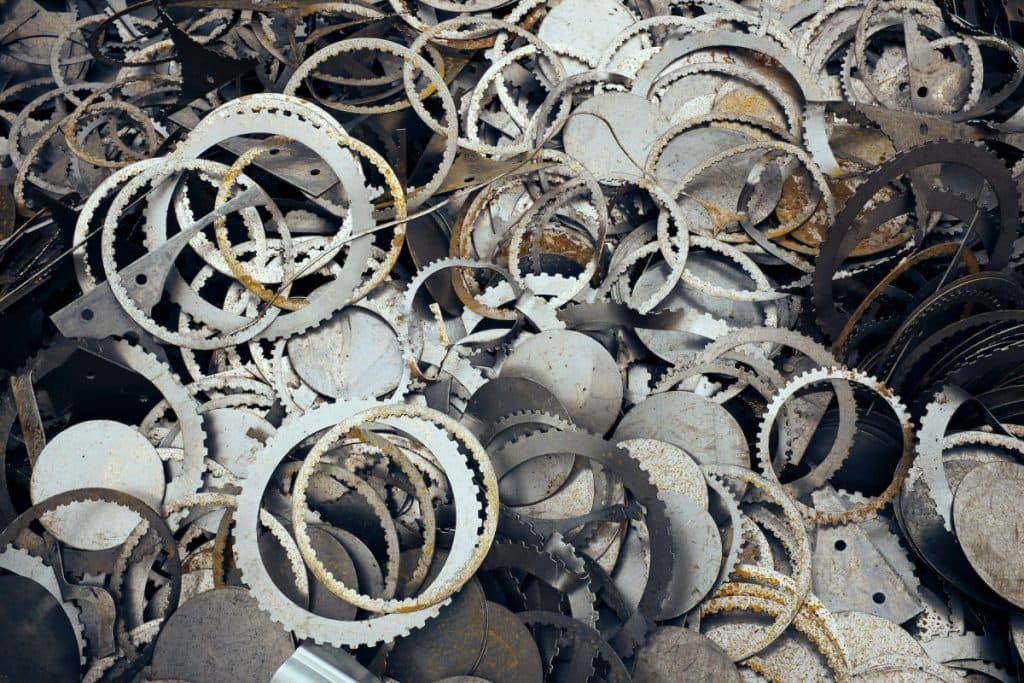
Reusing a wide range of materials, from concrete to aluminium, is intended to help Czechia. A study by the Institute of Circular Economy points out that, alongside costly investments, there are also cheaper ways to reduce emissions.
Circular solutions could reduce carbon dioxide-equivalent emissions in key industrial sectors in the European Union by up to 65 percent by 2050, according to a study by the Institute of Circular Economy (INCIEN). They could also save up to 30 percent in investment and energy costs compared with a scenario based on deploying new process technologies.
“Circular economy measures appear to be a more cost-effective partial pathway to decarbonisation, as they are less capital-intensive than the alternatives. The tools and resources for their implementation are essentially already available today,” says Benjamin Hague, INCIEN’s head of research. The study notes that greenhouse gas emissions from Czech industry, including energy use, have fallen by 60 percent since 1990, but emissions associated with industrial processes and product use have declined by only 10 percent.
Scrap should stay at home
Circular measures reduce CO2 emissions from industrial materials through their recycling or reuse, substitution with low-emission materials, reduced consumption, or circular business models such as sharing and modular design. INCIEN focused on the four most emissions- and energy-intensive materials in heavy industry: steel, cement, plastics and aluminium. These account for around 65 percent of total industrial emissions.
Steel and iron production is crucial from the perspective of industrial decarbonisation, as it accounts for 5 percent of total EU greenhouse gas emissions. Emissions intensity at Czech steelworks is currently significantly higher than the EU average, owing to the dominant share of primary production.
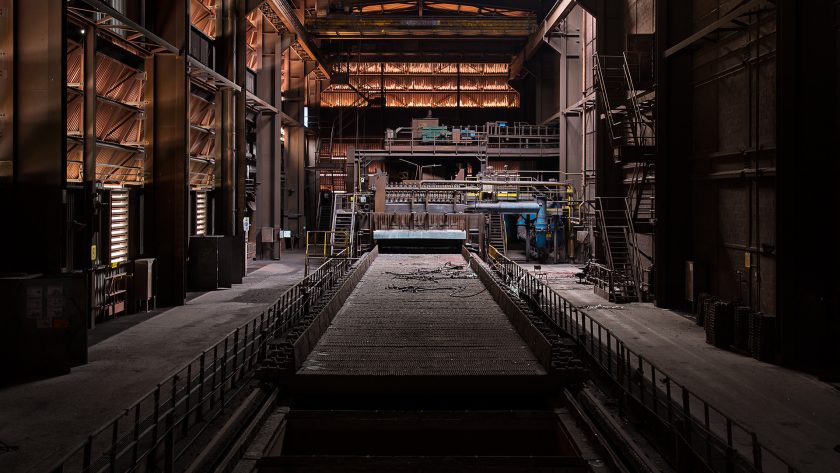
Czechia has also historically been a net exporter of steel scrap. It exports more than two million tonnes annually. According to the study, this points to an opportunity for decarbonisation through a transition to production based predominantly on scrap.
The two largest steelworks in Czechia – Liberty Ostrava and Třinecké železárny – are already investing in electric arc furnaces. According to the website of the Steel Union, Třinecké železárny intends to secure half of its output through a future electric arc furnace as part of its decarbonisation plan by 2030.
Liberty Ostrava is preparing a transition towards “green steel” production and carbon neutrality by 2030, says Barbora Černá Dvořáková, head of communications and external relations. This mainly involves modernising the steelworks at a cost of CZK 8.6 billion. During 2025, the company will replace its current tandem furnaces with two hybrid electric furnaces, enabling it to use a higher share of scrap than before. This will reduce its dependence on imported raw materials such as iron ore and coal.
“In order to make full use of the potential of this new technology and increase the share of scrap to 70 or even 100 percent, we will need more electricity, which is not currently available. We are therefore also preparing the construction of a connection to the high-voltage grid,” Černá Dvořáková said. Liberty Ostrava is seeking support for its transformation projects from the EU Modernisation Fund and the State Environmental Fund.
Industry lacks guidance on how to proceed
Cement production is also crucial in the context of decarbonising Czech industry. It accounts for approximately 2.5 percent of national CO2 emissions. While cement accounts for only 14 percent of concrete’s weight on average, it represents 95 percent of its carbon footprint. Around two-thirds of these emissions are associated with the production of clinker, the main component of cement.
According to the study, the key lies in replacing clinker with concrete powder from construction and demolition waste, reducing the cement-to-concrete ratio in concrete mixes, and using less concrete in the design and construction of buildings. Various low-carbon cement formulations are also being tested in pilot projects.
According to the Czech Cement Producers’ Association, local cement plants have one of the most decarbonised energy mixes in the European cement industry. Roman Snop, vice-president of the Association for the Use of Energy Products and vice-president of the European Association of Coal Combustion Products (ECOBA), agrees. “Our activity in this area has been under way for 12 years. We are among the few that are well prepared for this situation,” Snop says.
According to him, industry lacks guidance on how to proceed. The association therefore plans to submit one to the Ministry of the Environment and the Ministry of Industry and Trade next year. “We want to cooperate on preparing a national circular economy strategy for alternative construction materials. A kind of handbook is therefore being created on how to handle anthropogenic materials (materials created through human activity, editor’s note). These are advantageous raw materials because they improve the quality of construction products, extend their lifespan and have a very low carbon footprint,” Snop says.
Plenty of plastics are collected, but recycling is lagging
Circular opportunities to reduce CO2 emissions in the chemical industry mainly concern plastics. According to INCIEN, emissions per tonne of recycled plastics are already on average 80 to 85 percent lower than for virgin plastics, representing enormous decarbonisation potential. However, only 15 percent of plastic waste is currently recycled in the EU.
Under one scenario for achieving carbon neutrality, the circular economy could deliver more than 80 percent of the required emissions reductions from plastics production by 2050, through a combination of demand reduction, mechanical recycling, expanded chemical recycling and the production of bio-based plastics using sustainable biomass resources.
Although a large amount of plastic waste is collected (approximately 75 percent of plastic packaging in 2020), the main barriers remain a high share of landfilling, weak recycling infrastructure and the absence of a deposit-return system for PET bottles. When landfilling ends in Czechia in 2030, there is a risk that plastics will be incinerated on a large scale, contributing to higher emissions.
Ecodesign will enter legislation
A scenario by European Aluminium suggests that increasing the share of recycled aluminium in EU consumption to 50 percent by 2050 would eliminate nearly 50 percent of emissions associated with aluminium consumption in the EU. However, Czechia significantly lags behind in recycling aluminium beverage cans, reaching a recycling rate of only 22 percent in 2019. In this case too, according to the INCIEN study, introducing a packaging deposit-return system could help.
The materials mentioned are consumed primarily by two sectors: construction and the automotive industry. Increasing the energy efficiency of buildings and gradually decarbonising the energy mix can be expected to gradually reduce buildings’ operational emissions. Conversely, so-called “embodied emissions” will become the main component of buildings’ overall carbon footprint within the next 10 to 15 years, due to the use of highly energy-intensive materials such as steel and cement.
INCIEN representatives are convinced that Czechia lacks a detailed roadmap for industrial decarbonisation. Moreover, it addresses the circular economy mainly in the context of efficient resource and waste management, rather than in connection with climate change mitigation. Requirements for these measures will soon become part of EU and member-state legislation.
“From 2024, manufacturing industry will gradually have to meet the requirements of the new EU Ecodesign for Sustainable Products Regulation. Requirements are also being prepared for the construction sector, focusing on buildings’ whole-life emissions, including those embodied in materials,” Hague says.
Republished from the online portal EkoNews.cz, a website covering business and sustainability.
Translation disclaimer
This article is a machine translation of the Czech original and has not yet been fully reviewed. In case of any doubt, please refer to the Czech version.
Sdílejte článek prostřednictvím:
You might also like
23 October 2026, 11:01
23 October 2026, 06:34