25 September 2026, 09:51
Loading...
Havlíček: Czech Republic seeks major allowance overhaul, price cap

oEnergetice.cz, ČTK
10 February 2026, 13:20
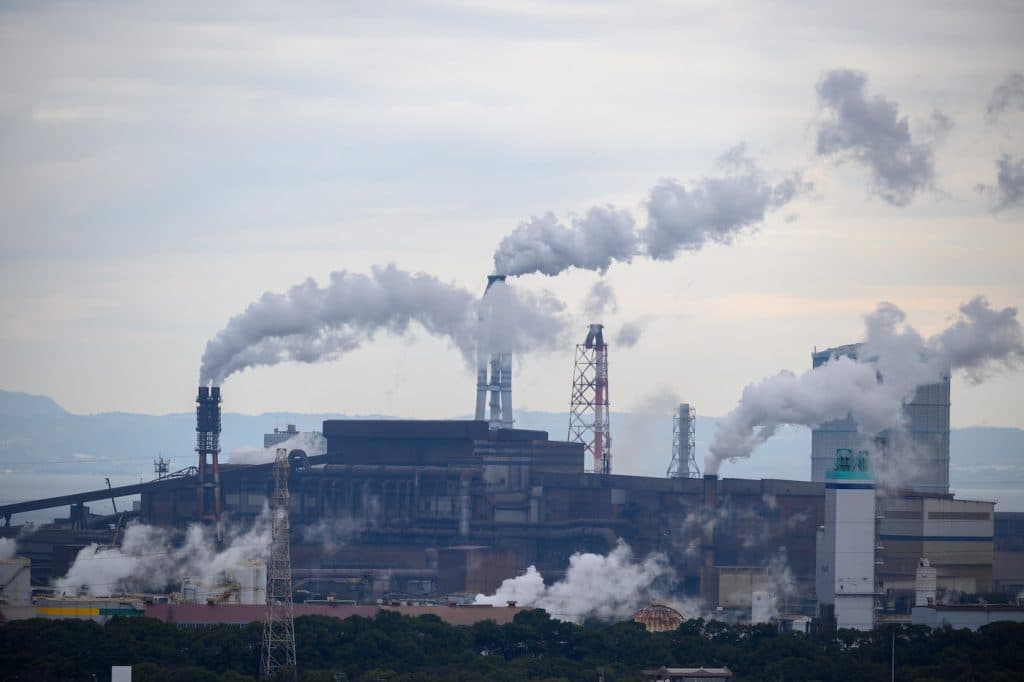
The Czech Republic will seek support in the European Union for fundamental changes to the current emissions allowance system. One of its main objectives will be to cap the price of current emissions allowances at a maximum of 30 euro per tonne of carbon dioxide, in line with estimates from 2020. Industry and Trade Minister Karel Havlíček (ANO) said this today at the Czech Antwerp industrial conference, arguing that the allowance system is destroying European industry. However, most member states are currently opposed to changes, he said. The current allowance price is around 82 euro.
According to Havlíček, the EU’s current green policy threatens the competitiveness of European industry, with the Czech Republic, as an industrially oriented country, paying a higher price than others. “If Europe does not come to its senses, it will be a hard crash into a wall,” the minister stressed.
He sees the price of emissions allowances as one of the main problems. The EU introduced its Emissions Trading System (ETS 1) in 2005. It applies primarily to the energy sector, energy-intensive industry and aviation. It sets an overall cap on carbon dioxide emissions, while companies must surrender a corresponding allowance for each tonne of carbon dioxide emitted.
“The current emissions allowance system has completely got out of control. In 2020, the estimated price for the current period was around 26 to 30 euro. In reality, it is now above 80 euro. This is where we must begin: first resolve ETS 1, and then the ETS 2 system follows from that,” Havlíček said.
According to him, the EU should therefore cap allowance prices at the level estimated in 2020. At the same time, he wants to push through a mechanism that would set the maximum possible price increase over the next roughly ten years. “It would be predictable and meaningful. The allowance would then no longer become a speculative instrument as it is now. This would unclog a fundamental problem, and then it would be possible to work on other things,” Havlíček noted.
However, according to Havlíček, there is currently no consensus in the EU on modifying the ETS 1 system. Most member states are opposed, he said. He sees potential support in neighbouring countries such as Poland, Hungary and Slovakia, while Germany and Italy, for example, are also gradually changing their stance, according to the minister.
Representatives of domestic industry, particularly energy-intensive companies, also called for changes to emissions allowances. According to Daniel Tamchyna, president of the Chemical Industry Association of the Czech Republic, current EU policy is leading to industrial production being shifted outside the EU. Over the past roughly five years, industrial production in the EU has fallen by around a fifth, he said, while investment has declined even more sharply and business closures have accelerated. Shifting production also runs counter to the EU’s climate goals, he said, because other countries do not have such ambitious climate protection targets and restrictions.
Prime Minister Andrej Babiš (ANO) also criticised allowance prices in a letter sent to European Union politicians at the beginning of February. In it, he called for a pragmatic approach to the green transition. In addition to changes to ETS 1, the letter also calls for postponing the launch of ETS 2, which would extend the system to road transport and building heating.
Translation disclaimer
This article is a machine translation of the Czech original and has not yet been fully reviewed. In case of any doubt, please refer to the Czech version.
Sdílejte článek prostřednictvím:
You might also like
24 September 2026, 11:23

24 September 2026, 10:30
24 September 2026, 06:56